Bhutanese Air Force
The Bhutanese Air Force operates 2 military aircraft in 2026 — 2 helicopters. It ranks #161 of 161 air forces worldwide.
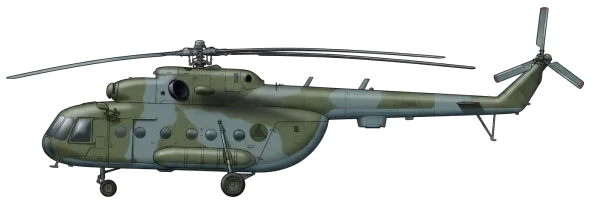
Full inventory in 2026
1 aircraft typeRoyal Bhutan Army
Overview
The Kingdom of Bhutan does not operate an independent air force; instead, its aerial defense and support capabilities are deeply integrated with the Indian Armed Forces. The armed forces of Bhutan consist of the Royal Bhutan Army, Royal Bodyguards, and the Royal Bhutan Police. For air support, the Royal Bhutan Army relies on the Eastern Air Command of the Indian Air Force (IAF). This long-standing strategic relationship with India dictates Bhutan's defense posture, where India is responsible for military training, arms supplies, and the air defense of Bhutan.
Bhutan's own air assets are part of the Royal Bhutan Army's Air Wing and are limited to a small number of helicopters. These are primarily used for non-combat roles such as transportation, search and rescue, and logistical support. The Air Wing's focus is on internal security, disaster relief, and VIP transport rather than traditional air warfare.
The strategic doctrine of Bhutan is fundamentally defensive and non-aligned, with a heavy reliance on its treaty relationship with India for external security. Positioned between two major powers, China and India, Bhutan's defense policy prioritizes protecting its sovereignty through diplomatic means and its strategic partnership with India. There are no known major modernization programs for creating an independent air force, as the current arrangement with the IAF is considered sufficient for its defense needs.
In the regional context, Bhutan's lack of an air force is not unique for a small, mountainous, and landlocked nation. Its security is intrinsically linked to India's regional security umbrella. This arrangement has been demonstrated in joint operations and exercises, and Indian assistance was notable during Operation All Clear in 2003, when IAF helicopters evacuated Royal Bhutan Army casualties. The defense relationship ensures Bhutan's airspace is monitored and protected, allowing the country to focus its limited resources on its army and internal security forces.
Frequently Asked Questions
How many aircraft does Bhutan have?
How does Bhutan's air force rank globally?
How many military helicopters does Bhutan have?
What is the AIRS Index score of Bhutan?
Where does Bhutan get its military aircraft from?
- MAR 142026 Updated Added Mi-8