Mi-8 Hip
Soviet multipurpose helicopter, prevalent during the Cold War, extensively utilized for transport, combat and humanitarian operations globally. Key figures: top speed 250 km/h, range 495 km, service ceiling 4,500 m, max takeoff weight 12,000 kg, unit price $4M, built 17,000. In service with 51 air forces as of 2026 — Russia (789), Algeria (140), Ukraine (73) and 48 others.
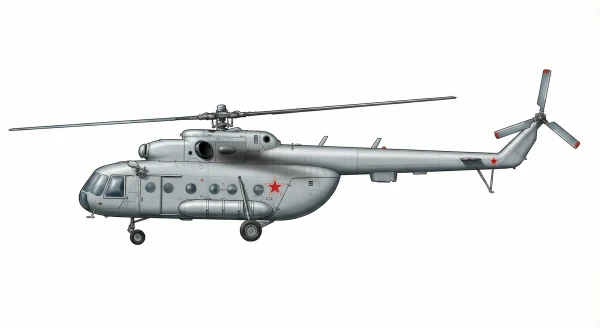
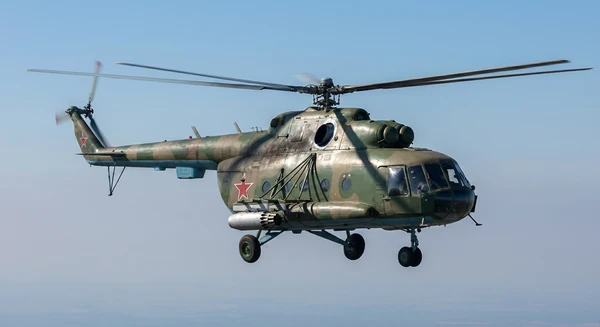
| Crew | 3 (2 pilots, flight engineer) |
| Length | 25.2 m (82.8 ft) |
| Wingspan | 21.3 m (69.8 ft) |
| Height | 5.7 m (18.5 ft) |
| Empty weight | 7,160 kg (15,785 lbs) |
| Max. takeoff weight | 12,000 kg (26,455 lbs) |
| Powerplant | 2 × turboshafts Klimov TV2-117 1,119 kW each |
| Maximum speed | 250 km/h (155 mph) |
| Operational range | 495 km (308 mi) |
| Service ceiling | 4,500 m (14,764 ft) |
-
 Russia
789 +10
Russia
789 +10
-
 Algeria
140
Algeria
140
-
 Ukraine
73
Ukraine
73
-
 Angola
65
Angola
65
-
 Egypt
62
Egypt
62
-
 Pakistan
55
Pakistan
55
-
 Kazakhstan
49
Kazakhstan
49
-
 Syria
49
Syria
49
-
 Peru
48
Peru
48
-
 Iraq
43
Iraq
43
-
 Azerbaijan
41
Azerbaijan
41
-
 North Korea
41
North Korea
41
-
 Uzbekistan
39
Uzbekistan
39
-
 Poland
38
Poland
38
-
 Belarus
36
Belarus
36
-
 Vietnam
30
Vietnam
30
-
 Sri Lanka
27
Sri Lanka
27
-
 Mexico
24
Mexico
24
-
 Sudan
24
Sudan
24
-
 Georgia
17
Georgia
17
-
 Armenia
16
Armenia
16
-
 Myanmar
16
Myanmar
16
-
 Ethiopia
14
Ethiopia
14
-
 Tajikistan
14
Tajikistan
14
-
 Serbia
13
Serbia
13
-
 Yemen
12
Yemen
12
-
 Cambodia
10
Cambodia
10
-
 Nicaragua
10
Nicaragua
10
-
 Thailand
10
Thailand
10
-
 United States
10
United States
10
-
 China
8
China
8
-
 Afghanistan
7
Afghanistan
7
- 🇨🇩 Congo Democratic Republic 6
-
 Congo
6
Congo
6
-
 North Macedonia
6
North Macedonia
6
-
 Chad
6
Chad
6
-
 Hungary
5
Hungary
5
-
 Kyrgyzstan
5
Kyrgyzstan
5
-
 Ivory Coast
4
Ivory Coast
4
-
 Libya
4
Libya
4
-
 Mozambique
4
Mozambique
4
-
 Togo
4
Togo
4
-
 Burkina Faso
3 +2
Burkina Faso
3 +2
- 🇧🇦 Bosnia and Herzegovina 2
- 🇧🇹 Bhutan 2
-
 Cuba
2
Cuba
2
-
 Djibouti
2
Djibouti
2
-
 Namibia
2
Namibia
2
-
 Colombia
1
Colombia
1
-
 Lithuania
1
Lithuania
1
-
 Moldova
1
Moldova
1
Recent Events — Mi-8 Hip
94 events →-
SEP 172026
 Russia
×2
Two Mi-8 helicopters destroyed in the drone strike on Rostov-on-Don Tsentralny that also hit an An-12 and two An-26s.
Destroyed
Russia
×2
Two Mi-8 helicopters destroyed in the drone strike on Rostov-on-Don Tsentralny that also hit an An-12 and two An-26s.
Destroyed
-
SEP 92026
Russia
Destroyed by a drone at the Chemburka helipad outside Anapa; Russian and Ukrainian accounts agree on the loss.
Destroyed
-
SEP 82026
Russia
Destroyed by Ukrainian drones at Taganrog-Central AB; satellite imagery showed the wreck on the apron.
Destroyed
-
SEP 42026
Russia
Damaged on the military apron at Sochi airport in the drone strike that destroyed a Ka-52 and an Mi-28.
Damaged
-
SEP 22026
Russia
Ran out of fuel returning from an election-support flight and put down on a Sakhalin highway, rolling into a ditch; minor injuries.
Damaged
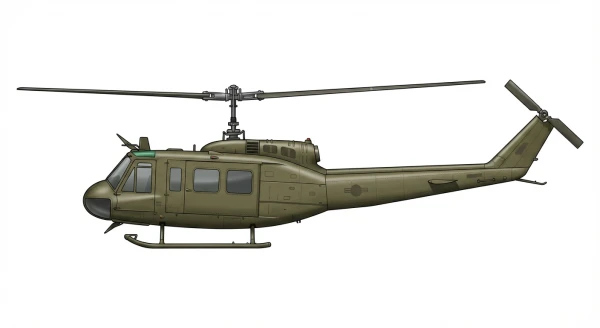
Description
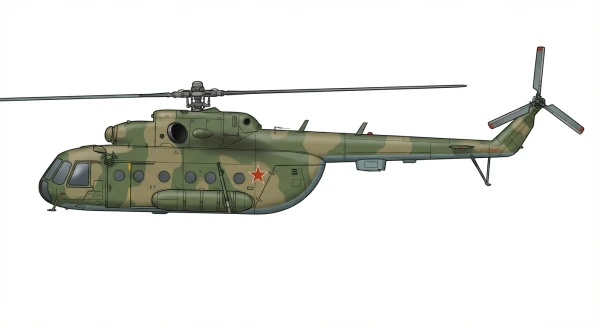
The Mil Mi-8 (NATO reporting name: Hip) is a Soviet-designed medium twin-turbine helicopter originally developed by the Mil Design Bureau and produced by the Kazan Production Plant. Introduced into the Soviet Air Force in 1967, the aircraft operates as a transport, airborne command post, armed gunship, and reconnaissance platform. With over 17,000 units built and used by more than 50 countries, the Mi-8 is the most-produced helicopter in history.
Development
Mikhail Mil proposed a twin-engine turbine replacement for the Mil Mi-4 in 1959. The single-engine V-8 prototype made its maiden flight in June 1961, followed on 2 August 1962 by the V-8A prototype equipped with two Isotov TV2 turboshaft engines, marking the first Soviet helicopter flown with purpose-built gas turbines. Government testing concluded in November 1964, leading to mass production at the Kazan plant in late 1965.
Design
The Mi-8 features a five-blade main rotor introduced in 1963 to reduce vibration and a main cabin designed to accommodate up to 24 passengers or 4,000 kg of cargo. Second-generation models transitioned from a right-side pusher tail rotor to a left-side tractor configuration to increase yaw authority across advancing rotor blades. Power on the Mi-8MT variant is supplied by twin Klimov TV3-117MT turboshaft engines producing 1,454 kW each.
Armament
Armed variants carry up to 4,000 kg of stores across four to six external hardpoints. Munitions include 57 mm S-5 unguided rockets in UV-16-57 or UV-32-57 pods, 250 kg bombs, and anti-tank guided missiles such as the AT-2 Swatter, 9M17 Phalanga, or Malyutka. Defensive machine guns include side-mounted 7.62 mm PK guns or a nose-mounted flexible 12.7 mm KV-4 machine gun.
Operational History
The Soviet Union deployed fleets of Mi-8s during the Soviet–Afghan War and used them to drop over 5,000 metric tons of materials onto the Chernobyl reactor in 1986. The type saw combat during the Iran–Iraq War, the War in Abkhazia, the Yugoslav Wars, and the Russo-Ukrainian War. Export customers and operators include Finland, Georgia, India, Iraq, Ukraine, and Yugoslavia.
Variants
-
Mi-8T: First mass-production utility transport variant capable of carrying 24 troops, unguided rocket pods, and side-mounted machine guns.
-
Mi-8TVK: Direct air support gunship variant fitted with six external hardpoints and a flexible 12.7 mm nose machine gun.
-
Mi-8IV: Airborne command post variant equipped with the Ivolga communication system and tail-boom Doppler radar.
-
Mi-8PP: Airborne electronic warfare platform fitted with the Polye jamming system to disrupt ground-based air defense radars.
-
Mi-8P: Civilian passenger transport variant powered by twin Klimov TV2-117A engines with seating for up to 32 passengers.
Frequently Asked Questions
What type of aircraft is the Mi-8 Hip?
What is the maximum speed of the Mi-8 Hip?
What is the range of the Mi-8 Hip?
When did the Mi-8 Hip first fly?
How many Mi-8 Hip have been built?
Which countries operate the Mi-8 Hip?
How much does a Mi-8 Hip cost?
What is the service ceiling of the Mi-8 Hip?
- AUG 62026 Updated Description updated
- AUG 52026 Updated Powerplant updated in a site-wide editorial pass
- JUL 232026 Updated Sources and cross-references refreshed
- APR 72026 Updated Sources and cross-references refreshed
- JAN 122026 Updated Range updated in a site-wide editorial pass