Netherlands vs Luxembourg
AI Analysis
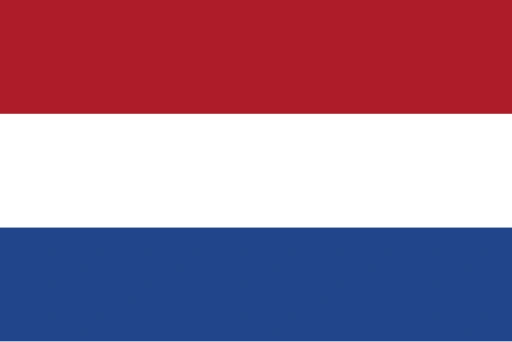
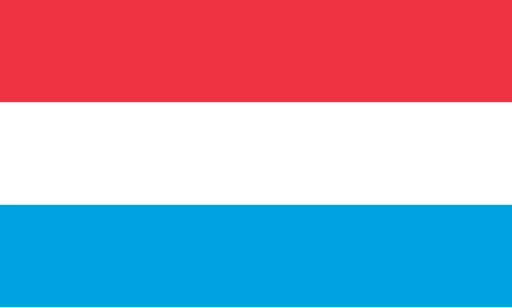
The flags of the Netherlands and Luxembourg are two of the most frequently confused national symbols in Europe due to their nearly identical horizontal tricolor composition of red, white, and blue. While the Dutch flag is the oldest tricolor in continuous use, establishing a standard for republican vexillology, the Luxembourgish flag emerged later, derived independently from heraldic traditions. Despite their visual convergence, the two banners represent distinct historical narratives and sovereign identities.
Design Comparison
Both flags feature three horizontal stripes of equal width arranged red, white, and blue from top to bottom. However, a side-by-side analysis reveals critical differences in color specification and proportion:
-
Color Shade: The primary distinction lies in the blue stripe. The Dutch flag utilizes cobalt blue, a deep, dark shade. Conversely, Luxembourg employs a distinctively lighter sky blue (or azure).
-
Aspect Ratio: The Netherlands adheres to a standard 2:3 ratio, resulting in a shorter, more compact appearance. Luxembourg uses a 3:5 ratio, making the flag appear elongated.
-
Red Shade: While less obvious than the blue, the Dutch red is officially "bright vermilion," whereas the Luxembourgish red is a standard heraldic red derived from its coat of arms.
Historical Context
The Dutch flag originated in the 16th century as the "Prince's Flag" (Prinsenvlag), initially orange, white, and blue. By the mid-17th century, red replaced orange due to the greater visibility and stability of red dye at sea. Queen Wilhelmina formalized the red-white-blue combination in 1937 to settle disputes regarding the orange stripe.
Luxembourg's design traces back to the 13th-century coat of arms of the House of Luxembourg, which featured a red lion on a white and blue striped field. During the Belgian Revolution of the 1830s, patriots adapted these heraldic colors into a tricolor format to assert a distinct Luxembourgish identity. The similarity to the Dutch flag is largely a result of the limited palette of heraldic colors rather than direct imitation. The 1972 law officially adopting the flag specifically mandated the lighter blue to distinguish the Grand Duchy's ensign from that of its northern neighbor.
How to Tell Them Apart
-
Check the Blue: If the bottom stripe is dark navy or cobalt, it is the Netherlands. If it is a bright, light blue, it is Luxembourg.
-
Check the Shape: If the flag looks longer and narrower, it is likely the Luxembourgish 3:5 design.
-
Maritime Context: At sea, Luxembourg civil vessels often fly the "Roude Léiw" (Red Lion) ensign instead of the tricolor to completely avoid identification errors.
Conclusion
While sharing the classic republican tricolor format, these flags diverge in origin and specification. The Netherlands flies a 17th-century naval adaptation of the Prince's Flag with dark cobalt blue, whereas Luxembourg displays a 19th-century heraldic derivation featuring a lighter sky blue to assert its unique sovereignty.