New Zealand vs United Kingdom
AI Analysis
The flags of New Zealand and the United Kingdom share a direct visual lineage, as the latter constitutes a significant portion of the former's design. This relationship stems from the British colonial era, which standardized the use of the Union Jack as a canton on the ensigns of many Commonwealth nations. While the United Kingdom's flag represents the political union of distinct realms through heraldic crosses, New Zealand's ensign adapts this symbol to assert a distinct identity as a Pacific nation with constitutional ties to the British monarchy.
Design Comparison
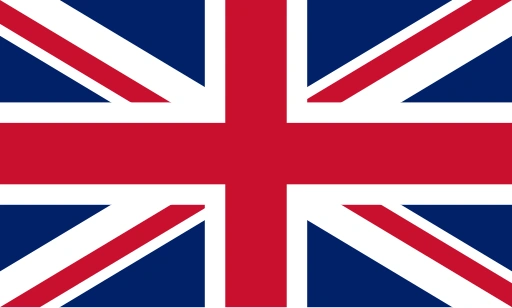
Both flags utilize a palette of red, white, and dark blue within a 1:2 aspect ratio. The United Kingdom's flag, commonly known as the Union Jack, occupies the entire field with a complex superimposition of three heraldic crosses: the central red cross of Saint George, the white saltire of Saint Andrew, and the red saltire of Saint Patrick.
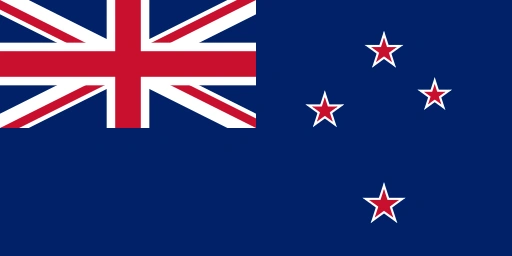
The New Zealand flag modifies this layout by confining the Union Jack to the upper hoist canton (the top left quarter). The remainder of the New Zealand flag consists of a dark blue field "defaced" on the fly side by four five-pointed red stars outlined in white. These stars are arranged to mimic the Southern Cross constellation (Crux), distinguishing the design from the purely geometric composition of the British flag.
Historical Context
The Union Flag's design was finalized in 1801 following the Act of Union between Great Britain and Ireland. This iteration added the red saltire of Saint Patrick to the 1606 design commissioned by King James I, thereby representing the unification of England, Scotland, and Ireland under a single sovereign.
New Zealand's flag emerged a century later from British maritime regulations. The Colonial Naval Defence Act of 1865 required colonial vessels to fly a Blue Ensign with a distinguishing badge. Although a similar version was used for government ships starting in 1867, the current design was officially adopted for national use on March 24, 1902, via the New Zealand Ensign Act. The retention of the Union Jack acknowledges historical links to the United Kingdom, a connection reaffirmed when voters rejected a flag change during the 2015–2016 referendums.
How to Tell Them Apart
-
Field Composition: The United Kingdom's flag consists entirely of intersecting crosses and saltires covering the full banner. New Zealand's flag features a solid blue field with the UK flag occupying only the top left corner.
-
Star Elements: New Zealand's flag is easily identified by the four red stars with white borders on the right side. The UK flag contains no stars.
Conclusion
While the Union Jack represents the convergence of three European realms into one kingdom, the New Zealand flag recontextualizes this symbol to denote Commonwealth heritage. The addition of the Southern Cross anchors the design in the South Pacific, distinguishing the independent nation from the imperial power that originally commissioned the ensign.