Senegal vs Mali
AI Analysis
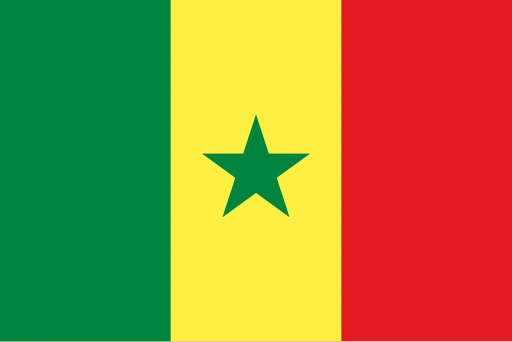
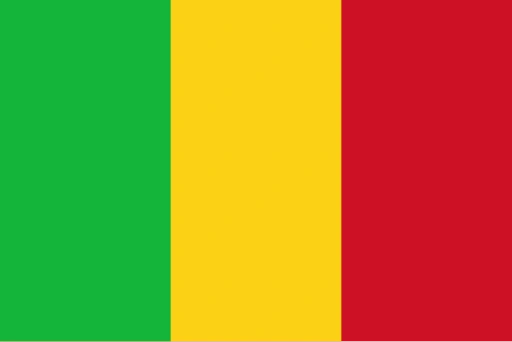
The national flags of Senegal and Mali are frequently confused due to their identical vexillological structure as vertical tricolors utilizing the Pan-African color palette. Both nations emerged from the dissolution of the Mali Federation in 1960, resulting in national ensigns that share a common design lineage and nearly indistinguishable geometric layouts.
Design Comparison
Both flags feature a 2:3 aspect ratio and consist of three equal vertical bands arranged from hoist to fly in the order of green, yellow (or gold), and red. The shared color palette draws directly from the Pan-African movement: green symbolizes hope and agriculture; yellow represents wealth; and red signifies the blood spilled for independence.
The distinguishing feature lies entirely in the central yellow band:
-
Senegal: Features a five-pointed green star centered in the yellow stripe.
-
Mali: Features a plain yellow/gold stripe with no additional charge or emblem.
Historical Context
The near-identical designs stem from the short-lived Mali Federation (1960), which united Senegal and the Sudanese Republic (modern-day Mali). The Federation's flag was a green-yellow-red vertical tricolor featuring a black kanaga (a stylized human figure) in the center.
Following the Federation's collapse, Senegal adopted its current flag on August 20, 1960. The government replaced the kanaga with a green star to affirm the nation's spiritual identity and openness to the world. The Sudanese Republic, renaming itself the Republic of Mali, initially retained the Federation flag. However, on March 1, 1961, Mali officially removed the kanaga to comply with Islamic aniconism—the religious objection to representing living beings in art—and to establish a distinct national identity separate from the defunct federation.
How to Tell Them Apart
Because the stripe orientation and color order (Green-Yellow-Red) are identical, identification relies on the central element.
-
Look for the Star: If the flag contains a green star in the center, it is Senegal.
-
Look for the Plain Stripe: If the central yellow band is empty, it is Mali.
-
Mnemonic: "S" stands for both Senegal and Star.
Conclusion
While Senegal and Mali share the standard Pan-African vertical tricolor due to their entangled political history within the Mali Federation, they are distinguished by their approach to central iconography. Senegal utilizes a green star to symbolize unity and secularism, while Mali employs a strictly triband design to respect religious traditions and emphasize the nation’s natural resources.