Armenia Military Forces 🇦🇲
Military Strength Overview
| 🛩️ Air Force | 71 active aircraft |
| 🪖 Active Troops | 44,800 personnels |
| ⛑️ Reserve Troops | 210,000 personnels |
| 👮♀️ Paramilitary | 4,300 personnels |
| 🎖️ Military ranks | 37 ranks listed |
Global Military Index
| 🪖 Manpower (15%) | 74.0 | Active, reserve & paramilitary: 151090 effective |
| 🛡️ Ground Firepower (20%) | 45.4 | Main battle tanks: 109 |
| ⚓ Naval Power (20%) | 0.0 | Weighted by ship type: carriers, submarines, destroyers... |
| ✈️ Air Power (25%) | 45.9 | Weighted by aircraft type: combat, bombers, helicopters... |
| ☢️ Nuclear Deterrent (10%) | 0.0 | No declared nuclear capability |
| 💰 Defense Budget (10%) | 48.5 | $1418M annual military spending |
Methodology: Log-scaled composite index using SIPRI, IISS, and GMNET data. Each pillar is normalized to 0-100, then weighted by strategic importance.
Geography
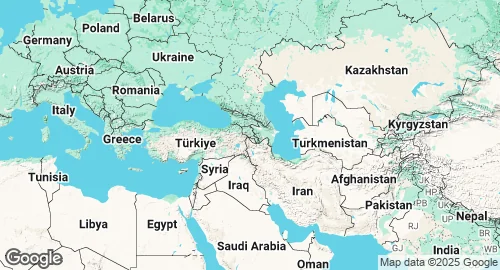
| Capital | Yerevan |
| Land Area | 28,342 km² |
| Coastline Length | 0 km |
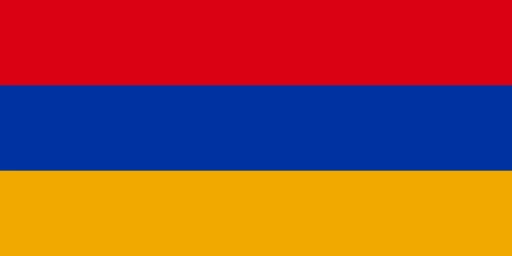
National Flag
Defense Statistics & Key Metrics
| Population | 3.0 million (2023) |
| GDP | $24.1 billion (2023) |
| GDP per capita | $8053 (2023) |
| Military Budget | $1.4 billion (2024) |
| Share of GDP in Milex | 5.5% (2024) |
| Share of Govt Expenditures | 18.3% (2024) |
| Military spends per capita | $475 (2024) |
| Inflation Rate | 0.27% (2024) |
| Military Personnel | 47,000 (2020) |
Armenian Military Budget History
Population and Military Personnel Trends
GDP and Inflation Rate Trends
Strategic Overview in 2026
Strategic Position
Armenia’s defense posture is defined by the requirement to defend its sovereign territory following the 2023 conflict in Nagorno-Karabakh and subsequent border escalations. The country is currently undergoing a systemic transition in its security architecture. As of early 2026, Armenia has frozen its participation in the Russian-led Collective Security Treaty Organization (CSTO) at all levels, citing the organization’s failure to provide military assistance during border incursions.
Strategic priorities emphasize the diversification of defense partners to reduce reliance on a single security guarantor. Armenia has established comprehensive defense cooperation programs with France and India. Cooperation with the European Union has also expanded, including the presence of the EU Partnership Mission (EUMA) and the first-ever allocation of support from the European Peace Facility in 2025. Relations with Azerbaijan remain the primary security concern, characterized by ongoing negotiations for a peace treaty and a border demarcation process.
Military Forces
The Armed Forces of Armenia consist of the Ground Forces and the Air Force and Air Defense. Personnel numbers include approximately 45,000 active-duty troops and 210,000 reservists. Paramilitary forces, primarily consisting of the Border Guard Troops under the National Security Service, number around 5,000.
The military is transitioning from Soviet-era equipment to more modern platforms sourced from Western and Indian manufacturers.
- Ground Forces: Main battle tanks include T-72 and limited quantities of T-90 variants. Armored infantry is supported by BMP-1, BMP-2, and BTR-80 vehicles. Recently acquired mobility platforms include French-manufactured Bastion armored personnel carriers and Tata-manufactured 4x4 utility trucks from India.
- Artillery: This branch is undergoing a transition to 155mm NATO-standard systems. Inventory includes French Caesar self-propelled howitzers and Indian ATAGS towed artillery. Multiple Launch Rocket System (MLRS) capabilities have been augmented with Indian Pinaka systems.
- Air Force and Air Defense: The air fleet operates Su-30SM multirole fighters and Su-25 ground-attack aircraft. Air defense is organized into a layered architecture. Legacy systems include S-300 and Tor-M2KM batteries. New integration includes French GM200 mobile radars and Indian Akash surface-to-air missile systems, supplemented by Mistral short-range missiles.
- Specialized Capabilities: Specialized training focuses on mountain warfare and fortification, often conducted in coordination with French advisory teams. Domestic efforts also prioritize the integration of electronic warfare and counter-unmanned aerial vehicle (C-UAV) systems.
Defense Industry
Armenia maintains a domestic defense industry that has seen a sharp increase in state investment. In 2025, government contracts with domestic firms reached approximately 170 billion drams, a substantial increase from previous years. Domestic manufacturing focuses on:
- Unmanned Systems: Production of loitering munitions, tactical reconnaissance drones, and multi-rotor UAVs.
- Electronics and Optics: Development of thermal imaging sensors, laser rangefinders, and electronic warfare suites designed to disrupt low-altitude aerial threats.
- Munitions: Efforts to achieve self-sufficiency in small arms ammunition and mortar shells to support prolonged defensive operations.
While the domestic industry is growing, the military remains reliant on imports for heavy armor, advanced combat aircraft, and long-range air defense systems.
Strategic Trends
Defense spending reached approximately 6% of GDP in 2025, reflecting the high priority placed on military modernization. While the 2026 budget indicates a stabilization of absolute spending levels, the focus remains on the "Armed Forces Transformation Concept," which aims to complete a full transition to a professional NCO corps and reduce the reliance on short-term conscripts.
Procurement priorities are centered on long-range precision fires, layered air defense, and the digitalization of command and control. Strategic shifts include a move toward Western-style military education and doctrine, with increased cadet exchanges and training programs hosted in France and the United States. Challenges include the need to integrate diverse equipment from different manufacturing origins and the persistent resource gap relative to regional rivals.
Frequently Asked Questions
How large is Armenia's military?
What is Armenia's defense budget?
How does Armenia rank militarily in the world?
Does Armenia have nuclear weapons?
How many aircraft does Armenia's air force have?
How many tanks does Armenia have?
What percentage of GDP does Armenia spend on defense?
What is Armenia's military personnel per capita?
Does Armenia have paramilitary forces?
Military Expenditure: SIPRI Milex. Suggest a change