Comoros Military Forces 🇰🇲
Military Strength Overview
Geography
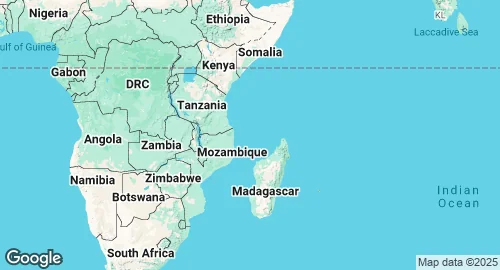
| Capital | Moroni |
| Land Area | 1,862 km² |
| Coastline Length | 340 km |
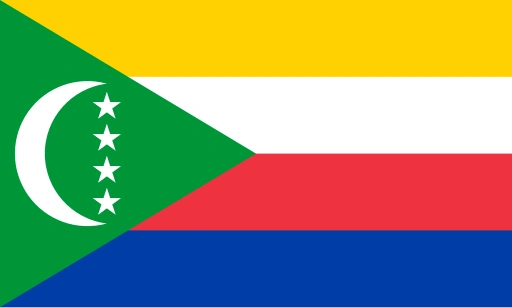
National Flag
Defense Statistics & Key Metrics
| Population | 834188 (2022) |
| GDP | $1.2 billion (2022) |
| GDP per capita | $1489 (2022) |
| Inflation Rate | -4.29% (2013) |
Population and Military Personnel Trends
GDP and Inflation Rate Trends
Strategic Overview in 2026
Strategic Position
The Union of the Comoros is situated at the northern end of the Mozambique Channel, a transit corridor for global maritime trade and energy shipments. The primary security concerns of the Comorian state center on maritime domain awareness, illegal, unreported, and unregulated (IUU) fishing, human trafficking, and the persistent territorial dispute with France over the island of Mayotte.
The defense doctrine of Comoros is oriented toward internal stability and the protection of its Exclusive Economic Zone (EEZ). The Comorian military, known as the National Development Army (Armée Nationale de Développement, AND), focuses on civilian assistance, infrastructure development, and coastal surveillance.
Comoros maintains several international defense relationships: - France: A bilateral defense agreement provides for technical military cooperation, training, and logistical support. France remains the primary security partner, despite the diplomatic friction concerning Mayotte’s status. - Regional Organizations: Comoros is a member of the African Union (AU), the Southern African Development Community (SADC), and the Indian Ocean Commission (IOC). It participates in the Regional Maritime Information Fusion Centre (RMIFC) to coordinate anti-piracy and maritime security efforts. - China and Turkey: Bilateral cooperation with these nations has increased, involving the provision of equipment, infrastructure projects, and military training programs.
Military Forces
The Armée Nationale de Développement (AND) is the unified command structure for the Comorian security forces, reporting to the Ministry of Defense. The AND is divided into four main components: the Land Force, the Coast Guard, the National Gendarmerie, and the Comorian National Police (which performs paramilitary functions). Personnel levels are approximately 1,100 to 1,500 active-duty members across all branches.
Ground Force
The Ground Force is an infantry-centric organization primarily tasked with internal security and disaster response. It operates as a light mobile force. - Equipment: The inventory consists of small arms, rocket-propelled grenades, and light tactical vehicles. It utilizes unarmored transport trucks and technicals for mobility.
Coast Guard
The Coast Guard is the most active branch due to the archipelago’s geography and the requirements of the Maritime Security (MASE) program. Its mission includes counter-piracy, search and rescue, and fisheries protection. - Equipment: The fleet consists of patrol boats and rigid-hull inflatable boats (RHIBs). Recent acquisitions include patrol vessels provided by international partners to enhance surveillance within the Mozambique Channel.
Air Component
Comoros maintains a minimal air capability integrated into the AND, primarily used for transport and reconnaissance. - Equipment: The inventory includes light transport aircraft such as the Let L-410 Turbolet and Cessna models. It does not operate combat aircraft or attack helicopters.
National Gendarmerie
The Gendarmerie serves as a paramilitary force with jurisdiction over rural areas and borders. It is modeled on the French Gendarmerie and maintains units specialized in maritime policing and public order.
Strategic Trends
The Comorian defense posture is characterized by a shift toward maritime professionalization and regional integration. A primary modernization priority is the enhancement of the Coast Guard’s persistent presence in the EEZ to combat maritime crime and unauthorized migration toward Mayotte.
Defense spending typically remains below 1% of GDP, necessitating heavy reliance on foreign military financing and equipment donations. Procurement priorities focus on coastal radar systems, communication hardware, and the maintenance of the existing patrol fleet.
In 2025 and 2026, the AND has prioritized training exercises with regional partners to improve interoperability within the SADC Standby Force and the East African Standby Force (EASF). These exercises focus on counter-insurgency and maritime interdiction. Constraints facing the military include limited budgetary resources, a lack of heavy maintenance facilities for naval and air assets, and the challenge of coordinating security across three geographically separated islands with a small personnel base. Future force structure shifts are expected to emphasize modularity and the expansion of the Gendarmerie's role in counter-terrorism and border control.
Frequently Asked Questions
Does Comoros have nuclear weapons?
Military Expenditure: SIPRI Milex. Suggest a change