Costa Rica Military Forces 🇨🇷
Military Strength Overview
| 👮♀️ Paramilitary | 9,800 personnels |
Global Military Index
| 🪖 Manpower (15%) | 49.5 | Active, reserve & paramilitary: 2940 effective |
| 🛡️ Ground Firepower (20%) | 0.0 | Main battle tanks: 0 |
| ⚓ Naval Power (20%) | 0.0 | Weighted by ship type: carriers, submarines, destroyers... |
| ✈️ Air Power (25%) | 0.0 | Weighted by aircraft type: combat, bombers, helicopters... |
| ☢️ Nuclear Deterrent (10%) | 0.0 | No declared nuclear capability |
| 💰 Defense Budget (10%) | 0.0 | Data unavailable |
Methodology: Log-scaled composite index using SIPRI, IISS, and GMNET data. Each pillar is normalized to 0-100, then weighted by strategic importance.
Geography
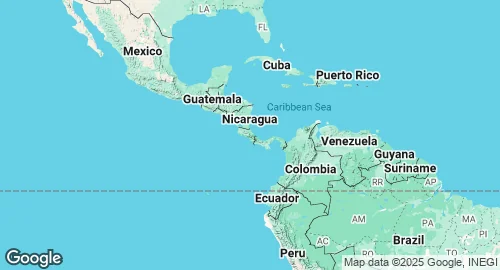
| Capital | San José |
| Land Area | 51,060 km² |
| Coastline Length | 1,290 km |
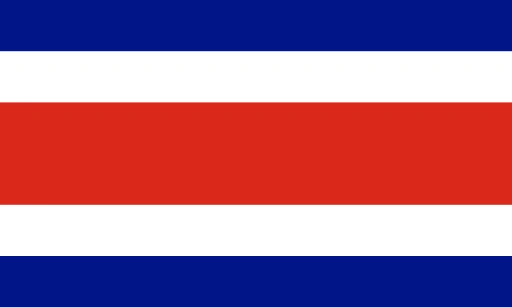
National Flag
Defense Statistics & Key Metrics
| Population | 5.1 million (2023) |
| GDP | $86.5 billion (2023) |
| GDP per capita | $16942 (2023) |
| Inflation Rate | -0.41% (2024) |
| Military Personnel | 10,000 (2020) |
Costa Rican Military Budget History
Population and Military Personnel Trends
GDP and Inflation Rate Trends
Strategic Overview in 2026
Strategic Position
Costa Rica abolished its standing military in 1948, a status formalized in Article 12 of the 1949 Constitution. National security is defined by a doctrine of unarmed neutrality and reliance on international legal and diplomatic frameworks. The state is a member of the Inter-American Treaty of Reciprocal Assistance (Rio Treaty) and the Organization of American States (OAS).
Security priorities are centered on internal stability, counter-narcotics, and border integrity. Primary security concerns include the transit of illicit narcotics from South America to North American markets and the activities of transnational organized crime groups. Border security remains a focus due to periodic sovereignty disputes with Nicaragua regarding the San Juan River and maritime boundaries. Bilateral security cooperation is conducted primarily with the United States under the 1999 Maritime Counter-Drug Cooperation Agreement, which facilitates joint patrols and maritime interdiction.
Military Forces
National defense and internal security are consolidated under the Ministry of Public Security through the Public Force (Fuerza Pública). The total active personnel for the combined security forces is approximately 14,000 to 18,000. These forces are civilian-led and do not maintain a traditional military rank or command hierarchy.
Ground Force The ground component performs gendarmerie-style duties, including border patrol, counter-insurgency, and urban law enforcement. Specialized units include the Special Support Unit (UEA) for tactical response and the Special Intervention Unit (UEI). The UEI is a 70-member commando force under the Intelligence and Security Directorate (DIS) that focuses on counter-terrorism and high-value protection. Ground equipment consists of small arms, including M16 and M4 rifles, IWI Tavor assault rifles, and Heckler & Koch MP5 submachine guns. Mobile capability is provided by light tactical vehicles and motorcycles.
Air Vigilance Service (SVA) The SVA provides air support for police operations, medical evacuations, and border surveillance. The inventory consists of utility and transport aircraft, including Cessna 206 and 210 light aircraft, Beechcraft King Air turboprops, and Piper PA-31T and PA-34 utility aircraft. Rotary-wing assets include MD 500, MD 600, and Bell 212/412 helicopters. The SVA operates no fixed-wing combat aircraft or armed strike platforms.
National Coast Guard Service (SNG) The SNG is responsible for maritime law enforcement and search and rescue within the Exclusive Economic Zone. The fleet consists of patrol boats and coastal interceptors. Key vessels include Island-class and Marine Protector-class cutters transferred from the United States, alongside Damen Stan Patrol vessels. The SNG does not operate major surface combatants such as frigates or submarines.
Strategic Trends
The security budget for 2026 is approximately $630 million. This allocation reflects an increase in spending intended to address elevated homicide rates and the expansion of transnational criminal networks. Modernization efforts focus on expanding personnel and enhancing technical surveillance. The government has authorized the recruitment of 1,130 new police officers to be integrated by 2026.
Procurement priorities are centered on radar systems and drone technology to improve monitoring of coastal waters and the northern border. In late 2025, the Legislative Assembly approved the entry of 195 United States Coast Guard vessels into Costa Rican ports throughout 2026. This authorization supports joint maritime interdiction efforts to compensate for domestic capacity constraints.
A primary constraint facing the security apparatus is the professionalization of organized crime, characterized by the domestic assembly of firearms using components smuggled through legal commerce. Future force structure shifts are expected to focus on intelligence-led policing and the integration of regional data-sharing networks to mitigate the influence of Mexican and Colombian drug cartels.
Frequently Asked Questions
How does Costa Rica rank militarily in the world?
Does Costa Rica have nuclear weapons?
Does Costa Rica have paramilitary forces?
Military Expenditure: SIPRI Milex. Suggest a change