Dominica Military Forces 🇩🇲
Military Strength Overview
Geography
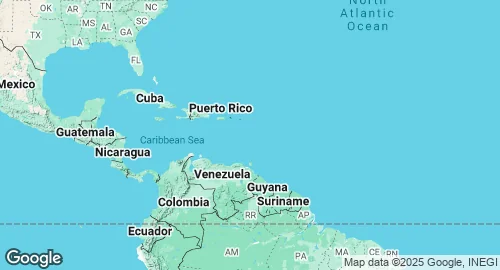
| Capital | Roseau |
| Land Area | 751 km² |
| Coastline Length | 148 km |
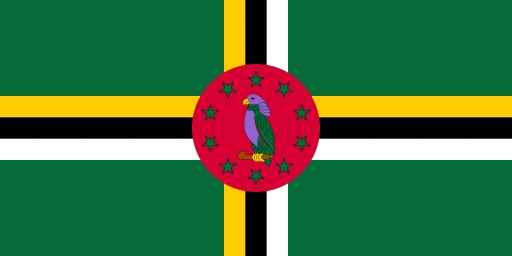
National Flag
Defense Statistics & Key Metrics
| Population | 66826 (2022) |
| GDP | $607.2 million (2022) |
| GDP per capita | $9086 (2022) |
| Inflation Rate | 7.78% (2022) |
Population and Military Personnel Trends
GDP and Inflation Rate Trends
Strategic Overview in 2026
Strategic Position
The Commonwealth of Dominica maintains a defense posture centered on collective security and regional cooperation. Following the abolition of the Dominica Defence Force in 1981 in response to an attempted coup, the state has relied on its police force for internal security and international alliances for external defense.
Dominica is a founding member of the Regional Security System (RSS), a collective defense organization comprising eight Eastern Caribbean states. Under the 1996 Treaty Establishing the Regional Security System, member states are committed to mutual assistance in response to external aggression, national emergencies, and internal security threats. The RSS serves as the primary mechanism for Dominica’s defense, providing access to a regional headquarters in Barbados and standby forces from neighboring states.
Geopolitically, Dominica’s primary security concerns involve the interdiction of maritime narcotics trafficking, the illicit flow of firearms, and responding to extreme weather events. The island’s location between the French overseas departments of Guadeloupe and Martinique necessitates close cooperation with French security forces for maritime border control and search and rescue operations. Additionally, Dominica participates in the Caribbean Basin Security Initiative (CBSI), a partnership with the United States aimed at improving maritime security and countering transnational organized crime.
Defense doctrine emphasizes civilian-led internal security with a paramilitary capability for high-risk operations. The state maintains membership in the Caribbean Community (CARICOM) and the Organisation of Eastern Caribbean States (OECS), aligning its security policies with regional integration objectives.
Military Forces
Dominica does not maintain a standing military. National security and defense functions are executed by the Commonwealth of Dominica Police Force (CDPF), which operates under the Ministry of National Security and Legal Affairs. The CDPF acts as the national defense force during periods of war or stated national emergencies.
The personnel strength of the CDPF is approximately 450 to 500 established officers. The force is headquartered in Roseau and is organized into specialized branches that provide military-style capabilities:
- Special Service Unit (SSU): Established in 1983, this paramilitary branch is the primary tactical response unit. It is trained for counter-narcotics operations, riot control, and internal security missions that exceed the capacity of regular police units. SSU personnel receive training often facilitated by regional partners and international instructors from the United States and the United Kingdom.
- Marine Unit (Coast Guard): This branch is responsible for maritime law enforcement, fisheries protection, and search and rescue within the territorial waters and Exclusive Economic Zone (EEZ). The unit operates a fleet of patrol vessels, including nearshore interceptors and utility craft. Key assets include SAFE Boats and Metal Shark patrol boats, which were procured or upgraded through international security assistance programs.
- Special Branch: This unit focuses on national intelligence and protective services for government officials.
In the event of a large-scale security crisis, the RSS can deploy the Regional Security System Incidents Response Team (IRT) or the RSS Contingent, which includes personnel from the standing military forces of other member states, such as Barbados or Antigua and Barbuda.
Strategic Trends
Defense and security priorities for 2025 and 2026 are focused on the suppression of illegal firearms trafficking and the enhancement of maritime border surveillance. In late 2025, the government requested the deployment of RSS personnel to Dominica to assist the CDPF in operations targeting illegal firearms and gang-related activities. This move highlights the continued reliance on regional intervention mechanisms to address internal security spikes.
The 2025/2026 national budget allocates approximately $69.2 million to the Ministry of National Security and Legal Affairs, representing roughly 10.2% of the total recurrent expenditure. The majority of these funds are directed toward personnel costs, infrastructure maintenance, and the procurement of specialized equipment. Modernization efforts for 2026 include the arrival of new emergency response vehicles, specifically fire engines and ambulances, to bolster the capacity of the Fire and Ambulance Services.
Modernization of the Marine Unit remains a priority, with ongoing support from the United States Southern Command (SOUTHCOM) for vessel maintenance and technical training. The 2026 strategic agenda for the RSS, which Dominica supports, emphasizes improved intelligence sharing and the standardization of training across member states to counter evolving threats from transnational criminal organizations. Future force development is constrained by fiscal limitations and the absence of a dedicated military recruitment pipeline, reinforcing the state's dependence on the CDPF’s dual-role officers and regional collective defense treaties.
Frequently Asked Questions
Does Dominica have nuclear weapons?
Military Expenditure: SIPRI Milex. Suggest a change