Fiji Military Forces 🇫🇯
Military Strength Overview
| 🪖 Active Troops | 3,500 personnels |
| ⛑️ Reserve Troops | 6,000 personnels |
Global Military Index
| 🪖 Manpower (15%) | 54.5 | Active, reserve & paramilitary: 6500 effective |
| 🛡️ Ground Firepower (20%) | 0.0 | Main battle tanks: 0 |
| ⚓ Naval Power (20%) | 0.0 | Weighted by ship type: carriers, submarines, destroyers... |
| ✈️ Air Power (25%) | 0.0 | Weighted by aircraft type: combat, bombers, helicopters... |
| ☢️ Nuclear Deterrent (10%) | 0.0 | No declared nuclear capability |
| 💰 Defense Budget (10%) | 29.2 | $78M annual military spending |
Methodology: Log-scaled composite index using SIPRI, IISS, and GMNET data. Each pillar is normalized to 0-100, then weighted by strategic importance.
Geography
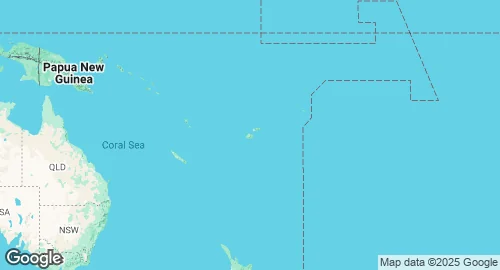
| Capital | Suva |
| Land Area | 18,274 km² |
| Coastline Length | 1,129 km |
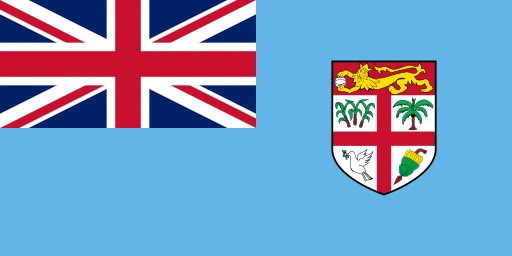
National Flag
Defense Statistics & Key Metrics
| Population | 924145 (2023) |
| GDP | $5.4 billion (2023) |
| GDP per capita | $5889 (2023) |
| Military Budget | $77.6 million (2024) |
| Share of GDP in Milex | 1.3% (2024) |
| Share of Govt Expenditures | 4.3% (2024) |
| Military spends per capita | $84 (2024) |
| Inflation Rate | 2.15% (2023) |
| Military Personnel | 4,000 (2020) |
Fijian Military Budget History
Population and Military Personnel Trends
GDP and Inflation Rate Trends
Strategic Overview in 2026
Strategic Position
Fiji occupies a central geographic position in the South Pacific, influencing its role as a regional hub for security coordination and maritime surveillance. The primary defense doctrine, articulated in the National Security Strategy 2025–2029, emphasizes "human security" and a "Friends to All, Enemies to None" policy. Strategic priorities focus on maritime domain awareness, climate change resilience, and the mitigation of transnational crime, specifically narcotics trafficking.
Fiji maintains its most integrated defense relationships with Australia and New Zealand. Under the Vuvale Partnership, Fiji and Australia entered formal negotiations in late 2025 to elevate their security cooperation to a bilateral treaty, expected to be finalized in 2026. Bilateral cooperation with New Zealand includes the Statement of Partnership, which focuses on maritime security and humanitarian assistance and disaster relief (HA/DR). Fiji is a member of the Pacific Islands Forum (PIF) and advocates for the "Ocean of Peace" concept, a regional initiative intended to reduce militarization and geopolitical competition in the Pacific.
While maintaining traditional ties with Western partners, Fiji continues to engage with China through 2025 and 2026, marking 50 years of diplomatic relations. This engagement includes military-to-military exchanges and police training, though the Fijian government has officially rejected the establishment of any permanent foreign military bases on its territory.
Military Forces
The Republic of Fiji Military Forces (RFMF) is a unified command structure consisting of the Fiji Land Force and the Fiji Navy. The force is led by the Commander of the RFMF, a two-star rank reporting to the Ministry of Home Affairs and Immigration. Total personnel include approximately 3,500 active-duty members and 6,000 reserves.
Fiji Land Force (Army) The Land Force is organized into the Fiji Infantry Regiment and the Engineer Regiment. The infantry component comprises six battalions. Traditionally, two battalions are maintained at high readiness for international deployment, while the remaining units focus on domestic security and HA/DR. - Peacekeeping: International operations are a primary function of the RFMF. Fiji concluded its long-standing deployment to the United Nations Assistance Mission in Iraq (UNAMI) in December 2025. Current deployments include the Multinational Force and Observers (MFO) in the Sinai Peninsula and various UN missions in the Middle East and Africa. - Equipment: The army utilizes small arms, including K2 and M16 rifles, along with mortars and light transport vehicles. It does not operate main battle tanks or tracked armored fighting vehicles.
Fiji Navy The Fiji Navy is responsible for surveillance and enforcement within the nation’s 1.3 million square kilometer Exclusive Economic Zone (EEZ). - Fleet: The fleet consists of patrol boats and hydrographic survey vessels. In February 2025, the Navy commissioned the RFNS Timo, a Guardian-class patrol boat provided by Australia. The fleet also includes the hydrographic vessel RFNS Volasiga. - Technology: In 2025, the Navy integrated Bluebottle Uncrewed Surface Vessels (USVs) for autonomous maritime surveillance to monitor illegal, unreported, and unregulated (IUU) fishing and drug smuggling.
Specialized Capabilities The Blackrock Peacekeeping and HA/DR Camp serves as a regional training hub. In 2026, the RFMF plans to seek further United Nations accreditation for training programs delivered at this facility.
Strategic Trends
The Fiji defense budget for the 2025–2026 fiscal year is approximately $186 million FJD, representing roughly 1.3% of GDP. Peacekeeping operations account for nearly 30% of this expenditure.
Modernization and Personnel Shifts Current modernization efforts prioritize maritime technology over heavy land-based platforms. A 2026 initiative involves the strategic redeployment of personnel returning from overseas missions to assist the Fiji Police Force in addressing domestic crime. Furthermore, starting in 2026, Fiji will embed an RFMF company with the Australian Army’s 7th Brigade for extended rotational deployments to enhance interoperability.
Constraints The military faces budgetary limitations and a heavy reliance on foreign aid for equipment procurement. Modernization is largely driven by bilateral donations from Australia, New Zealand, and South Korea. Strategic planning is currently focused on professionalizing the officer corps and ensuring military alignment with democratic governance frameworks following the National Security and Defence Review.
Frequently Asked Questions
How large is Fiji's military?
What is Fiji's defense budget?
How does Fiji rank militarily in the world?
Does Fiji have nuclear weapons?
What percentage of GDP does Fiji spend on defense?
What is Fiji's military personnel per capita?
Military Expenditure: SIPRI Milex. Suggest a change