Faroe Islands Military Forces 🇫🇴
Military Strength Overview
Geography
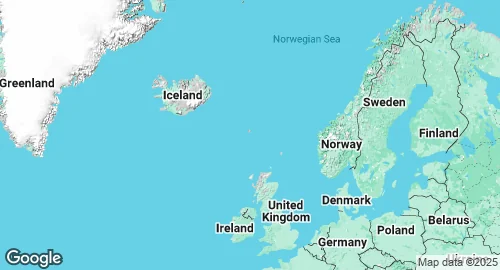
| Capital | Tórshavn |
| Land Area | 1,393 km² |
| Coastline Length | 1,117 km |
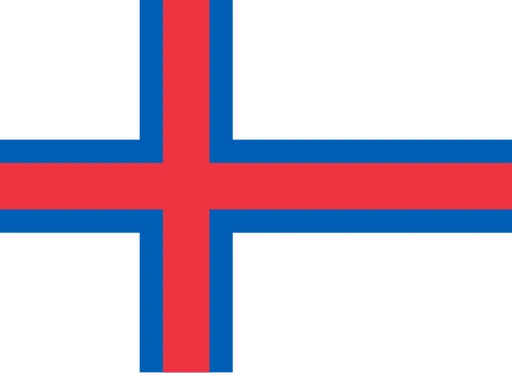
National Flag
Defense Statistics & Key Metrics
| Population | 53315 (2021) |
| GDP | $3.7 billion (2021) |
| GDP per capita | $68737 (2021) |
Population and Military Personnel Trends
GDP and Inflation Rate Trends
Strategic Overview in 2026
Strategic Position
The Faroe Islands occupy a central position in the Greenland-Iceland-United Kingdom (GIUK) Gap, a maritime chokepoint through which Russian Northern Fleet assets must pass to access the North Atlantic. This location makes the archipelago a focal point for North Atlantic Treaty Organization (NATO) maritime domain awareness and anti-submarine warfare (ASW) operations.
As a self-governing territory within the Kingdom of Denmark, the Faroe Islands are integrated into NATO via Danish membership. While the Faroese government has autonomous control over most domestic affairs, defense remains a competence of the Danish Ministry of Defence. However, recent bilateral agreements between Tórshavn and Copenhagen have granted the Faroese government a greater role in foreign and security policy decisions affecting the islands.
Primary security concerns center on the protection of undersea fiber-optic cables and the monitoring of increased Russian naval and aerial activity in the High North. The defense doctrine focuses on surveillance, sovereignty enforcement, and search and rescue (SAR) operations. In 2025 and 2026, the strategic priority has shifted toward enhancing "persistent presence" in the region, reflecting broader NATO efforts to secure the Arctic and North Atlantic corridors.
Military Forces
The Faroe Islands do not maintain an independent standing military. National defense is provided by the Danish Defence (Forsvaret), specifically through the Joint Arctic Command (Arktisk Kommando), which is headquartered in Nuuk, Greenland, but maintains a liaison and operational presence in Tórshavn.
Personnel and Command Structure There are no permanent Faroese-specific military units. Danish military personnel are stationed on the islands on a rotational or permanent basis to man surveillance installations and support maritime operations. The Faroese population is not subject to conscription, though citizens may volunteer for the Danish Armed Forces.
Naval and Coast Guard Assets The Danish Navy maintains a presence in Faroese waters using Arctic-capable vessels. These assets typically include: - Knud Rasmussen-class patrol vessels: Equipped for ice-reinforced operations and sovereignty patrol. - Thetis-class frigates: Multi-role vessels used for fisheries inspection and maritime surveillance. - MH-60R Seahawk helicopters: Operated from Danish naval vessels for SAR and surface surveillance.
Domestic maritime security and fisheries enforcement are conducted by the Faroese Coast Guard (Vørn). This civilian organization operates offshore patrol vessels, such as the Brimil and Tjaldur, and maintains a fleet of SAR helicopters, primarily the Airbus H175. While civilian, Vørn coordinates closely with the Danish Arctic Command during maritime emergencies or security incidents.
Air and Radar Surveillance Air defense and surveillance are managed through the Sornfelli radar station. After being dormant for several years, the station has undergone modernization to integrate its data into NATO’s Integrated Air and Missile Defence System (NATINAMDS). The station provides long-range air surveillance coverage over the North Atlantic, filling a gap in the alliance’s northern flank.
Strategic Trends
The current defense posture is defined by the re-militarization of the North Atlantic. Under the Danish Defense Agreement 2024–2033, significant funding is allocated toward "Arctic and North Atlantic surveillance," which directly impacts Faroese infrastructure.
Modernization and Infrastructure The primary procurement priority is the technical upgrade of the Sornfelli radar installation. Operational trials in 2025 confirmed the station's ability to track high-altitude and long-range aerial targets, providing the Faroese government and NATO with a real-time air picture. Additionally, there is an ongoing initiative to improve subsurface surveillance capabilities. This involves the deployment of acoustic sensors and unmanned underwater vehicles (UUVs) to monitor maritime traffic and protect subsea telecommunications infrastructure from sabotage.
Budgetary and Political Trends While the Faroe Islands do not have a dedicated defense budget, the Danish defense budget—which funds activities in the Faroe Islands—is trending toward 2% of GDP in alignment with NATO targets. Locally, the Faroese government has increased funding for the Coast Guard (Vørn) to expand its maritime domain awareness capabilities.
Constraints The primary constraint facing military activity is the internal political debate regarding the level of military integration. While the re-establishment of the Sornfelli radar was agreed upon, some Faroese political factions express concern over the islands becoming a target in a potential conflict. Consequently, the defense posture emphasizes "low tension" through defensive surveillance rather than the permanent basing of offensive combat units.
Frequently Asked Questions
Does Faroe Islands have nuclear weapons?
Military Expenditure: SIPRI Milex. Suggest a change