Haiti Military Forces 🇭🇹
Military Strength Overview
| 🪖 Active Troops | 700 personnels |
| 👮♀️ Paramilitary | 50 personnels |
Global Military Index
| 🪖 Manpower (15%) | 40.8 | Active, reserve & paramilitary: 715 effective |
| 🛡️ Ground Firepower (20%) | 0.0 | Main battle tanks: 0 |
| ⚓ Naval Power (20%) | 0.0 | Weighted by ship type: carriers, submarines, destroyers... |
| ✈️ Air Power (25%) | 0.0 | Weighted by aircraft type: combat, bombers, helicopters... |
| ☢️ Nuclear Deterrent (10%) | 0.0 | No declared nuclear capability |
| 💰 Defense Budget (10%) | 20.3 | $20M annual military spending |
Methodology: Log-scaled composite index using SIPRI, IISS, and GMNET data. Each pillar is normalized to 0-100, then weighted by strategic importance.
Geography
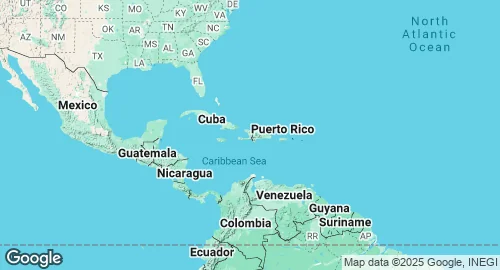
| Capital | Port-au-Prince |
| Land Area | 27,560 km² |
| Coastline Length | 1,771 km |
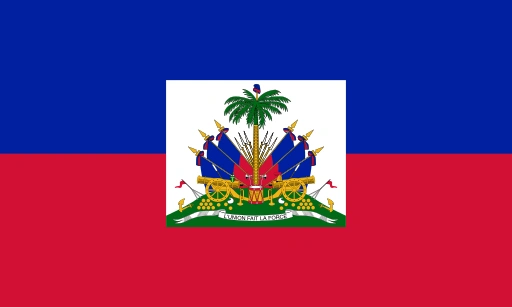
National Flag
Defense Statistics & Key Metrics
| Population | 11.6 million (2023) |
| GDP | $19.9 billion (2023) |
| GDP per capita | $1706 (2023) |
| Military Budget | $19.8 million (2024) |
| Share of GDP in Milex | 0.1% (2024) |
| Share of Govt Expenditures | 1.6% (2024) |
| Military spends per capita | $2 (2024) |
| Inflation Rate | 36.81% (2023) |
| Military Personnel | 1,000 (2020) |
Haitian Military Budget History
Population and Military Personnel Trends
GDP and Inflation Rate Trends
Strategic Overview in 2026
Strategic Position
Haiti’s defense posture is primarily defined by internal security challenges and the collapse of state authority in urban centers. The geopolitical context is dominated by an ongoing conflict with a coalition of armed gangs, known as Viv Ansanm, which control approximately 90% of the capital, Port-au-Prince. Consequently, defense doctrine has shifted from traditional territorial defense to internal stabilization and counter-insurgency operations.
National security is largely supported by international mandates. In September 2025, the United Nations Security Council adopted Resolution 2793, transitioning the Multinational Security Support (MSS) mission into a formal "Gang Suppression Force" (GSF). This force operates under a 12-month mandate to conduct intelligence-led operations alongside Haitian authorities. Haiti maintains membership in the Organization of American States (OAS) and CARICOM, the latter of which provides political mediation and regional security coordination.
Relations with the Dominican Republic remain strained due to the spillover of the security crisis and mass migration. The Dominican government has responded by militarizing the 300-kilometer border, deploying over 10,000 troops and expanding a border wall intended to cover 170 kilometers of the frontier by mid-2025. Land and sea borders between the two nations remained largely closed to travelers as of late 2025.
Military Forces
The Forces Armées d'Haïti (FAd'H) was reinstated in 2017 after being disbanded in 1995. It operates as a nascent force alongside the Haitian National Police (PNH). The FAd'H is composed of three branches: the National Army, the Aviation Corps, and the Navy, though the latter two remain in the early stages of development.
Personnel Active military personnel are estimated at 1,500 in late 2025, with an additional 360 recruits in training. The government has announced a strategic goal to expand the force to 6,000 personnel in the short term, with long-term projections seeking a force of 20,000 over four years. The PNH remains the largest domestic security body, with approximately 10,000 active officers.
Equipment - Armored Vehicles: The FAd'H and PNH operate a fleet of armored personnel carriers and MRAPs, including Roshel Senator and MaxxPro models. In late 2025, the Ministry of Defense ordered 17 additional armored vehicles to enhance mobility in gang-controlled areas. - Small Arms: Primary infantry weapons include M16, Heckler & Koch G3, and Taurus T4 assault rifles. Taiwan remains the primary donor of individual equipment, including ballistic helmets and vests. - Aviation and Drones: The Aviation Corps is currently limited to transport and utility roles. Since March 2025, a dedicated task force has utilized drones for surveillance and targeted strikes against gang positions, supported by U.S.-based private military contractors. - Naval Vessels: The Coast Guard (Commissariat des Gardes-Côtes), though part of the PNH, serves as the de facto naval force, operating patrol boats for coastal surveillance and anti-smuggling operations.
Strategic Trends
The primary strategic priority for 2026 is the restoration of sufficient security to facilitate general elections, currently scheduled for February 2026. This transition is contingent upon the GSF and FAd'H regaining control of critical infrastructure, including the national airport and primary seaports.
Defense spending has seen an upward trend relative to previous years. The 2025-2026 national budget allocated approximately 8.376 billion gourdes (USD 64 million) to the FAd'H, representing a 20% increase from the prior fiscal year. Total security spending, including the PNH, accounts for approximately 12% of the national budget, though overall defense expenditure remains below 0.5% of GDP.
Modernization efforts focus on establishing "large barracks" along the Dominican border to formalize territorial control. Force development is heavily reliant on foreign training programs. In 2025, agreements were reached for Colombia to train 1,000 recruits across army, navy, and air force disciplines. Similar training initiatives are ongoing with Mexico and Ecuador. Despite these programs, the military faces significant constraints, including a persistent U.S. arms embargo that limits the direct procurement of lethal equipment, requiring specialized waivers for specific assistance packages.
Frequently Asked Questions
How large is Haiti's military?
What is Haiti's defense budget?
How does Haiti rank militarily in the world?
Does Haiti have nuclear weapons?
What percentage of GDP does Haiti spend on defense?
What is Haiti's military personnel per capita?
Does Haiti have paramilitary forces?
Military Expenditure: SIPRI Milex. Suggest a change