Kiribati Military Forces 🇰🇮
Military Strength Overview
Geography
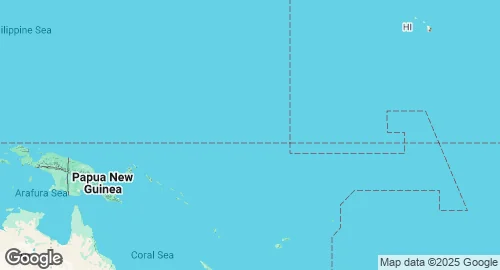
| Capital | Tarawa |
| Land Area | 811 km² |
| Coastline Length | 1,143 km |
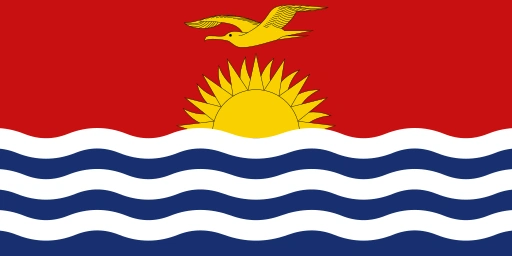
National Flag
Defense Statistics & Key Metrics
| Population | 130469 (2022) |
| GDP | $270.8 million (2022) |
| GDP per capita | $2076 (2022) |
| Inflation Rate | 5.35% (2022) |
Population and Military Personnel Trends
GDP and Inflation Rate Trends
Strategic Overview in 2026
Strategic Position
Kiribati maintains no standing military forces and relies on a combination of domestic paramilitary policing and bilateral security agreements with regional partners for national defense. The Republic's primary security concerns are centered on the management and protection of its Exclusive Economic Zone (EEZ), which exceeds 3.5 million square kilometers and is one of the largest in the world.
Geopolitically, Kiribati occupies a central position in the Pacific, spanning the Gilbert, Phoenix, and Line Islands. This geography has made the nation a focal point of competition between traditional security partners, such as Australia and the United States, and the People's Republic of China (PRC). Since 2019, Kiribati has expanded its security and infrastructure cooperation with the PRC, leading to the deployment of Chinese police advisors and the exploration of dual-use infrastructure projects.
Kiribati is a member of the Pacific Islands Forum (PIF) and a signatory to the Boe Declaration on Regional Security, which frames security through a "blue Pacific" lens, prioritizing climate change, human security, and maritime domain awareness. Defense assistance is primarily facilitated by Australia under the Pacific Maritime Security Program (PMSP). New Zealand and the United States also provide occasional maritime surveillance and disaster relief support.
Military Forces
The Kiribati Police Service (KPS) is the sole security and paramilitary organization in the country, reporting directly to the Office of the President (Te Beretitenti). The force consists of approximately 500 to 600 personnel and is responsible for law enforcement, border security, maritime surveillance, and emergency response.
The Maritime Unit represents the country's most capable security component. It is tasked with fisheries enforcement, search and rescue (SAR), and sovereignty patrols across the archipelago. The unit operates Guardian-class patrol boats provided by Australia. These vessels include the RKS Teanoai II and the RKS Tobwaan Mainiku. These steel-hulled monohulls are equipped for long-range patrols and can carry a diverse complement of police personnel and specialized equipment for maritime boarding operations.
The KPS lacks heavy combat equipment. There are no main battle tanks, armored fighting vehicles, or combat aircraft within the national inventory. Domestic arms are limited to small arms, including AR-15 type rifles and standard-issue police sidearms, primarily used for tactical response, ceremonial duties, and specialized security details. The force operates no naval vessels larger than its patrol boats and maintains no dedicated air wing, instead relying on commercial or foreign military aircraft for long-range transport and reconnaissance.
Strategic Trends
The modernization of Kiribati’s security architecture focuses on improving Maritime Domain Awareness (MDA). In 2025 and 2026, the KPS is working to integrate satellite-based monitoring and terrestrial Automatic Identification System (AIS) receivers, particularly for the remote Line and Phoenix Islands. This includes the development of a permanent maritime law enforcement outpost on Kiritimati (Christmas Island) to provide a persistent presence in the easternmost reaches of the EEZ.
A notable shift in doctrine involves the integration of foreign police advisors from the PRC. As of 2025, Chinese personnel are stationed in Kiribati to assist in community policing, riot control training, and the establishment of a national crime database. This has occurred alongside the continued presence of Australian advisors who provide technical maintenance for the maritime fleet and training for KPS officers.
Infrastructure development at Canton Island (Kanton) remains a strategic priority. Feasibility studies for the rehabilitation of the island’s airfield and bridge are ongoing. While the Kiribati government classifies these as civilian projects intended to boost tourism, regional analysts monitor the site for its potential to support military logistics due to its location between Hawaii and Australia.
Defense and security spending remains a component of the national police budget, which is heavily subsidized by foreign aid. Australia’s Official Development Assistance (ODA) for the 2025-26 period remains focused on maritime security, with the Australian Defence Force (ADF) support vessel ADV Reliant frequently visiting Kiribati to deliver equipment, spares, and training. Environmental security is also a primary constraint, as rising sea levels threaten fixed maritime infrastructure, prompting recent investments in climate-resilient port facilities at Betio.
Frequently Asked Questions
Does Kiribati have nuclear weapons?
Military Expenditure: SIPRI Milex. Suggest a change