Liberia Military Forces 🇱🇷
Military Strength Overview
| 🪖 Active Troops | 2,010 personnels |
Global Military Index
| 🪖 Manpower (15%) | 47.2 | Active, reserve & paramilitary: 2010 effective |
| 🛡️ Ground Firepower (20%) | 0.0 | Main battle tanks: 0 |
| ⚓ Naval Power (20%) | 0.0 | Weighted by ship type: carriers, submarines, destroyers... |
| ✈️ Air Power (25%) | 0.0 | Weighted by aircraft type: combat, bombers, helicopters... |
| ☢️ Nuclear Deterrent (10%) | 0.0 | No declared nuclear capability |
| 💰 Defense Budget (10%) | 23.7 | $34M annual military spending |
Methodology: Log-scaled composite index using SIPRI, IISS, and GMNET data. Each pillar is normalized to 0-100, then weighted by strategic importance.
Geography
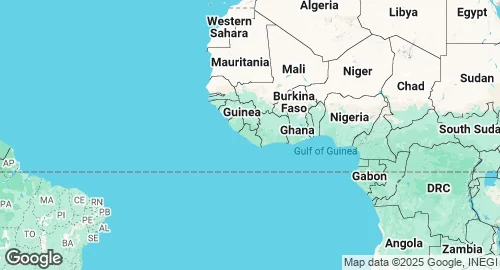
| Capital | Monrovia |
| Land Area | 96,320 km² |
| Coastline Length | 579 km |
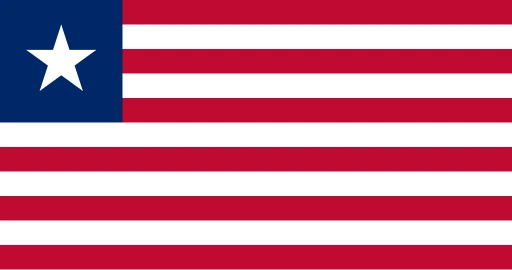
National Flag
Defense Statistics & Key Metrics
| Population | 5.5 million (2023) |
| GDP | $4.2 billion (2023) |
| GDP per capita | $772 (2023) |
| Military Budget | $33.8 million (2024) |
| Share of GDP in Milex | 0.7% (2024) |
| Share of Govt Expenditures | 3.2% (2024) |
| Military spends per capita | $6 (2024) |
| Inflation Rate | 10.09% (2023) |
| Military Personnel | 2,000 (2020) |
Liberian Military Budget History
Population and Military Personnel Trends
GDP and Inflation Rate Trends
Strategic Overview in 2026
Strategic Position
Liberia is situated on the Atlantic coast of West Africa, bordered by Sierra Leone, Guinea, and Côte d’Ivoire. Its defense posture is primarily oriented toward internal stability, border security, and the mitigation of transnational threats within the Mano River Union (MRU) and the Economic Community of West African States (ECOWAS). In 2026, Liberia assumed a non-permanent seat on the United Nations Security Council, a position that informs its current diplomatic and security focus on regional peacekeeping and international law.
Primary security concerns involve the monitoring of porous land borders to prevent the spillover of regional instability and the movement of illicit goods. Transnational organized crime, including human trafficking and narcotics smuggling, remains a persistent challenge in the western border regions. Additionally, the protection of natural resources is a stated priority; the military is currently engaged in operations to secure Sapo National Park against illegal mining and logging activities.
Liberia maintains a close bilateral defense relationship with the United States through the State Partnership Program, which pairs the Armed Forces of Liberia (AFL) with the Michigan National Guard for training and professional development. The country also participates in the African Union (AU) security framework and has historically contributed personnel to regional peacekeeping missions, such as the former United Nations Multidimensional Integrated Stabilization Mission in Mali (MINUSMA).
Military Forces
The Armed Forces of Liberia (AFL) is a professionalized, volunteer force under the oversight of the Ministry of National Defense and the Commander-in-Chief, the President of Liberia. The force is organized into three primary components: the Liberian Ground Force (Army), the Liberian Coast Guard, and the Liberian Air Wing. As of 2025, active personnel totals approximately 2,000, though a recruitment drive initiated in early 2026 aims to add 650 new personnel as part of a long-term goal to expand the force to 5,000.
The Liberian Ground Force is the largest branch and is headquartered at the Edward Binyah Kesselly (EBK) Barracks. In 2025, the AFL activated the First Armored Reconnaissance Battalion and the AFL Signal Company to enhance mobile surveillance and communication capabilities. The army primarily operates light infantry equipment, but its inventory was expanded in 2025 through a $20 million donation from the African Union. This package includes armored personnel carriers, military protective assault vehicles, combat jeeps, and cargo trucks. The force also maintains mounted weapon systems, mortars, and man-portable air-defense systems (MANPADS).
The Liberian Coast Guard (LCG) is responsible for maritime sovereignty and the enforcement of laws within Liberia's exclusive economic zone. Its primary missions include countering illegal, unreported, and unregulated (IUU) fishing and piracy in the Gulf of Guinea. The LCG fleet consists of several small patrol craft, including Defender-class boats, rigid-hull inflatable boats (RHIBs), and Boston Whalers. In 2025, the LCG integrated additional specialized boats provided through the ECOWAS Support to West Africa Integrated Maritime Security (SWAIMS) project.
The Liberian Air Wing remains in a nascent stage, focused primarily on logistical support and aerial reconnaissance. It currently lacks fixed-wing combat aircraft or a functional transport fleet, relying on international partners for air mobility and heavy lift requirements.
Strategic Trends
The primary trend in Liberian defense is the modernization and expansion of the AFL to fill security vacuums left following the withdrawal of international peacekeeping missions. In 2025, the AFL launched Operation True Guardian, an indefinite internal security operation focused on the Western Region counties of Grand Cape Mount, Bomi, and Gbarpolu. This operation establishes forward operating bases to deter transnational crime and maritime incursions.
Defense spending for 2025 was estimated at approximately $37 million, representing roughly 1.8% to 2.3% of the national GDP. While the budget has seen gradual increases, the military remains heavily dependent on foreign aid and donations for high-value equipment and infrastructure projects. A major focus of the 2025-2026 period is the renovation of military housing and the decongestion of the EBK Barracks. Facilities such as Camp Gree in Sinoe County and Camp Grand in Nimba County have undergone recent rehabilitation to support the decentralized deployment of troops.
Strategic priorities for 2026 include the full integration of the African Union-donated armored assets and the professionalization of new recruits to improve the soldier-to-citizen ratio. Challenges remain in the form of logistical constraints and the high cost of maintaining a modern, mobile force with limited domestic industrial support.
Frequently Asked Questions
How large is Liberia's military?
What is Liberia's defense budget?
How does Liberia rank militarily in the world?
Does Liberia have nuclear weapons?
What percentage of GDP does Liberia spend on defense?
What is Liberia's military personnel per capita?
Military Expenditure: SIPRI Milex. Suggest a change