Liechtenstein Military Forces 🇱🇮
Military Strength Overview
Geography
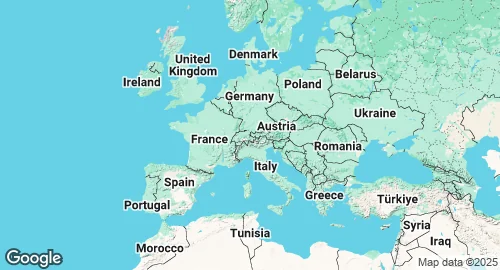
| Capital | Vaduz |
| Land Area | 160 km² |
| Coastline Length | 0 km |
National Flag

Defense Statistics & Key Metrics
| Population | 39182 (2021) |
| GDP | $7.7 billion (2021) |
| GDP per capita | $196784 (2021) |
Population and Military Personnel Trends
GDP and Inflation Rate Trends
Strategic Overview in 2026
Strategic Position
Liechtenstein is a landlocked microstate situated between Switzerland and Austria. Its security architecture is defined by the abolition of its standing army in 1868 and a subsequent policy of permanent neutrality. The Principality maintains no independent military capability and relies on Switzerland for national defense under various bilateral arrangements. While a 1923 Customs Treaty and a 1924 Currency Treaty integrate the two nations economically, no formal mutual defense treaty exists. In February 2025, the Swiss Federal Council reiterated that Switzerland would not provide direct military defense in the event of a foreign attack on Liechtenstein, as doing so would conflict with Swiss neutrality.
Liechtenstein is a member of the United Nations and the Organization for Security and Co-operation in Europe (OSCE). It also participates in the Schengen Area, which governs its border management and police cooperation frameworks. Primary security concerns are non-conventional, focusing on transnational crime, cyber threats, and natural disasters. Regional relationships are characterized by deep integration with Switzerland, which represents Liechtenstein's interests abroad in most diplomatic and consular matters. In November 2025, Liechtenstein entered into a framework agreement with the United States and Switzerland to strengthen cooperation on economic security, specifically regarding export controls, sanctions enforcement, and investment screening.
Military Forces
Liechtenstein does not maintain a standing military force. Article 44 of the Constitution provides for the mandatory service of all citizens under the age of 60 in the event of an armed conflict, though this provision remains a legal mechanism rather than an active operational framework.
Internal security and law enforcement are the responsibility of the Landespolizei (National Police). The force consists of approximately 125 total personnel, including 91 sworn officers and additional civilian staff. The Landespolizei is organized into three primary divisions: Security and Traffic Control, Criminal Investigation, and Executive Support.
The Landespolizei maintains a specialized paramilitary capability through the Sondereinheit Intervention (SI), a police tactical unit. The SI is tasked with high-risk operations, including counter-terrorism, hostage rescue, and the protection of the Princely House. The unit trains regularly with regional Swiss and Austrian tactical teams to ensure interoperability.
Equipment is limited to light police assets. Standard-issue weaponry includes SIG Sauer sidearms and Heckler & Koch submachine guns and carbines. The Landespolizei operates a fleet of approximately 45 vehicles, including patrol cars and light tactical transports for the SI. For maritime tasks on the Rhine, the police operate speedboats. There is no domestic air capability; aerial surveillance or emergency transport is coordinated with private contractors or Swiss federal assets.
Strategic Trends
The primary shift in Liechtenstein's defense posture in 2025 and 2026 is the expansion of cyber defense capabilities. The National Strategy for Protection Against Cyber Risks 2025, which became effective in February 2025, establishes a modernized framework for protecting critical infrastructure and the financial sector. This strategy is managed by the National Cyber Security Unit (NCSU) and aligns the Principality with the European Union’s NIS2 directive, which was transposed into national law in early 2025. By February 2026, regulated entities are required to implement enhanced organizational controls to meet these new security standards.
Modernization efforts are focused on digital infrastructure and the integration of biometric systems for border control within the Schengen framework. Budgetary priorities remain centered on the Ministry of Interior for the operation of the Landespolizei and the Office of Civil Protection.
The state’s strategic focus also includes "economic security," a concept formalized in the 2025 tripartite framework with the United States and Switzerland. This agreement prioritizes the alignment of export controls and the vetting of inbound investment to protect sensitive technologies. Challenges remain regarding the limited personnel pool and the absence of domestic military infrastructure, ensuring that Liechtenstein's security will continue to rely on the depth of its cross-border technical and diplomatic partnerships.
Frequently Asked Questions
Does Liechtenstein have nuclear weapons?
Military Expenditure: SIPRI Milex. Suggest a change