Monaco Military Forces 🇲🇨
Military Strength Overview
Geography
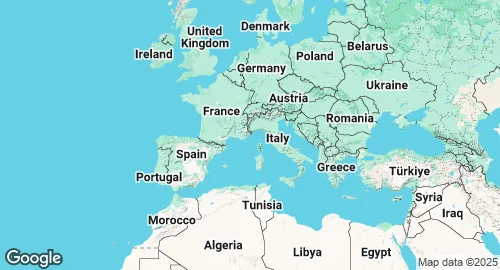
| Capital | Monaco |
| Land Area | 2 km² |
| Coastline Length | 4.1 km |
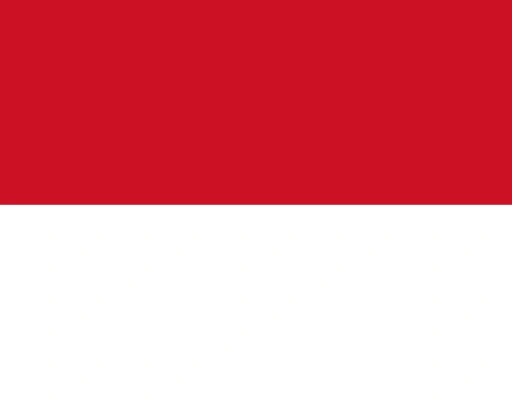
National Flag
Defense Statistics & Key Metrics
| Population | 38527 (2021) |
| GDP | $8.6 billion (2021) |
| GDP per capita | $223823 (2021) |
Population and Military Personnel Trends
GDP and Inflation Rate Trends
Strategic Overview in 2026
Strategic Position
Monaco’s defense and territorial integrity are primarily guaranteed by France under the terms of the Franco-Monégasque Treaty. This bilateral relationship, established in 1861 and updated in 1918 and 2002, stipulates that France is responsible for the Principality's external security and the protection of its sovereignty. In return, Monégasque international policy is aligned with French strategic interests. A 2025 state visit reaffirmed this alliance, focusing on integrated maritime security and Mediterranean regional stability.
The Principality is not a member of NATO or the European Union but participates in the Schengen Area and maintains deep cooperation with European security agencies. Its strategic priorities center on internal stability, the protection of the Sovereign and the Princely Family, and maritime security within its territorial waters. Primary security concerns involve non-traditional threats, including cyber-attacks, financial crimes, and maritime pollution or illegal fishing. Monaco is an active member of INTERPOL and coordinates closely with French intelligence and counter-terrorism services.
Military Forces
The Force Publique (Public Force) constitutes the military component of Monaco’s security architecture. It operates under the Department of the Interior and is commanded by a senior officer, typically a colonel. Total military personnel numbers approximately 270 active-duty members.
Compagnie des Carabiniers du Prince
This infantry unit serves as the Sovereign's guard. It consists of approximately 125 personnel, including officers, non-commissioned officers, and brigadiers. While its primary role is ceremonial—including the daily guard mounting at the Prince’s Palace—the unit is trained for close protection, public order, and emergency response. Specialized sub-units include a motorcycle detachment, a diving team for maritime security, and a military orchestra. Small arms inventory includes SIG Sauer rifles, Heckler & Koch MP5 submachine guns, and various sidearms.
Corps des Sapeurs-Pompiers de Monaco
The fire and rescue service maintains military status and consists of approximately 150 personnel. Beyond firefighting and civil protection, the corps is integrated into the national defense plan for large-scale emergencies and CBRN (chemical, biological, radiological, and nuclear) defense. Its personnel undergo military training and are subject to military discipline.
Maritime and Airport Police Division
While technically a branch of the civil police (Sûreté Publique), this division operates in close coordination with the military for coastal defense. The maritime fleet includes fast patrol boats used for surveillance, search and rescue, and fisheries protection. Recent inventory additions include the Saint Georges, a 10-meter rapid intervention vessel capable of 45 knots, and a 24-meter fast patrol boat manufactured by Effebi, which is armed with light machine guns for deterrence and coastal security.
Strategic Trends
Monaco's defense posture increasingly emphasizes digital and maritime sovereignty. The 2026 preliminary budget, passed in late 2025, allocates resources toward the modernization of internal security infrastructure and the expansion of the Monaco Cyber Security Agency. Procurement focuses on high-technology surveillance equipment, including drones for maritime and border monitoring, and the enhancement of electronic signals intelligence capabilities.
Force structure shifts are directed toward multi-role capabilities for the Force Publique, ensuring that both the Carabiniers and Sapeurs-Pompiers can support French or regional maritime security operations in the Mediterranean if required. Future constraints remain tied to the country's limited geography and the total reliance on French military hardware and doctrinal support for any conventional defense scenario. Personnel recruitment remains selective, with officers often drawn from the French Army or Gendarmerie to maintain professional parity with regional allies.
Frequently Asked Questions
Does Monaco have nuclear weapons?
Military Expenditure: SIPRI Milex. Suggest a change