Marshall Islands Military Forces 🇲🇭
Military Strength Overview
Geography
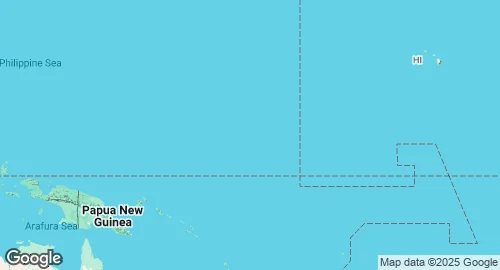
| Capital | Majuro |
| Land Area | 181 km² |
| Coastline Length | 370.4 km |
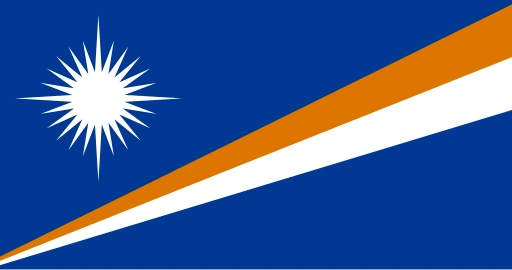
National Flag
Defense Statistics & Key Metrics
| Population | 40077 (2022) |
| GDP | $253.4 million (2022) |
| GDP per capita | $6323 (2022) |
Population and Military Personnel Trends
GDP and Inflation Rate Trends
Strategic Overview in 2026
Strategic Position
The Republic of the Marshall Islands (RMI) maintains a unique defense posture defined by the Compact of Free Association (COFA) with the United States. Under this bilateral agreement, which was renewed and funded through 2044 via the Compact of Free Association Amendments Act of 2024, the United States holds full authority and responsibility for the defense and security of the RMI. This arrangement includes a "defense veto," allowing the U.S. to deny third-party military access to Marshallese territory, effectively integrating the archipelago into the U.S. strategic defense perimeter in the Pacific.
Primary security concerns for the RMI involve maritime domain awareness, illegal, unreported, and unregulated (IUU) fishing, and the existential threat posed by sea-level rise to low-lying atoll infrastructure. Geopolitically, the RMI is a key component of the "Second Island Chain," serving as a critical node for U.S. power projection and missile defense testing. The RMI maintains a security partnership with Taiwan, formalized in a 2025 pact aimed at addressing hybrid threats and enhancing coast guard cooperation.
The most significant military installation in the RMI is the Ronald Reagan Ballistic Missile Defense Test Site (RTS) located on Kwajalein Atoll. The site is a major hub for the research, development, and testing of intercontinental ballistic missiles (ICBMs), hypersonic weapons, and space surveillance technologies.
Military Forces
The Republic of the Marshall Islands does not maintain a standing national military. Internal security and maritime law enforcement are the responsibility of the Marshall Islands Police Department (MIPD).
Paramilitary and Law Enforcement The MIPD operates a specialized maritime unit known as the Sea Patrol. This unit is tasked with patrolling the RMI’s Exclusive Economic Zone (EEZ), conducting search and rescue (SAR) operations, and enforcing fisheries legislation. - Personnel: The MIPD consists of approximately 200 personnel, with the Sea Patrol comprising a dedicated subset of trained maritime officers. - Equipment: The Sea Patrol operates Guardian-class patrol boats provided by Australia under the Pacific Maritime Security Program. These vessels replaced older Pacific-class boats and provide enhanced endurance and surveillance capabilities for long-range oceanic patrols.
U.S. Military Presence The United States Army Garrison - Kwajalein Atoll (USAG-KA) provides the primary military capability within the RMI. In 2025, the U.S. Army implemented a command structure shift, designating the Commander of U.S. Army Pacific (USARPAC) as the senior commander for Kwajalein to better integrate the atoll into regional multi-domain operations. - Personnel: Approximately 1,200 to 1,400 U.S. personnel are stationed at Kwajalein Atoll, including active-duty soldiers, Department of the Army civilians, and contractors. - Capabilities: The RTS maintains sophisticated radar, optical, and telemetry sensors. It supports up to 10 major missile or hypersonic flight tests annually and contributes to the U.S. Space Force’s space domain awareness mission.
Strategic Trends
The implementation of the 2024 COFA amendments has stabilized the RMI's defense budget outlook through 2044, with $2.3 billion in total assistance allocated for economic and security-related infrastructure. A primary strategic priority in 2025 and 2026 is the modernization of Kwajalein Atoll’s facilities to sustain operations against rising sea levels and to support increased demand for hypersonic weapon testing.
The RMI has increased its participation in the Indo-Pacific Partnership for Maritime Domain Awareness (IPMDA), utilizing satellite data to monitor its territorial waters. In 2025, the RMI government emphasized "environmental security" as a core doctrinal priority, seeking U.S. military engineering support to reinforce atoll stability. Additionally, the organizational transition from USAG-KA to a more integrated "U.S. Army Kwajalein Atoll" (USAKA) structure in 2025 reflects an shift toward optimizing command and control for high-end conflict deterrence in the Pacific theater.
Frequently Asked Questions
Does Marshall Islands have nuclear weapons?
Military Expenditure: SIPRI Milex. Suggest a change