Malawi Military Forces
Malawi ranks #145 of 170 militaries worldwide in 2026, with 10,700 active troops. The Air Force flies 11 aircraft. Landlocked, Malawi has no navy and no nuclear weapons.
Armed Forces in 2026
| Domain | Strength | Composition |
|---|---|---|
| Air Force | 11 aircraft | 8 helicopters |
| Personnel | 10,700 active | 4,200 paramilitary |
ATLAS Index (Aggregate Total of Land, Air and Sea strength)
Full ranking →| Pillar | Weight | Score | Basis |
|---|---|---|---|
| Manpower | 10% | 23.5 | Active, reserve & paramilitary personnel |
| Ground forces | 20% | 0.0 | ARMS inventory power: armour & artillery by type and era, attack helicopters, armament |
| Naval power | 20% | 0.0 | SEAS inventory power: hulls by type, size and era, air wing, sustainment, armament |
| Air power | 25% | 12.6 | AIRS inventory power: aircraft by type and generation, enablers, armament |
| Nuclear deterrent | 10% | 0.0 | No declared nuclear capability |
| Defense budget | 15% | 10.0 | Annual spending, purchasing-power adjusted |
| Availability | modifier | ground ×0.80 · naval ×1.00 · air ×0.84 | Budget per point of each force, from the branch indexes |
Country File
| Population | 21.7M (2024) |
| GDP | $11.3 billion (2024) |
| GDP per capita | $523 |
| Military budget | $90M (2024) |
| Share of GDP | 0.8% (2024) |
| Military spending per capita | $4 (2024) |
| Inflation rate | 32.18% (2024) |
| Capital | Lilongwe |
| Region | Africa |
| Land area | 94,080 km² |
| Land borders | 2,881 km |
| Bordering countries | 3 |
| Currency | MWK |
Strategic Overview in 2026
The Malawi Defence Force (MDF) is a multi-branch military organization responsible for the territorial integrity of Malawi and its contributions to regional security operations. While historically focused on internal stability and border security, the MDF has increasingly transitioned toward a role defined by international peacekeeping and regional counter-insurgency support.
Strategic Position
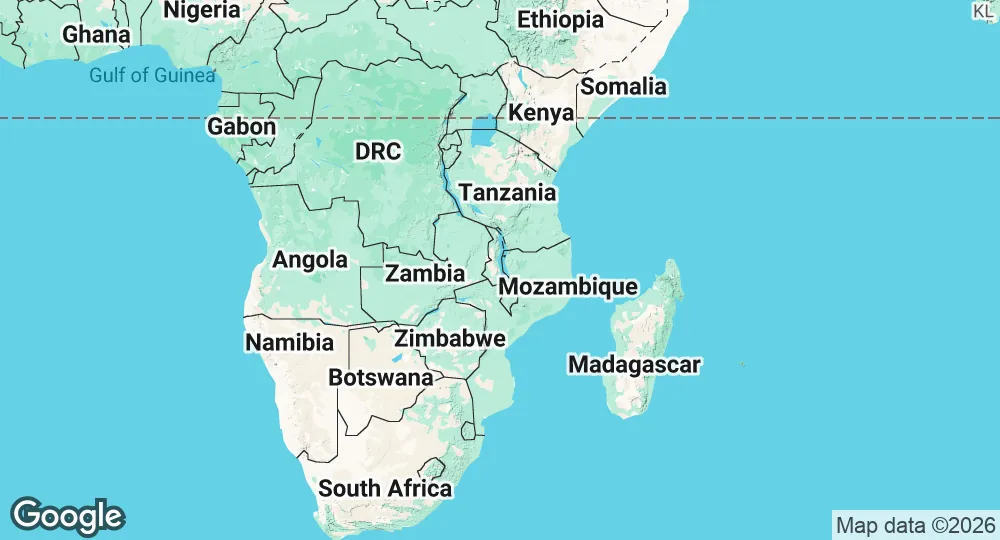
Malawi occupies a landlocked position in Southern Africa, sharing borders with Zambia, Tanzania, and Mozambique. This geography dictates a defense posture focused on border security and regional cooperation through the Southern African Development Community (SADC). A primary security concern is the potential for spillover from the Islamist insurgency in Mozambique’s Cabo Delgado province, which lies approximately 200 kilometers from the eastern border. This proximity has led to increased intelligence monitoring and patrolling in the eastern districts, such as Mangochi, to prevent militant infiltration.
The nation maintains a non-aligned foreign policy but participates actively in the African Union (AU) and SADC. Malawi is a contributor to the SADC Standby Brigade and has a long-standing commitment to the United Nations (UN) peacekeeping framework. Strategic priorities involve maintaining a professionalized force capable of rapid deployment in regional conflicts, particularly within the Democratic Republic of the Congo (DRC) and Mozambique. Bilateral defense cooperation remains strong with the United Kingdom, which assisted in the MDF’s initial formation, and the United States, which provides training and equipment through the Global Peace Operations Initiative.
Military Forces
The Malawi Defence Force is organized into four primary service branches: the Army, the Air Force, the Maritime Force, and the Malawi National Service. The total active personnel is estimated between 15,000 and 20,000.
The Army is the dominant branch, organized around three primary infantry battalions known as the Malawi Rifles, based in Lilongwe, Mzuzu, and Zomba. Specialized units include a Parachute Battalion and a Combat Support Battalion. The Army operates a limited number of T-54/55 main battle tanks and a fleet of light armored vehicles, including Eland and Fox armored cars. For troop transport and patrol, the force utilizes South African-produced APCs, such as the Puma M26 and Casspir, as well as Chinese-manufactured light tactical vehicles.
The Air Force is primarily configured for transport, utility, and reconnaissance rather than air superiority. Its inventory includes Dornier 228 and Basler BT-67 fixed-wing transport aircraft. The rotary-wing fleet consists of Eurocopter SA330 Puma and SA341 Gazelle helicopters, used for troop insertion, casualty evacuation, and logistics.
The Maritime Force operates as a brown-water navy, centered on Lake Malawi. It maintains patrol craft to monitor the lake's borders and counter smuggling and illegal migration. The force operates from bases at Monkey Bay and Chilumba.
Strategic Trends
Defense spending in Malawi has stabilized at approximately 1% of GDP in recent years. The 2025/2026 national budget reflects significant fiscal constraints, with the government balancing military requirements against a large fiscal deficit and public debt. Modernization efforts are primarily focused on enhancing the capabilities of individual infantry units through the procurement of modern small arms, body armor, and night-vision equipment, often sourced via international aid and donations.
A defining trend for the MDF in 2025 and 2026 is its continued leadership in peacekeeping missions. Malawian troops are integrated into the Force Intervention Brigade (FIB) in the DRC, where they engage in offensive operations against armed groups. This operational experience has influenced domestic training, with an emphasis on counter-insurgency and urban warfare tactics.
Challenges facing the MDF include a reliance on aging hardware and the high cost of maintaining a fleet of disparate equipment types sourced from various international suppliers. Future force shifts are likely to prioritize the expansion of intelligence and surveillance capabilities, including the potential integration of unmanned aerial vehicles (UAVs) for border monitoring, to address the evolving threat of cross-border militancy.
Military Expenditure: CIA World Factbook. Last updated on 4 August 2026. Suggest a change
Frequently Asked Questions
How large is Malawi's military?
What is Malawi's defense budget?
How does Malawi rank militarily in the world?
Does Malawi have nuclear weapons?
How many aircraft does Malawi's air force have?
What percentage of GDP does Malawi spend on defense?
What is Malawi's military personnel per capita?
Does Malawi have paramilitary forces?
- AUG 42026 Updated Global Military Index updated in a site-wide editorial pass
- AUG 32026 Updated Global Military Index updated
- JUL 162026 Updated Global Military Index updated in a site-wide editorial pass
- JUN 162026 Updated Yearly statistics, military spending and 2 more fields updated
- JAN 132026 Updated Description added