Nauru Military Forces 🇳🇷
Military Strength Overview
Geography
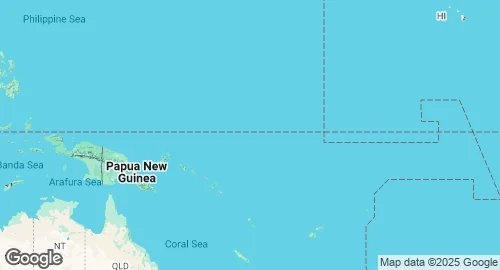
| Capital | Yaren |
| Land Area | 21 km² |
| Coastline Length | 30 km |
National Flag

Defense Statistics & Key Metrics
| Population | 11801 (2022) |
| GDP | $156.8 million (2022) |
| GDP per capita | $13287 (2022) |
| Inflation Rate | -0.12% (2012) |
Population and Military Personnel Trends
GDP and Inflation Rate Trends
Strategic Overview in 2026
Strategic Position
Nauru maintains a security posture defined by its geographic isolation and a comprehensive bilateral partnership with Australia. The primary security framework is governed by the Nauru-Australia Treaty, which entered into force in 2025. This agreement establishes Australia as Nauru’s primary security and development partner. Under the terms of the treaty, Nauru is required to mutually agree with Australia on any third-party involvement in its security, defense, policing, and critical infrastructure sectors, including telecommunications and banking. This effectively grants Australia oversight regarding foreign military or security presence on the island.
The nation’s strategic priorities are outlined in the National Security Strategy launched in late 2025. This doctrine adopts an expanded definition of security that includes maritime sovereignty, climate resilience, and economic stability alongside traditional law enforcement. Regional cooperation is facilitated through Nauru’s membership in the Pacific Islands Forum (PIF) and adherence to the Boe Declaration on Regional Security.
Geopolitically, Nauru navigates a landscape marked by competition for influence in the Pacific. While the country recently shifted its diplomatic recognition to the People's Republic of China, its security and policing infrastructure remain integrated with Australian and regional frameworks. Primary concerns include illegal, unreported, and unregulated (IUU) fishing within its Exclusive Economic Zone (EEZ), transnational crime, and the security of its telecommunications and digital space.
Military Forces
Nauru does not maintain a formal military establishment. National security and law enforcement are the responsibility of the Nauru Police Force (NPF), which operates under the Ministry of Justice and Border Control. The President of Nauru serves as the Minister for Police, maintaining civilian oversight of the force.
Personnel and Structure
The Nauru Police Force consists of approximately 100 personnel. The force is organized into specialized units, including: * Operations Unit: Responsible for general duties and community policing. * Crimes Unit: Handles criminal investigations and forensics. * Maritime Unit: Manages coastal surveillance and fisheries protection. * Operations Support Unit: Provides logistical and administrative assistance. * Professional Standards Unit: Oversees internal conduct and training.
Equipment and Capabilities
The NPF is primarily a civilian police force and is not routinely armed. However, it maintains a small inventory of small arms for specialized tasks and ceremonial purposes. This inventory includes M1 Garand rifles and a limited number of other firearms.
Maritime capabilities are centered on a small fleet of patrol craft used for search and rescue and EEZ surveillance. These include 10-meter patrol boats provided by regional partners. The NPF relies heavily on the Nauru-Australia Policing Partnership (NAPP) for technical support, surveillance equipment, and specialized training. In instances of larger-scale maritime security needs, Nauru coordinates with the Australian Defence Force and the Pacific Islands Forum Fisheries Agency (FFA).
Strategic Trends
The current strategic trajectory for Nauru is defined by the implementation of the Nauru-Australia Treaty and the Nauru-Australia Policing Partnership (NAPP) Phase 2, which commenced in July 2025 and is scheduled to continue through 2029. This program focuses on modernizing NPF leadership, enhancing operational policing capabilities, and improving border security infrastructure.
Modernization priorities include the upgrading of surveillance technology and the development of cyber security frameworks to protect national digital infrastructure. Funding for these initiatives is largely derived from a five-year AU$140 million commitment from Australia, with AU$40 million specifically allocated to policing, security infrastructure, and recruitment.
In 2026, Nauru faces shifts in its economic and developmental status as it graduates from the OECD’s list of official development assistance recipients. This transition is expected to influence future defense-related spending and the structure of international grants. The government continues to prioritize the integration of climate security into its national defense planning, reflecting the risk posed by rising sea levels to the island's critical infrastructure and territorial integrity.
Frequently Asked Questions
Does Nauru have nuclear weapons?
Military Expenditure: SIPRI Milex. Suggest a change