Solomon Islands Military Forces 🇸🇧
Military Strength Overview
Geography
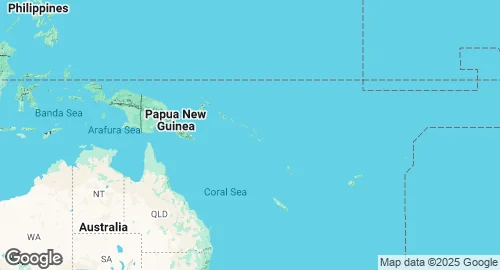
| Capital | Honiara |
| Land Area | 27,986 km² |
| Coastline Length | 5,313 km |
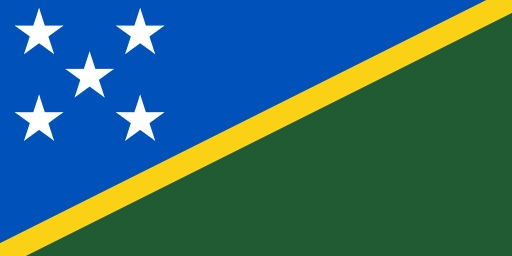
National Flag
Defense Statistics & Key Metrics
| Population | 781066 (2022) |
| GDP | $1.6 billion (2022) |
| GDP per capita | $2005 (2022) |
| Inflation Rate | 5.52% (2022) |
Population and Military Personnel Trends
GDP and Inflation Rate Trends
Strategic Overview in 2026
The Solomon Islands maintains a unique defense posture characterized by the absence of a standing military and a reliance on a paramilitary police force, supplemented by a complex web of bilateral security agreements. As of 2026, the nation is undergoing a foundational shift in its security architecture, balancing traditional ties with Australia and growing cooperation with the People's Republic of China (PRC).
Strategic Position
The Solomon Islands occupies a central position in the Melanesian sub-region of the South Pacific, situated along critical sea lines of communication between North America and Australia. Primary security concerns include internal civil unrest, maritime border protection, illegal, unreported, and unregulated (IUU) fishing, and the management of unexploded ordnance remaining from World War II.
The nation's defense doctrine is governed by a policy of "security diversification." The cornerstone of this posture is the 2017 Bilateral Security Treaty with Australia, which provides a legal framework for the rapid deployment of Australian police, defense, and civilian personnel during emergencies. This treaty was activated during civil unrest in late 2021. Concurrently, the 2022 security pact with the PRC allows for the deployment of Chinese police and military personnel to maintain social order upon request.
Regionally, the Solomon Islands is a member of the Pacific Islands Forum and the Melanesian Spearhead Group. It maintains specific security cooperation agreements with Papua New Guinea and Fiji, intended to provide regional support mechanisms that decrease reliance on extra-regional powers. In 2025, the government finalized its Maritime Security Strategy (2024–2027) to enhance surveillance and enforcement across its 1.6 million square kilometer exclusive economic zone.
Military Forces
The Solomon Islands does not possess a formal military. National security and sovereignty are maintained by the Royal Solomon Islands Police Force (RSIPF), which operates under the Ministry of Police, National Security and Correctional Services.
The RSIPF has an approximate strength of 1,500 personnel. In late 2025, the government announced plans to expand the force to 2,500 officers over a five-year period to meet growing internal and maritime security requirements. Specialized units within the RSIPF provide the country's paramilitary and tactical capabilities:
- Police Response Team (PRT): This unit serves as the primary tactical response force. Following a period of disarmament after the civil conflict at the turn of the century, the PRT has been rearmed with specialized small arms, including Daniel Defense MK18 rifles and Glock pistols.
- Maritime Department: Acting as a de facto navy, this department operates a fleet of Guardian-class patrol boats and several smaller inshore patrol craft. These vessels are equipped with 12.7 mm machine guns and are utilized for border patrol, search and rescue, and fisheries enforcement.
- Explosive Ordnance Disposal (EOD) Unit: A specialized unit focused on the identification and neutralization of World War II-era unexploded ordnance, which remains a frequent threat to public safety and infrastructure development.
Training and equipment are largely provided by foreign partners. Australia remains the primary provider of maritime assets and tactical small arms training, while the PRC provides training in riot control, vehicles, and unmanned aerial vehicles (UAVs).
Strategic Trends
The most significant trend in the Solomon Islands' defense posture is the official exploration of establishing a formal national defense force. In October 2025, the government initiated a policy process to develop a legislative framework for a military, aimed at enhancing national self-reliance and disaster response capabilities. While no fixed timeline for the standing up of this force exists, the move marks a departure from the post-independence policy of a non-militarized state.
The 2025 defense and security budget remains constrained, operating at a deficit and relying on external financing for approximately 25% of its total expenditure. Modernization efforts are focused on three areas: * Personnel Growth: Increasing recruit intake to reach the 2,500-officer target by 2030. * Infrastructure: Construction of a new sovereign Police Training Centre in Honiara and the expansion of maritime mooring facilities to support larger patrol vessels. * Surveillance Technology: Integration of UAVs and enhanced maritime domain awareness tools to combat transnational crime.
Constraints facing the security sector include the historical public distrust of armed units following the 1998–2003 civil conflict and the logistical challenges of providing security across an archipelago of over 900 islands. Future shifts in force structure depend heavily on the finalization of the defense force concept paper and the subsequent legislative approval process scheduled for 2026.
Frequently Asked Questions
Does Solomon Islands have nuclear weapons?
Military Expenditure: SIPRI Milex. Suggest a change