Sao Tome and Principe Military Forces 🇸🇹
Military Strength Overview
Geography
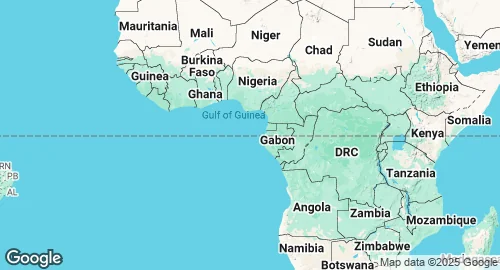
| Capital | São Tomé |
| Land Area | 964 km² |
| Coastline Length | 209 km |
National Flag
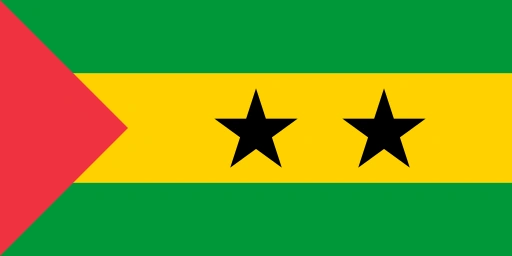
Defense Statistics & Key Metrics
| Population | 226305 (2022) |
| GDP | $540.8 million (2022) |
| GDP per capita | $2390 (2022) |
| Inflation Rate | 18.01% (2022) |
Population and Military Personnel Trends
GDP and Inflation Rate Trends
Strategic Overview in 2026
Strategic Position
Located in the Gulf of Guinea, São Tomé and Príncipe maintains a defense posture centered on maritime sovereignty and the security of its Exclusive Economic Zone (EEZ). The primary security concerns of the state involve non-traditional maritime threats, including piracy, illegal, unreported, and unregulated (IUU) fishing, and transnational trafficking. These threats are intensified by the country's position along significant shipping lanes used for the transport of hydrocarbons and commercial goods.
The state relies on a network of regional and international alliances to compensate for its limited domestic military capacity. It is a founding member of the Community of Portuguese Language Countries (CPLP) and the Economic Community of Central African States (ECCAS). Strategic priorities are managed through the Yaoundé Architecture, a regional maritime security framework that facilitates information sharing and joint patrols among Gulf of Guinea states.
Bilateral relationships are the cornerstone of the national defense strategy. Portugal remains the primary security partner through long-standing technical-military cooperation agreements. This partnership includes the permanent presence of a Portuguese Navy patrol vessel to support surveillance and training. The United States, via Africa Command (AFRICOM), provides assistance through the annual Obangame Express exercises and the donation of coastal surveillance equipment. Recent shifts in the strategic landscape involve the diversification of defense partners, including a formal military cooperation agreement with Russia intended to enhance personnel training and technical assistance.
Military Forces
The Armed Forces of São Tomé and Príncipe (FASTP) are organized into a small, integrated structure focused on internal security and maritime domain awareness. Total active personnel are estimated to be between 600 and 1,000. The President serves as the Commander-in-Chief, with administrative oversight provided by the Ministry of Defense and Internal Order.
Army
The Army (Exército) is the largest branch by personnel but functions primarily as a light infantry force. Its operational structure consists of infantry companies and support units. The force is tasked with territorial defense, disaster relief, and internal stability. Equipment is limited to small arms, light vehicles, and a small number of aging armored personnel carriers, such as the BTR-60, many of which are in varying states of maintenance.
Coast Guard
The Coast Guard (Guarda Costeira) is the most operationally active branch due to the nation's maritime geography. Its primary mission is the policing of the EEZ and the protection of offshore resources. The fleet consists of patrol boats and inshore interceptors, including vessels donated by Portugal and the United States. Notable assets include Portuguese Navy vessels operated under joint command and small Archangel-class or Boston Whaler patrol craft. The branch works closely with regional maritime coordination centers to monitor vessel traffic.
Specialized Units
The Presidential Guard and the National Guard provide specialized security for government officials and critical infrastructure. These units are often better equipped and trained than standard infantry companies. The state does not maintain an air force, though it utilizes some light transport aircraft and relies on foreign partners for aerial surveillance and maritime patrol.
Strategic Trends
The current defense trajectory is defined by the modernization of maritime surveillance capabilities and the professionalization of the officer corps. Modernization efforts focus on the integration of Automatic Identification System (AIS) radar and coastal sensor networks to improve the "Maritime Single Window" system. This enables the FASTP to track illegal activity more effectively across its 160,000-square-kilometer maritime zone.
Defense spending typically remains below 1% of the national GDP, necessitating a high degree of reliance on foreign military financing and equipment donations. A significant trend in 2025 and 2026 is the expansion of maritime protected areas, which has increased the operational requirements for the Coast Guard to enforce environmental and fishing regulations.
The military faces persistent constraints, including limited logistical sustainability and a lack of indigenous maintenance capacity for complex platforms. To address these gaps, the 2025–2026 defense priorities emphasize vocational training and the establishment of a Civilian-Military Cooperation Cell (CIMIC) within the CPLP framework. This initiative is designed to prepare personnel for participation in international peacekeeping operations, thereby increasing the military's professionalism and regional standing.
Frequently Asked Questions
Does Sao Tome and Principe have nuclear weapons?
Military Expenditure: SIPRI Milex. Suggest a change