Turks and Caicos Islands Military Forces 🇹🇨
Military Strength Overview
Geography
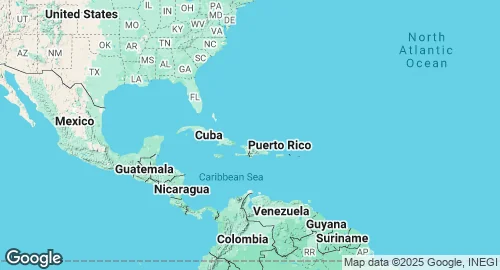
| Capital | Cockburn Town |
| Land Area | 430 km² |
| Coastline Length | 389 km |
National Flag
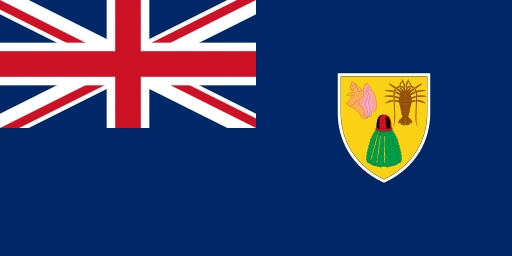
Defense Statistics & Key Metrics
| Population | 45847 (2022) |
| GDP | $1.2 billion (2022) |
| GDP per capita | $26802 (2022) |
Population and Military Personnel Trends
GDP and Inflation Rate Trends
Strategic Overview in 2026
Strategic Position
The Turks and Caicos Islands (TCI) is a British Overseas Territory located in the Lucayan Archipelago. Under the 2011 Constitution, the United Kingdom retains ultimate responsibility for the defense, external affairs, and internal security of the islands. Security policy is administered through the Governor, who acts as the representative of the British Crown and maintains direct oversight of the territory's security apparatus.
The primary security concerns for the TCI are dictated by its proximity to Haiti and its position along maritime transit routes between South America and the United States. Geopolitical priorities focus on maritime border integrity, specifically the interdiction of undocumented migration and the prevention of narcotics and firearms trafficking. The territory is a signatory to the Operation Bahamas, Turks and Caicos (OPBAT) agreement, a trilateral counter-drug framework involving the United States Coast Guard, the Drug Enforcement Administration (DEA), and the Royal Bahamas Defence Force.
Additionally, a Shiprider Agreement with the Bahamas allows for reciprocal maritime law enforcement authority, enabling officers from one jurisdiction to operate aboard the vessels of the other to address illegal migration and unregulated fishing. Regionally, the TCI coordinates with the Caribbean Community (CARICOM) Implementation Agency for Crime and Security (IMPACS) and the Regional Security System (RSS) for disaster response and intelligence sharing.
Military Forces
The primary defense entity is the Turks and Caicos Islands Regiment (TCIR), established in 2020 as a contingent military force. The Regiment is a territorial infantry and engineer unit of the British Armed Forces, designed to support the local police in internal security, border protection, and humanitarian assistance and disaster relief (HADR) operations.
The TCIR maintains an authorized strength of approximately 50 personnel, primarily composed of part-time reserves and a small permanent staff. The force is modeled on similar British Overseas Territory units, such as the Royal Bermuda Regiment and the Cayman Islands Regiment. Leadership is provided by a Commanding Officer, typically a Lieutenant Colonel, who reports to the Governor. Personnel undergo training at the Royal Military Academy Sandhurst and with British Army units to ensure interoperability with UK forces.
The Regiment operates in close coordination with the Royal Turks and Caicos Islands Police Force (RTCIPF), particularly its Marine Branch. The Marine Branch functions as a paramilitary coast guard, tasked with maritime law enforcement and search and rescue.
Key equipment includes: - Small Arms: The Regiment utilizes the Colt M5 carbine as its standard-issue assault rifle and the Glock 19 (designated L137A1) as the standard sidearm. - Vehicles: Ground mobility is provided by light utility vehicles and operations trucks, including Chevrolet Silverado variants. - Naval Assets: The maritime component operates a fleet of high-speed coastal patrol boats and interceptors. These vessels include Safeboat and SeaArk patrol craft equipped for interdiction in the archipelago’s shallow waters. - Specialized Units: The RTCIPF maintains a Tactical Unit trained in rapid deployment and high-angle operations, including fast-rope capabilities utilized in coordination with US DEA tactical helicopter sections.
Strategic Trends
The defense posture of the TCI is currently undergoing a period of expansion and modernization driven by the escalating security crisis in neighboring Haiti. In 2025 and 2026, the United Kingdom government committed a security assistance package totaling approximately £7.25 million. This funding is directed toward enhancing border security through the procurement of marine assets and the deployment of advanced coastal sensors.
Technical modernization focuses on the implementation of a comprehensive Maritime Domain Awareness (MDA) strategy. This includes the integration of drone surveillance capabilities and the installation of coastal radar systems supported by the UK’s Joint Maritime Security Centre. These upgrades aim to provide 24-hour monitoring of the territory's exclusive economic zone and coastal approaches.
Operational trends indicate an increase in the deployment of specialist UK personnel, including firearms officers and serious crime investigators, to reinforce local law enforcement. There is also a shift toward permanent maritime surveillance assets, including the periodic stationing of Royal Navy Offshore Patrol Vessels, such as the HMS Medway, to conduct joint exercises with the TCI Regiment and provide regional deterrence. The primary constraint remains the vast maritime area relative to the small size of the locally based permanent force, necessitating continued reliance on trilateral and bilateral partnerships for aerial and deep-water surveillance.
Frequently Asked Questions
Does Turks and Caicos Islands have nuclear weapons?
Military Expenditure: SIPRI Milex. Suggest a change