Tonga Military Forces 🇹🇴
Military Strength Overview
Geography
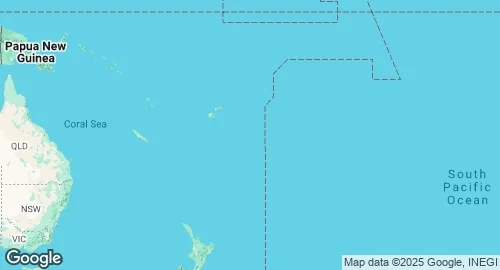
| Capital | Nuku’alofa |
| Land Area | 717 km² |
| Coastline Length | 419 km |
National Flag

Defense Statistics & Key Metrics
| Population | 105490 (2021) |
| GDP | $518.2 million (2021) |
| GDP per capita | $4913 (2021) |
| Inflation Rate | 5.64% (2021) |
Population and Military Personnel Trends
GDP and Inflation Rate Trends
Strategic Overview in 2026
Strategic Position
Tonga maintains a specialized defense posture centered on maritime sovereignty, internal security, and regional humanitarian operations. As an archipelago in the South Pacific, the primary security concerns include illegal, unreported, and unregulated (IUU) fishing, transnational crime—specifically narcotics trafficking—and the management of natural disasters.
The nation maintains bilateral defense relationships with Australia, New Zealand, the United States, and the United Kingdom. Under the Pacific Maritime Security Program, Australia provides technical support and assets for maritime surveillance. New Zealand facilitates training through the Mutual Assistance Programme. In 2025, Tonga further diversified its security partnerships by signing an Official Security Assistance agreement with Japan to receive specialized equipment. While Tonga adheres to a "One China Policy" and receives non-lethal infrastructure and logistical support from China, its primary military interoperability remains aligned with Western regional partners.
Tonga is one of only three Pacific Island countries with a standing military force. Its defense doctrine prioritizes the protection of its Exclusive Economic Zone (EEZ) and the maintenance of a rapid response capability for humanitarian assistance and disaster relief (HADR), a priority reinforced by the 2022 volcanic eruption and subsequent recovery operations.
Military Forces
His Majesty’s Armed Forces (HMAF) is the unified military organization of Tonga. The King serves as the Commander-in-Chief. The structure is divided into several operational and support components, including the Land Force, the Navy, and the Air Wing, overseen by a Joint Force Headquarters. Active personnel numbers are approximately 500 to 700.
Land Force The Land Force consists primarily of the Royal Tongan Marines and the Tonga Royal Guard. The Marines are organized into a company-sized unit trained for light infantry operations and international peacekeeping. The Royal Guard is responsible for the security of the monarch and royal installations. Small arms in service include Steyr AUG and M16 rifles. Tongan personnel frequently participate in overseas rotations, including secondments to training schools in Australia and New Zealand.
Navy The Royal Tongan Navy is the primary branch for EEZ enforcement and maritime security. Its fleet includes Australian-built Guardian-class patrol boats, specifically the VOEA Ngahau Koula and VOEA Ngahau Siliva. In August 2025, the Navy commissioned the VOEA Late, a new landing craft provided by Australia to enhance logistical transport and disaster response. The naval force also operates smaller high-speed interceptors and has received high-speed patrol boats from Japan to combat smuggling.
Air Wing The Air Wing operates light fixed-wing aircraft for maritime patrol and transport duties. In late 2025, Tonga signed an agreement to acquire a fleet of surveillance drones to expand its aerial reconnaissance capabilities without the high operating costs of manned aircraft.
Strategic Trends
The defense budget is integrated into a national fiscal strategy that prioritized a record expenditure for the 2025/26 financial year. HMAF plans to gradually increase its established personnel strength to 750 members, though current levels remain lower due to fiscal and recruitment constraints.
Modernization efforts are concentrated on maritime domain awareness and HADR capabilities. Recent procurement highlights a shift toward unmanned systems and high-speed littoral craft. In December 2025, Tonga secured a security grant for combat uniforms and surveillance drones. A major constraint facing the military is the retention of skilled personnel, often attributed to labor mobility schemes that attract qualified individuals to overseas civilian markets.
Geopolitically, the military is increasingly involved in multi-national exercises such as Pōvai Warrior, conducted with the Australian Army. The force remains focused on internal stability and regional peacekeeping, having historically deployed personnel to Iraq and Afghanistan in support of coalition operations. Future doctrinal shifts emphasize "Improved Law and Order," integrating military assets more closely with police and customs for domestic security tasks.
Frequently Asked Questions
Does Tonga have nuclear weapons?
Military Expenditure: SIPRI Milex. Suggest a change