Tuvalu Military Forces 🇹🇻
Military Strength Overview
Geography
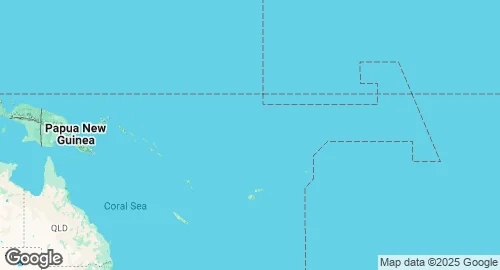
| Capital | Funafuti |
| Land Area | 26 km² |
| Coastline Length | 24 km |
National Flag
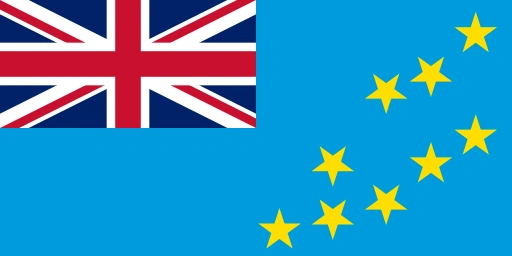
Defense Statistics & Key Metrics
| Population | 9992 (2022) |
| GDP | $59.1 million (2022) |
| GDP per capita | $5911 (2022) |
| Inflation Rate | 0.5% (2011) |
Population and Military Personnel Trends
GDP and Inflation Rate Trends
Strategic Overview in 2026
Strategic Position
Tuvalu maintains no standing military forces and relies on external security guarantees and regional partnerships for national defense. The primary framework for the country’s security is the Australia-Tuvalu Falepili Union, a bilateral treaty signed in 2023 that entered into force in 2024. Under this agreement, Australia provides a security guarantee to Tuvalu, committing to provide assistance in response to military aggression, major natural disasters, or public health emergencies. The treaty establishes Australia as Tuvalu's security partner of choice and requires mutual agreement between the two nations regarding any third-party security or defense-related arrangements involving Tuvalu.
Geopolitically, Tuvalu defines climate change and sea-level rise as its most immediate existential security threats. National doctrine increasingly integrates environmental adaptation with defense policy, viewing the preservation of statehood and maritime boundaries in the face of territory loss as a strategic priority. This policy is reflected in constitutional amendments designed to maintain sovereign statehood in perpetuity, regardless of physical land impacts from climate change.
Regionally, Tuvalu is a member of the Pacific Islands Forum and participates in the Boe Declaration on Regional Security. It maintains diplomatic relations with Taiwan, which provides development and maritime security assistance. Other key relationships include New Zealand and the United States, primarily through maritime domain awareness cooperation and fisheries enforcement.
Military Forces
National security and law enforcement responsibilities are consolidated within the Tuvalu Police Force (TPF), a paramilitary organization headquartered in Funafuti. The TPF comprises approximately 100 to 110 sworn personnel. These officers do not routinely carry firearms, reflecting a domestic environment characterized by low crime and the absence of conventional military threats.
The primary operational arm for national defense is the Maritime Surveillance Unit (MSU). The MSU is responsible for patrolling Tuvalu’s Exclusive Economic Zone (EEZ), which covers approximately 750,000 square kilometers. The unit’s core mission includes fisheries enforcement, search and rescue (SAR), and sovereignty patrols.
The MSU operates Guardian-class patrol vessels provided by Australia under the Pacific Maritime Security Program. Following the loss of its previous vessel to storm damage, Tuvalu received the replacement patrol boat Te Mataili III in 2024. This vessel is the TPF’s primary asset for long-range maritime monitoring. Additionally, the maritime unit operates coastal multipurpose boats provided by Taiwan to enhance near-shore security and surveillance.
Tuvalu does not possess an air wing, armored vehicles, or heavy artillery. Training for the TPF and MSU is conducted in coordination with the Australian Defence Force and the Royal Australian Navy, which also provide technical support and maintenance for maritime assets. Tuvalu further extends its maritime reach through "shiprider" agreements with the United States Coast Guard, allowing Tuvaluan law enforcement officers to conduct boardings from U.S. vessels to deter illegal, unreported, and unregulated (IUU) fishing.
Strategic Trends
Defense policy in 2025 and 2026 is focused on the full implementation of the Falepili Union. A central priority is the establishment of a National Security Coordination Centre in Funafuti, funded by Australia, intended to centralize response efforts for maritime security incidents and natural disasters.
Modernization efforts are directed exclusively toward maritime domain awareness and telecommunications infrastructure. Tuvalu is prioritizing the integration of satellite monitoring and digital surveillance tools to manage its vast EEZ more effectively. This shift aligns with the government’s broader "Future Now" project, which seeks to digitize government services and sovereign records as a hedge against territory loss.
The defense budget is effectively non-existent in traditional terms, as the vast majority of security infrastructure, equipment, and training is funded through bilateral grants and regional assistance programs. Procurement remains dependent on foreign aid, with Australia and Taiwan serving as the primary suppliers of maritime assets. In 2025 and 2026, the strategic focus remains the transition of national security priorities from traditional territorial defense to a multidimensional "climate security" model that emphasizes coastal adaptation and the protection of maritime resources.
Frequently Asked Questions
Does Tuvalu have nuclear weapons?
Military Expenditure: SIPRI Milex. Suggest a change