Vatican Military Forces 🇻🇦
Military Strength Overview
| ⛑️ Reserve Troops | 135 personnels |
Global Military Index
| 🪖 Manpower (15%) | 26.2 | Active, reserve & paramilitary: 67 effective |
| 🛡️ Ground Firepower (20%) | 0.0 | Main battle tanks: 0 |
| ⚓ Naval Power (20%) | 0.0 | Weighted by ship type: carriers, submarines, destroyers... |
| ✈️ Air Power (25%) | 0.0 | Weighted by aircraft type: combat, bombers, helicopters... |
| ☢️ Nuclear Deterrent (10%) | 0.0 | No declared nuclear capability |
| 💰 Defense Budget (10%) | 0.0 | Data unavailable |
Methodology: Log-scaled composite index using SIPRI, IISS, and GMNET data. Each pillar is normalized to 0-100, then weighted by strategic importance.
Geography
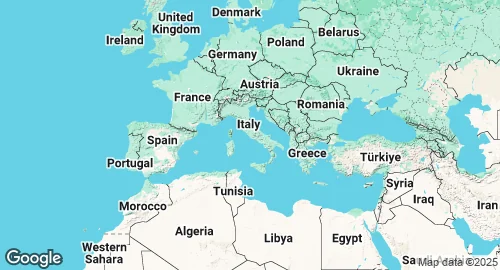
| Capital | Vatican City |
| Land Area | 1 km² |
| Coastline Length | 0 km |
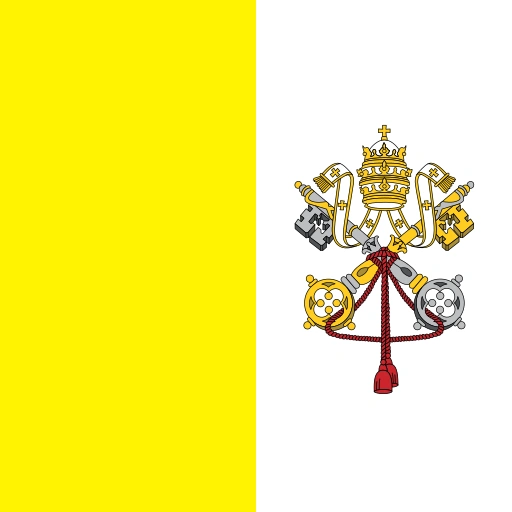
National Flag
Population and Military Personnel Trends
GDP and Inflation Rate Trends
Strategic Overview in 2026
Strategic Position
The Vatican City State maintains a policy of perpetual neutrality in international conflicts. Under Article 24 of the Lateran Treaty, the Holy See declares itself a neutral and inviolable territory, asserting that it will remain extraneous to all temporal competitions between states and to international congresses held for such objects, unless the contending parties make a joint appeal to its mission of peace. Consequently, the Vatican does not hold membership in military alliances such as NATO.
Primary security concerns center on the personal protection of the Pope, the security of the College of Cardinals during sede vacante periods, and the physical integrity of the enclave's cultural and religious sites. External defense is provided by the Italian Republic. The Italian Armed Forces are responsible for the protection of the Vatican's borders and airspace. This relationship is codified in bilateral agreements that ensure the coordination of security measures, particularly during large-scale public events in St. Peter’s Square.
Internal security is managed through a layered approach involving the Pontifical Swiss Guard and the Gendarmerie Corps. The Vatican also maintains active participation in international organizations such as the Organization for Security and Co-operation in Europe (OSCE) to engage in dialogue regarding regional stability and human rights.
Military Forces
The military and paramilitary structure of the Vatican is composed of two primary entities: the Pontifical Swiss Guard and the Gendarmerie Corps of Vatican City State.
Pontifical Swiss Guard (Cohors Helvetica) The Swiss Guard is the only remaining military unit of the Holy See. It functions as a specialized corps dedicated to the safety of the Pope and the protection of the Apostolic Palace. The unit is under the administrative jurisdiction of the Secretariat of State but reports directly to the Pope.
Personnel requirements are strictly defined: recruits must be single Swiss male citizens, Catholic, between 19 and 30 years of age, and have completed basic training with the Swiss Armed Forces. The Guard maintains an approximate strength of 135 personnel.
The unit’s command structure includes a Colonel (Commandant), a Lieutenant Colonel (Vice-Commandant), a Major, and several Captains. Operational duties include sentry service at the entrances to the Vatican City, ceremonial guard duties at papal functions, and close-protection details for the Pope during domestic and international travel.
Equipment for the Swiss Guard is categorized by function: * Ceremonial: Guards carry traditional halberds and rapiers while wearing Renaissance-style gala uniforms. * Operational: For security and counter-terrorism duties, the Guard utilizes modern small arms. The inventory includes SIG Sauer P220 and Glock 19 pistols, Heckler & Koch MP5 submachine guns, and SIG SG 550 series assault rifles.
Gendarmerie Corps (Corpo della Gendarmeria) The Gendarmerie serves as the state's paramilitary police force. It is responsible for public order, border control, traffic regulation, and criminal investigation. The Gendarmerie operates under the Directorate of Security and Civil Protection Services.
The corps includes specialized units such as the Rapid Intervention Unit (Gruppo di Intervento Rapido - GIR) and the Anti-Sabotage Unit. These units are trained to respond to high-risk scenarios, including terrorist threats and explosive ordnance disposal. The Gendarmerie operates a fleet of security vehicles and utilizes Beretta 92FS pistols and Heckler & Koch submachine guns.
Defense Industry
The Vatican City State possesses no domestic defense industry or arms manufacturing capabilities. It relies entirely on foreign imports for its security requirements. Small arms and tactical equipment are primarily sourced from Swiss and Italian manufacturers. Maintenance and procurement are handled through direct bilateral arrangements with these suppliers.
Strategic Trends
Current strategic priorities focus on infrastructure modernization and the adaptation of security protocols to address asymmetrical threats.
A major barracks reconstruction project is underway in 2026 to replace the aging facilities used by the Swiss Guard. This project is designed to modernize living quarters and administrative offices while allowing for a planned increase in personnel strength. The new facility is also designed to be adaptable for the potential future integration of female recruits, a move that remains under consideration by the Holy See.
In response to the evolving digital threat landscape, the Vatican has increased its focus on cybersecurity. This involves the protection of the Vatican Library's digitized archives, the Holy See's communication networks, and the Vatican Bank (IOR). Efforts include cooperation with international intelligence agencies to monitor and mitigate state-sponsored cyber espionage and ransomware attacks.
Recruitment remains a challenge due to the specific nationality and religious requirements for the Swiss Guard. To address this, the Vatican has intensified its outreach within Switzerland to maintain the necessary flow of qualified candidates. The Gendarmerie continues to refine its counter-terrorism capabilities, maintaining a presence in the INTERPOL network to facilitate intelligence sharing regarding transnational crime and security threats.
Frequently Asked Questions
How large is Vatican's military?
How does Vatican rank militarily in the world?
Does Vatican have nuclear weapons?
Military Expenditure: SIPRI Milex. Suggest a change