Saint Vincent and the Grenadines Military Forces 🇻🇨
Military Strength Overview
Geography
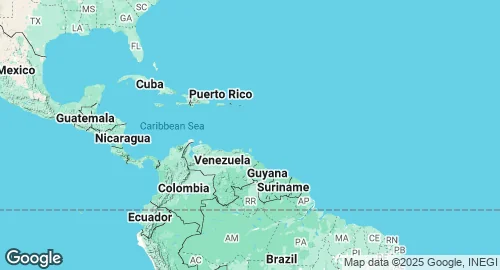
| Capital | Kingstown |
| Land Area | 389 km² |
| Coastline Length | 84 km |
National Flag
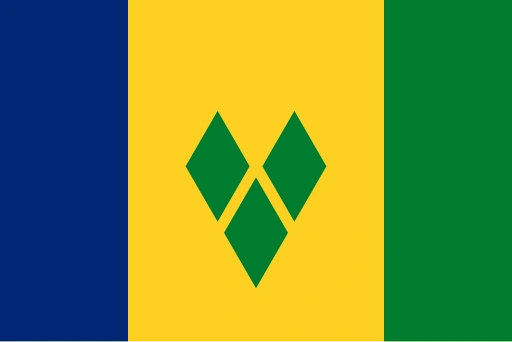
Defense Statistics & Key Metrics
| Population | 102046 (2022) |
| GDP | $966.5 million (2022) |
| GDP per capita | $9471 (2022) |
| Inflation Rate | 5.66% (2022) |
Population and Military Personnel Trends
GDP and Inflation Rate Trends
Strategic Overview in 2026
Strategic Position
Saint Vincent and the Grenadines maintains a non-militarized security posture, having no standing army. National defense and internal security are the responsibility of the Royal Saint Vincent and the Grenadines Police Force (RSVGPF), which operates under the Ministry of National Security. The primary security concerns for the archipelago include transnational narcotics trafficking, illegal, unreported, and unregulated (IUU) fishing, and maritime border protection.
The nation’s defense doctrine is centered on regional collective security and multilateralism. Saint Vincent and the Grenadines is a founding member of the Regional Security System (RSS), governed by the 1996 Treaty and the 1982 Memorandum of Understanding. This alliance provides for mutual assistance among Eastern Caribbean states in response to external threats, national emergencies, and natural disasters. Under the RSS framework, the country participates in intelligence sharing and periodic joint deployments.
The government maintains bilateral security partnerships with the United States, the United Kingdom, and Canada. These relationships involve training programs through the U.S. Southern Command and support via the Caribbean Basin Security Initiative (CBSI). In late 2025, a shift in the domestic political landscape followed the general election, though the new administration has signaled continued commitment to regional security frameworks and international cooperation.
Military Forces
The security architecture is integrated into a unified police structure. Total personnel within the RSVGPF and its paramilitary divisions are estimated at 800 to 1,000 active members. The force is headed by a Commissioner of Police; Envill Williams was confirmed in this post in late 2025.
The Special Service Unit (SSU) serves as the paramilitary arm of the police force. It is trained to handle high-risk internal security threats, counter-drug operations, and riot control. The unit operates as the primary ground-based tactical force, utilizing small arms such as M16 rifles, Beretta submachine guns, and standard-issue sidearms.
The Saint Vincent and the Grenadines Coast Guard (SVG CG) is responsible for maritime sovereignty and search and rescue (SAR) operations across the nation's exclusive economic zone. The fleet consists primarily of patrol boats and interceptors. Notable assets include: * Offshore Patrol Vessels: The fleet includes the Captain Hugh Mulzac, a Damen Stan Patrol 4207 class vessel used for long-range maritime interdiction. * Coastal Patrol Craft: The Coast Guard operates Damen Stan Patrol 2606 vessels and smaller utility craft. * Specialized Units: The SVG 05 Balliceaux is a dedicated medical evacuation and patrol vessel stationed in the southern Grenadines. * Inshore Assets: Several rigid-hull inflatable boats (RHIBs) and high-speed interceptors are used for near-shore law enforcement.
The country also maintains a small volunteer militia that serves as a reserve force, primarily intended to support the RSVGPF during national emergencies or disaster relief operations.
Strategic Trends
Defense and security expenditures are integrated into the national budget for Public Order and Safety, which was allocated approximately EC$ 105 million for the 2025 fiscal year. Procurement priorities remain focused on maritime domain awareness and the modernization of communication infrastructure.
A primary strategic trend in 2025 and 2026 is the expansion of the national cybersecurity framework. Under the Caribbean Digital Transformation Project (CARDTP), the government launched a National Action Plan for Cyber Security in 2025 to mitigate threats to critical digital infrastructure and combat rising online fraud and ransomware incidents. This initiative is supported by World Bank funding and regional coordination through CARICOM.
Operational focus has been heavily influenced by the recovery efforts following Hurricane Beryl. The RSS deployed personnel to Saint Vincent and the Grenadines in late 2024 and throughout 2025 to assist in relief and security stabilization. The RSVGPF continues to participate in major regional exercises, including TRADEWINDS 25, which emphasizes interoperability between Caribbean forces and international partners in countering hybrid warfare and transnational crime. Moving into 2026, the administration is expected to emphasize the implementation of more stringent maritime monitoring to address the "dark fleet" of vessels transiting regional waters to evade international sanctions.
Frequently Asked Questions
Does Saint Vincent and the Grenadines have nuclear weapons?
Military Expenditure: SIPRI Milex. Suggest a change