US Virgin Islands Military Forces 🇻🇮
Military Strength Overview
Geography
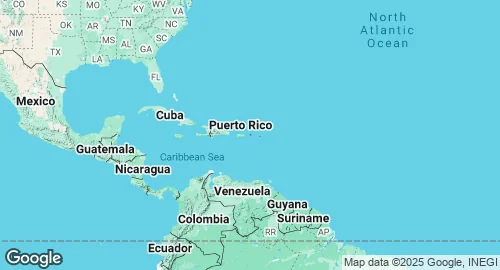
| Capital | Charlotte Amalie |
| Land Area | 346 km² |
| Coastline Length | 188 km |
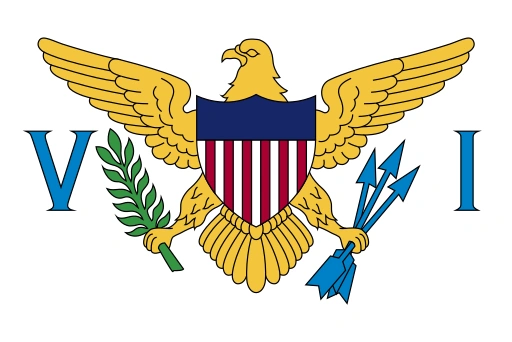
National Flag
Defense Statistics & Key Metrics
| Population | 106290 (2020) |
| GDP | $4.2 billion (2020) |
| GDP per capita | $39787 (2020) |
Population and Military Personnel Trends
GDP and Inflation Rate Trends
Strategic Overview in 2026
Strategic Position
The United States Virgin Islands (USVI) occupies a position on the northeastern boundary of the Caribbean Sea, bordering the Anegada Passage, a primary shipping lane between the Atlantic Ocean and the Caribbean. As an unincorporated territory of the United States, its defense is the responsibility of the U.S. Department of Defense, with operations coordinated through U.S. Southern Command (SOUTHCOM) and U.S. Northern Command (NORTHCOM).
In 2025 and 2026, the territory transitioned into a logistical and operational hub for Operation Southern Spear, a broad U.S. military campaign focused on maritime interdiction and regional stabilization. This shift reflects the "Trump Corollary" to the Monroe Doctrine, established in the 2025 National Security Strategy, which prioritizes the exclusion of extra-hemispheric influence and the protection of U.S. maritime approaches. Primary security concerns involve narcotics trafficking, irregular migration, and regional instability stemming from the January 2026 operations in Venezuela.
The USVI serves as a staging area for high-tempo operations within the San Juan Flight Information Region (FIR). While sovereign Caribbean nations have expressed varying levels of support for increased militarization, the USVI government maintains a policy of integration with federal defense initiatives to enhance local security and maritime domain awareness.
Military Forces
The primary domestic military component is the Virgin Islands National Guard (VING), a dual-mission force that reports to the Governor for territorial emergencies and to the President for federal service. VING comprises approximately 1,000 personnel.
Virgin Islands Army National Guard
The Army component is organized under the 104th Troop Command and the 786th Combat Sustainment Support Battalion. Key units include: - 661st Military Police Detachment: Conducts security and law enforcement support. - 662nd Engineer Company: Maintains capabilities for vertical and horizontal construction and disaster recovery. - 23rd Weapons of Mass Destruction Civil Support Team (CST): A specialized unit tasked with identifying chemical, biological, or radiological agents and supporting first responders. - Detachment 1, Company D, 1st Battalion, 114th Aviation Regiment: Operates utility helicopters for transport, medical evacuation, and surveillance.
U.S. Army Reserve
The 1st Mission Support Command (MSC) manages approximately 5,000 Army Reserve soldiers across Puerto Rico and the USVI. In January 2026, these forces conducted "Army of the Caribbean Week 2026" (ACW26), focusing on island-chain mobilization, signal communications, and large-scale combat operation readiness.
Federal Presence and Naval Assets
The U.S. Coast Guard maintains a persistent presence, with assets surged in 2025 to include additional cutters and deployable specialized forces to monitor the maritime border. The USVI does not host a permanent carrier strike group, but St. Thomas serves as a frequent port of call and logistical node for major surface combatants. In late 2025, the USS Gerald R. Ford visited the territory as part of a strike group deployment supporting regional deterrence.
Logistical infrastructure has been expanded at the Port Hamilton Refining and Transportation facility on St. Croix, which provides housing and support for rotational military personnel. Additionally, the U.S. Air Force and Navy utilize territorial airspace and local airfields for staging unmanned aerial vehicles (UAVs) and surveillance aircraft.
Strategic Trends
The defense posture of the USVI is characterized by a rapid shift toward forward-deployed readiness and infrastructure modernization. Following the 2025 National Security Strategy, there has been a documented trend of repositioning U.S. forces from legacy overseas bases to Caribbean territories.
Modernization priorities focus on: - Logistical Expansion: Development of the "Man Camp" at Port Hamilton and upgrades to armories, such as the LTC Lionel A. Jackson Armory, to support larger rotational contingents. - Maritime Surveillance: Increased deployment of integrated air and sea sensors to counter low-profile vessels and enhance domain awareness. - Joint Interoperability: Heightened frequency of joint exercises, such as the Garita Games and ACW26, designed to integrate National Guard, Reserve, and active-duty components for rapid mobilization.
Constraints include the territory's heavy reliance on federal funding and the logistical challenges of maintaining high-tempo operations across non-contiguous islands. Defense spending remains integrated into the broader U.S. defense budget, with specific territorial allocations focused on military construction and readiness projects scheduled through 2026.
Frequently Asked Questions
Does US Virgin Islands have nuclear weapons?
Military Expenditure: SIPRI Milex. Suggest a change