Vanuatu Military Forces 🇻🇺
Military Strength Overview
| 👮♀️ Paramilitary | 300 personnels |
Global Military Index
| 🪖 Manpower (15%) | 28.0 | Active, reserve & paramilitary: 90 effective |
| 🛡️ Ground Firepower (20%) | 0.0 | Main battle tanks: 0 |
| ⚓ Naval Power (20%) | 0.0 | Weighted by ship type: carriers, submarines, destroyers... |
| ✈️ Air Power (25%) | 0.0 | Weighted by aircraft type: combat, bombers, helicopters... |
| ☢️ Nuclear Deterrent (10%) | 0.0 | No declared nuclear capability |
| 💰 Defense Budget (10%) | 0.0 | Data unavailable |
Methodology: Log-scaled composite index using SIPRI, IISS, and GMNET data. Each pillar is normalized to 0-100, then weighted by strategic importance.
Geography
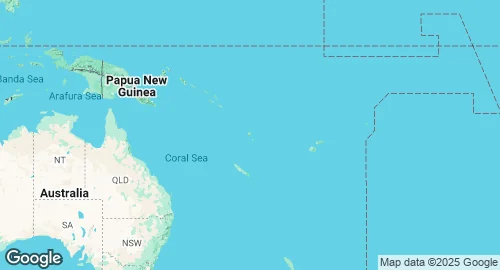
| Capital | Port Vila |
| Land Area | 12,189 km² |
| Coastline Length | 2,528 km |
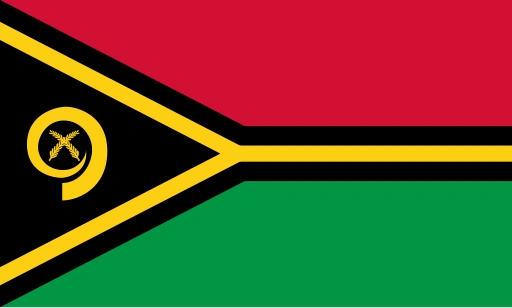
National Flag
Defense Statistics & Key Metrics
| Population | 313046 (2022) |
| GDP | $1.0 billion (2022) |
| GDP per capita | $3265 (2022) |
| Inflation Rate | 6.68% (2022) |
Population and Military Personnel Trends
GDP and Inflation Rate Trends
Strategic Overview in 2026
Strategic Position
Vanuatu maintains no standing military force. National security and defense responsibilities are partitioned between the Vanuatu Police Force (VPF) and its paramilitary arm, the Vanuatu Mobile Force (VMF). The nation’s defense doctrine emphasizes internal stability, maritime sovereignty, and disaster response rather than conventional warfare.
Vanuatu’s geopolitical posture is defined by its membership in the Pacific Islands Forum (PIF) and the Melanesian Spearhead Group (MSG). The country adheres to the Boe Declaration on Regional Security, which expands the definition of security to include environmental and resource security. Vanuatu is a signatory to the South Pacific Nuclear Free Zone Treaty (Treaty of Rarotonga), prohibiting the stationing or testing of nuclear weapons within its territory.
Primary security concerns involve the management of an Exclusive Economic Zone (EEZ) exceeding 600,000 square kilometers, specifically regarding Illegal, Unreported, and Unregulated (IUU) fishing and transnational crime. Strategic relationships are dominated by Australia and New Zealand. A bilateral security agreement with Australia, ratified in 2024, provides a framework for cooperation in areas including maritime security, disaster relief, and cybersecurity. While maintaining traditional Western ties, Vanuatu also accepts police equipment and infrastructure assistance from China, leading to a dual-tracked foreign policy typical of the "Pacific Way."
Military Forces
The Republic of Vanuatu lacks separate army, navy, or air force branches. Defense capabilities reside within two specialized wings of the Vanuatu Police Force:
Vanuatu Mobile Force (VMF) The VMF is a paramilitary internal security unit with approximately 300 to 400 personnel. It functions as a light infantry force capable of rapid deployment for civil unrest, border surveillance, and humanitarian assistance and disaster relief (HADR) operations. The VMF command structure is integrated into the VPF under the Commissioner of Police. Personnel receive training through the Australian Defense Force (ADF) and the New Zealand Defence Force (NZDF) under the Mutual Assistance Programme.
Police Maritime Wing (PMW) The PMW is responsible for maritime law enforcement, search and rescue, and EEZ surveillance. It operates patrol boats provided primarily through the Australian Pacific Maritime Security Program. The fleet consists of Guardian-class patrol boats, which replaced the older Pacific-class vessels. These ships are equipped for long-range patrol but lack heavy offensive armament, typically mounting light machine guns for law enforcement duties.
Equipment and Capabilities The VMF utilizes standard infantry small arms, including 5.56mm and 7.62mm assault rifles and light machine guns. Land mobility is provided by unarmored light utility vehicles and trucks. Vanuatu possesses no main battle tanks, armored fighting vehicles, or artillery.
The state has no dedicated military aviation branch. Aerial surveillance and maritime patrol requirements are met through regional cooperation, utilizing Royal Australian Air Force (RAAF) or Royal New Zealand Air Force (RNZAF) P-8A Poseidon assets during coordinated regional operations such as Operation Kurukuru.
Strategic Trends
Current defense priorities focus on maritime domain awareness and the professionalization of the VMF. Under the 2025-2026 planning cycle, the VMF is undergoing restructuring to improve response times to remote islands following natural disasters. This involves the establishment of regional police and VMF hubs outside the capital, Port Vila.
Maritime modernization is centered on the full operational integration of Guardian-class patrol boats. These vessels are being equipped with enhanced satellite communication suites provided by Australian defense grants to improve coordination with regional maritime fusion centers.
Cybersecurity has emerged as a distinct strategic priority. Following a 2025 initiative, Vanuatu is working with international partners to establish a National Cyber Security Centre to protect government infrastructure from ransomware and data breaches.
Defense spending remains a small fraction of the national budget, typically under 1% of GDP, with the majority of capital expenditure for defense hardware provided through foreign military aid. The primary constraint facing the VMF and PMW is the high cost of fuel and maintenance for maritime assets, which limits the frequency of deep-water patrols without external subsidization. Internal policy shifts in 2025 have emphasized "human security," directing VMF resources toward climate change adaptation and community-level disaster resilience.
Frequently Asked Questions
How does Vanuatu rank militarily in the world?
Does Vanuatu have nuclear weapons?
Does Vanuatu have paramilitary forces?
Military Expenditure: SIPRI Milex. Suggest a change