Flag of Aruba
Overview
| Country | Aruba |
| Adopted | 1976 |
| Aspect ratio | 2:3 |
| Colors | |
| Elements | Stars, horizontal stripes |
Description
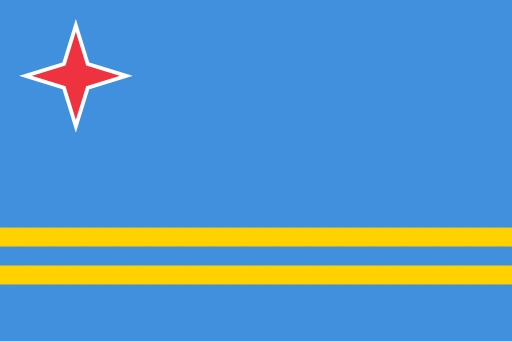
A field of light blue serves as the background for this rectangular flag, which features two thin, parallel yellow stripes positioned in the lower third. In the upper left corner sits a four-pointed red star outlined by a thin white border. The overall aspect ratio of the design is 2:3.
Symbolism
The blue field represents the Caribbean Sea, while the two yellow stripes symbolize the island's abundance of minerals and its historical industries of gold and phosphate. Representing the four points of the compass, the red star signifies the diverse origins of the Aruban people and their unity under one nation. White bordering the star denotes the purity of the Aruban people and the white sandy beaches that ring the island.
History
Official adoption occurred on March 18, 1976, during a period when the island was still part of the Netherlands Antilles. A flag committee led by Julio Maduro selected the design from over 600 submissions following a public competition. Since its implementation, the flag has remained unchanged, even after Aruba achieved its 'status aparte' within the Kingdom of the Netherlands in 1986. Prior to 1976, the territory utilized the flag of the Netherlands Antilles, which featured a white field with a blue horizontal and red vertical stripe.