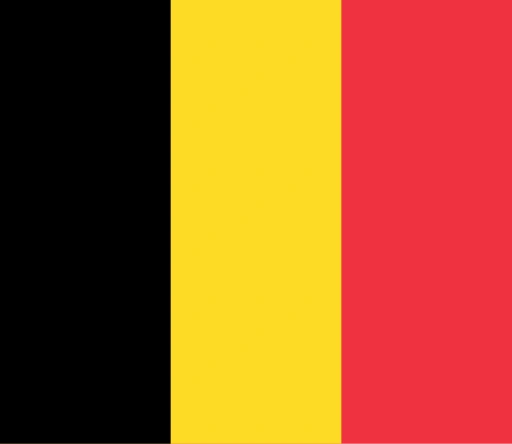
Flag of Belgium
Overview
| Country | Belgium |
| Adopted | 1831 |
| Aspect ratio | 13:15 |
| Colors | |
| Elements | Vertical stripes |
Description
The national flag of Belgium features three equal vertical bands of black, yellow, and red. Arranged from left to right, the black stripe is positioned at the hoist, followed by the yellow and finally the red. The design is notable for its unique official aspect ratio of 13:15, giving the banner a nearly square appearance.
Symbolism
The color palette is taken from the heraldic shield of the Duchy of Brabant, which depicts a yellow lion on a black background. Black serves to represent the shield and commemorate those who defended the nation's sovereignty. Yellow symbolizes the lion itself, representing strength and prosperity, while red signifies the lion’s tongue and claws, honoring the courage and sacrifice of Belgian revolutionaries.
History
Adopted on January 23, 1831, the flag emerged shortly after Belgium gained independence from the United Kingdom of the Netherlands. While the earliest versions used horizontal stripes, the Provisional Government soon transitioned to a vertical arrangement to differentiate the ensign from the Dutch flag. This color scheme draws direct inspiration from the 1789 Brabant Revolution, during which similar colors were flown in opposition to Austrian Habsburg rule. The current configuration has remained the official national symbol since the mid-19th century.