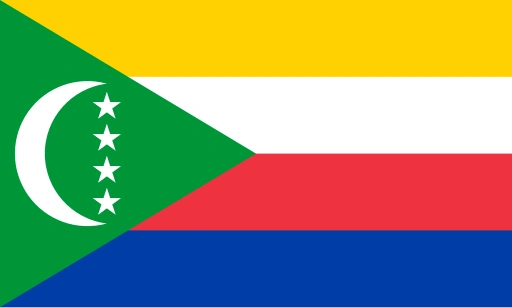
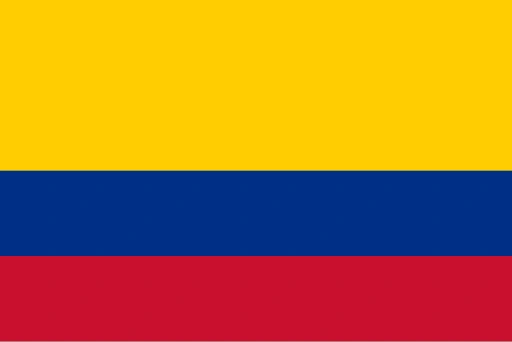
Flag of Colombia
Overview
| Country | Colombia |
| Adopted | 1861 |
| Aspect ratio | 2:3 |
| Colors | |
| Elements | Horizontal stripes |
Description
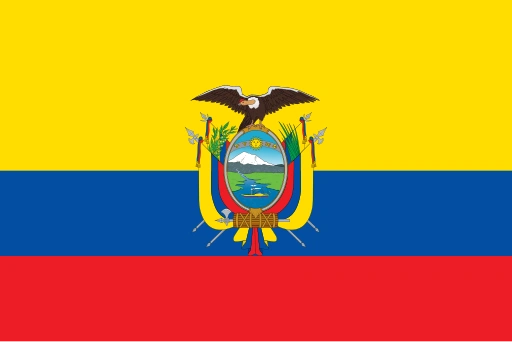
This national flag features three horizontal stripes in yellow, blue, and red. The uppermost yellow stripe is double the width of the others, occupying fifty percent of the vertical field, while the blue and red stripes each comprise twenty-five percent. No emblems or charges appear on the standard civil version of the design.
Symbolism
Yellow denotes the abundance of natural resources, the fertility of the land, and the gold that historically defined the region's wealth. The central blue stripe represents the Pacific and Atlantic Oceans that border the country, as well as the clear skies above the territory. Red commemorates the bravery and blood shed by heroes who fought for independence from Spanish colonial rule. These elements collectively illustrate the physical geography and the historical struggle for national sovereignty.
History
The tricolor design traces its origins to 1806, when General Francisco de Miranda created a similar banner for his revolutionary expeditions. Following the dissolution of Gran Colombia, the current configuration was formally adopted on November 26, 1861, during the presidency of Tomás Cipriano de Mosquera. While the arrangement of stripes varied since the early 19th century, the 1861 decree standardized the 2:3 aspect ratio and specific color distribution. It has served as the national symbol through various constitutional changes, including the transition to the modern Republic of Colombia in 1886.