Flag of Cuba
Overview
| Country | Cuba |
| Adopted | 1902 |
| Aspect ratio | 1:2 |
| Colors | |
| Elements | Stars, horizontal stripes, triangle |
Description
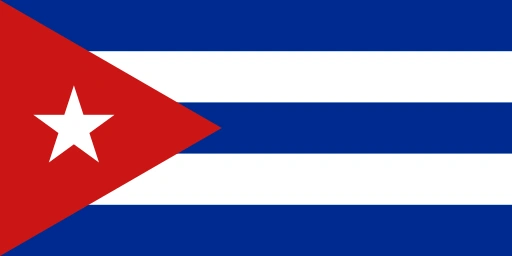
Five alternating horizontal stripes of blue and white compose the field of this rectangular banner. A red equilateral triangle is situated at the hoist side, its base extending the full height of the flag. Centered within this triangle is a single white five-pointed star.
Symbolism
The three blue stripes represent the historical administrative divisions of the island, while the two white stripes signify the purity of the independence movement's ideals. A red triangle evokes the blood shed by patriots during the struggle for freedom, echoing the revolutionary principles of liberty, equality, and fraternity. The white star, known as the Estrella Solitaria, symbolizes absolute national sovereignty and the light that guides the path to freedom.
History
Narciso López designed the banner in 1849 while in exile in New York City, assisted by poet Miguel Teurbe Tolón. Although it was flown during early uprisings against Spanish rule, the current design was officially adopted upon Cuba's independence from the United States on May 20, 1902. Unlike many other nations, Cuba retained this original design following the 1959 revolution and subsequent transition to a socialist republic.