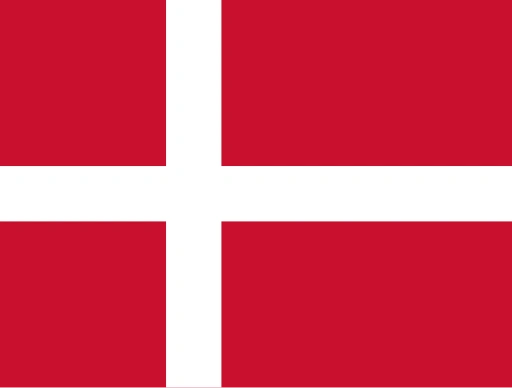
Flag of Denmark
Overview
| Country | Denmark |
| Adopted | 1625 |
| Aspect ratio | 28:37 |
| Colors | |
| Elements | Cross |
Description
This national flag features a solid red field with a white cross extending to all four edges. Positioned closer to the hoist than the fly, the vertical bar of the cross creates the distinctive asymmetrical layout known as the Nordic cross. The official dimensions are specified with an aspect ratio of 28:37.
Symbolism
The central white cross serves as a symbol of Christianity, reflecting the religious identity of the kingdom at the time of the flag's emergence. Red is traditionally interpreted as representing the blood spilled in battle or the strength and valor of the Danish people. These elements collectively commemorate the historical link between the state and the church while asserting national sovereignty.
History
While tradition dates the flag to the 1219 Battle of Lyndanisse, the earliest documented evidence of its use appears in the 14th-century Gelre Armorial. King Christian IV formally regulated the flag's use for the merchant navy in 1625, and it was later authorized for use by private citizens in 1854. This design subsequently influenced the development of national flags across the Nordic region.