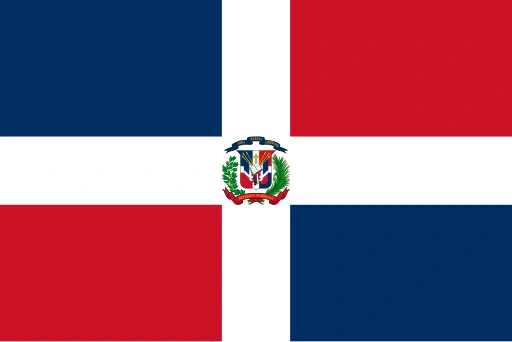
Flag of the Dominican Republic
Overview
| Country | Dominican Republic |
| Adopted | 1863 |
| Aspect ratio | 2:3 |
| Colors | |
| Elements | Cross, coat of arms |
Description
A white centered cross extends to the edges of the 2:3 ratio field, dividing the flag into four alternating rectangular quarters. The upper hoist and lower fly quadrants are ultramarine blue, while the upper fly and lower hoist quadrants are vermilion red. Positioned at the center of the cross is the national coat of arms, which features a shield supported by an olive branch and a palm branch.
Symbolism
Blue represents the sky over the nation and the liberty achieved by its people, while the red sections commemorate the blood shed by heroes during the struggle for independence. The central white cross serves as a symbol of salvation and the Christian heritage of the Dominican people. Within the coat of arms, the open Bible and small golden cross reflect the national motto "Dios, Patria, Libertad," emphasizing the central roles of faith, fatherland, and freedom.
History
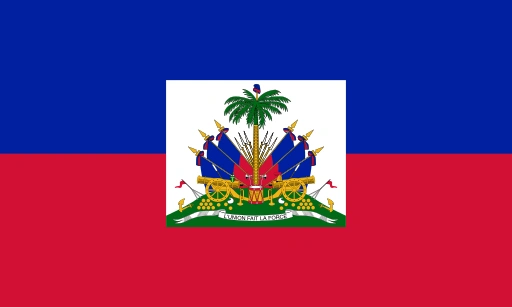
Juan Pablo Duarte, leader of the secret society La Trinitaria, designed the original version which was first hoisted during the 1844 independence movement against Haiti. While the initial design featured the blue and red blocks in a different arrangement, the current configuration was established later in 1844 and officially re-adopted in 1863 following the Dominican Restoration War. This design evolved from the Haitian flag by adding a white cross to signify the Christian faith of the revolutionary movement.