Flag of Guam
Overview
| Country | Guam |
| Adopted | 1917 |
| Aspect ratio | 22:41 |
| Colors | |
| Elements | Coat of arms |
Description
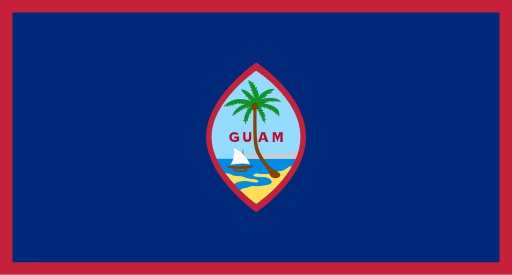
A dark blue rectangular field is enclosed by a narrow red border on all four sides. Centered on the blue background is an almond-shaped emblem featuring a coastal landscape with a palm tree, a traditional sailing vessel, and a cliffside. Red block lettering spelling the name of the territory is positioned horizontally across the middle of this central coat of arms.
Symbolism
The pointed oval shape of the central emblem mimics the ancient sling stones used by the indigenous Chamorro people for hunting and warfare. A solitary coconut tree represents the resilience and sustenance of the inhabitants, while the traditional proa boat signifies the seafaring expertise of the island's ancestors. The blue field represents the vast Pacific Ocean, and the red border honors the blood shed by residents during the 20th-century occupation of the island.
History
Governor Roy C. Smith officially approved the flag's design in 1917 after it was developed by Helen Paul, the wife of a local naval officer. During the period of Spanish colonial rule prior to 1898, the island flew the flag of Spain. The red border was a later modification, formally added to the design in 1948 following the conclusion of World War II. This 22:41 ratio flag has served as the primary territorial symbol since its inception, surviving the transition through various administrative shifts.