Flag of the Isle of Man
Overview
| Country | Isle of Man |
| Adopted | 1932 |
| Aspect ratio | 1:2 |
| Colors |
Description
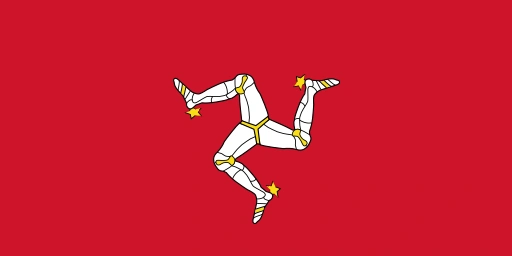
A centered triskelion, consisting of three armored human legs joined at the thigh, is set against a solid red field. These legs are flexed at the knee and arranged in a clockwise rotation, featuring silver armor and golden spurs. The flag is constructed with a 1:2 aspect ratio, resulting in a length twice its height.
Symbolism
The three legs represent the Latin motto "Quocunque Jeceris Stabit," which translates to "Whithersoever you throw it, it will stand." This emblem reflects the resilience and independence of the Manx people throughout their history of Norse and Scottish rule. Red serves as the traditional background color, while the armor and spurs signify the military readiness and chivalry of the island's medieval defenders.
History
The Isle of Man officially adopted this design on July 9, 1932, following centuries of unofficial use of the triskelion emblem. This central device is based on the arms of the 13th-century Norse-Gaelic Kings of Mann and was previously featured on the Manx Sword of State. Before its 20th-century adoption, the island's administration primarily utilized the Union Jack, though a red ensign featuring the triskelion was authorized for maritime use in 1889.