Flag of Ireland
Overview
| Country | Ireland |
| Adopted | 1919 |
| Aspect ratio | 1:2 |
| Colors | |
| Elements | Vertical stripes |
Description
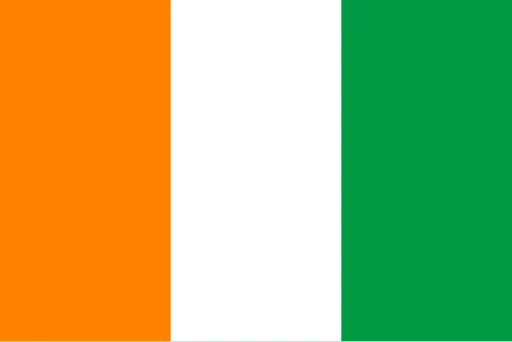
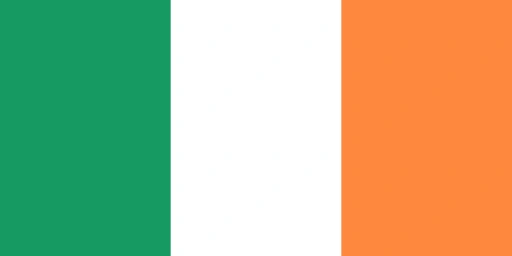
The national flag of Ireland is a vertical tricolor featuring three equal bands of green, white, and orange. Arranged from left to right, the green stripe is positioned at the hoist, followed by the white middle section and the orange stripe at the fly. This rectangular banner is designed with an aspect ratio of 1:2.
Symbolism
Green represents the Gaelic political tradition and the historic Catholic population of the island. Orange symbolizes the supporters of William of Orange, representing the Protestant tradition. The central white stripe signifies a lasting peace and the hope for a union between these two distinct cultures. Together, these elements commemorate the aspiration for inclusion and harmony among all people on the island.
History
Thomas Francis Meagher first introduced the tricolor in 1848 during the Young Irelander rebellion, drawing inspiration from the French revolutionary flag. It gained prominence as a national symbol during the 1916 Easter Rising and was subsequently adopted by the Irish Republic in 1919. Prior to this design, the unofficial national flag was frequently a green field featuring a golden harp. The flag's status was eventually confirmed and given constitutional protection in 1937.