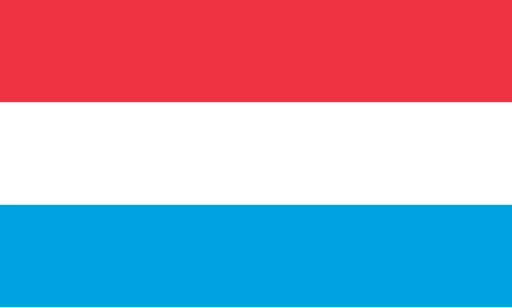
Flag of Luxembourg
Overview
| Country | Luxembourg |
| Adopted | 1972 |
| Aspect ratio | 3:5 |
| Colors | |
| Elements | Horizontal stripes |
Description
This national banner consists of three horizontal stripes of equal width arranged in a tricolor format. From top to bottom, the stripes are colored red, white, and a light shade of blue. The design is a simple geometric composition without any additional emblems or charges.
Symbolism
The colors of the tricolor are derived from the 13th-century coat of arms of the Grand Duke of Luxembourg. Red and white represent the heraldic lion and the field found on the historical shield of the House of Luxembourg. Blue is included to represent the background of the dynastic arms, connecting the modern state to its medieval origins. Collectively, these elements commemorate the nation's historical continuity and its long-standing status as a sovereign European power.
History
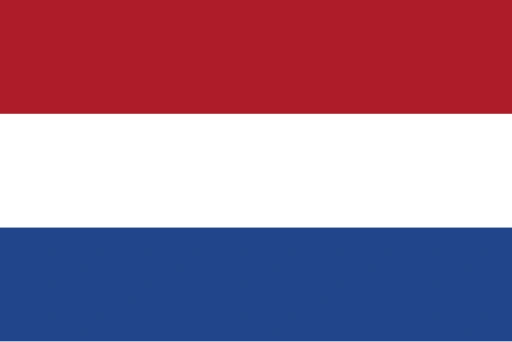
While used unofficially since the mid-19th century, the flag was formally adopted by the Grand Duchy on June 23, 1972. Its colors were initially selected during the 1830s to distinguish Luxembourgish identity during the Belgian Revolution. To prevent confusion with the flag of the Netherlands, the 1972 law defined a specific 3:5 aspect ratio and a lighter sky blue shade. A separate ensign featuring a red lion on a blue and white background was also legalized in 1972 for maritime and aviation use.