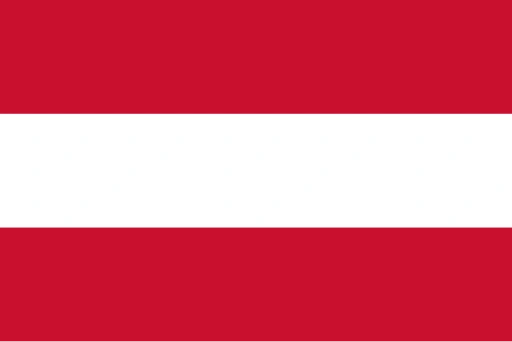
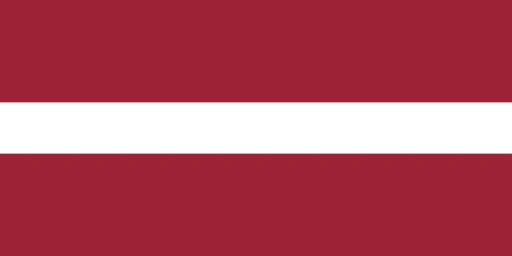
Flag of Latvia
Overview
| Country | Latvia |
| Adopted | 1990 |
| Aspect ratio | 1:2 |
| Colors | |
| Elements | Horizontal stripes |
Description
The national flag of Latvia features three horizontal stripes arranged in a 2:1:2 ratio. A narrow white band is positioned in the center, bordered by two wider stripes of a dark carmine red hue. This rectangular field maintains an overall aspect ratio of 1:2.
Symbolism
Popular legend attributes the color scheme to a wounded Latvian tribal chief whose blood stained the edges of a white sheet, leaving a clean stripe in the center. The specific dark red color, often referred to as 'Latvian red,' represents the blood shed by the population during their historical struggle for liberty. White serves as a symbol of purity, peace, and the rule of law. Together, these elements commemorate the historical endurance of the Latvian people and their commitment to national sovereignty.
History
Documentation of a red-white-red banner dates back to the 13th-century Rhymed Chronicle of Livonia, which describes a military unit from Cēsis using such a design. Artist Ansis Cīrulis standardized the modern proportions and specific shade of red in 1917, leading to its official adoption by the Republic of Latvia in 1921. Following the Soviet occupation in 1940, the flag was banned and replaced by the flag of the Latvian SSR until its legal restoration on February 27, 1990.