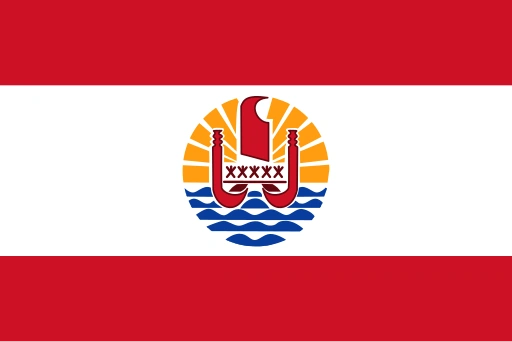
Flag of the French Polynesia
Overview
| Country | French Polynesia |
| Adopted | 1984 |
| Aspect ratio | 2:3 |
| Colors |
Description
This flag consists of three horizontal bands of red, white, and red in a 1:2:1 ratio. Centered in the middle white stripe is a circular emblem featuring a red double-hulled sailing canoe. The background of this emblem displays a yellow sun with ten rays above a pattern of blue and white waves.
Symbolism
Red and white bands reference the historical heritage of the local monarchy and the cultural identity of the Polynesian people. The central canoe, known as a pahi, represents the traditional seafaring skills and the ancestral migrations across the Pacific Ocean. Five stylized human figures atop the canoe symbolize the five archipelagos that comprise the territory: the Society, Tuamotu, Gambier, Marquesas, and Austral Islands. Surrounding the vessel, the golden sun rays signify life and energy, while the blue waves represent the ocean's role as a source of sustenance.
History
The Assembly of French Polynesia officially adopted the current flag on November 23, 1984. This decision coincided with the territory gaining increased internal autonomy from France under a new statute. Historically, the red and white color scheme was inspired by the 19th-century maritime flags of the Kingdom of Tahiti and the Pomare dynasty. While the French Tricolour remains the official national flag, the regional flag is legally mandated for display on all public buildings and during official ceremonies.