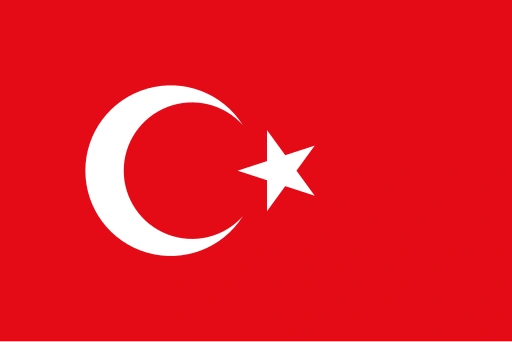
Flag of Turkey
Overview
| Country | Turkey |
| Adopted | 1936 |
| Aspect ratio | 2:3 |
| Colors | |
| Elements | Stars, crescent |
Description
The flag features a solid red field with two primary white elements positioned slightly left of center. A white crescent moon opens toward a five-pointed white star, which is oriented with one point facing the fly side. The composition maintains a 2:3 aspect ratio, ensuring the geometric alignment of the celestial symbols remains consistent.
Symbolism
Red serves as a traditional color representing the blood of soldiers who fought for the nation's independence during the Turkish War of Independence. The crescent and star are historic Islamic symbols that have been integrated into Turkic culture over several centuries. Popular legend associates the design with a reflection of the moon and a star in a pool of blood on a battlefield, symbolizing the sacrifice required to establish the republic. Together, these elements signify the sovereignty of the Turkish state and the cultural heritage of the Anatolian people.
History
While the current legal standards were codified in the Turkish Flag Law of 1936, the basic design originated in the late 18th century during the Ottoman Empire. Sultan Selim III introduced a similar version featuring an eight-pointed star in 1793, which was later modified to the five-pointed star in 1844 under Sultan Abdülmecid I. Following the collapse of the Ottoman Empire and the establishment of the Republic of Turkey in 1923, the new government retained the design to maintain continuity with the nation's past. Minor adjustments to the precise dimensions and mathematical proportions were finalized in the mid-1930s to standardize its appearance across all official uses.