Flag of the United States
Overview
| Country | United States |
| Adopted | 1960 |
| Aspect ratio | 10:19 |
| Colors | |
| Elements | Stars, horizontal stripes |
Description
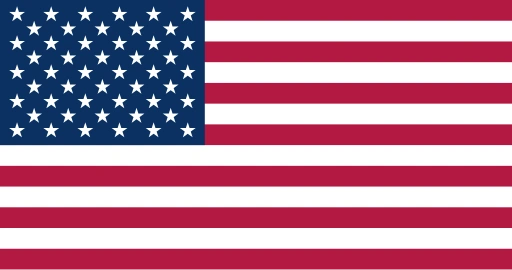
The design consists of thirteen horizontal stripes of equal height, alternating between red and white colors. A blue canton in the upper hoist-side corner contains fifty small, white, five-pointed stars arranged in nine offset horizontal rows. This rectangular field of blue rests against the top seven stripes.
Symbolism
The thirteen horizontal stripes represent the original British colonies that declared independence to form the United States. Within the blue canton, the fifty individual stars signify each of the current states in the Union. While the flag's colors were not officially defined until 1782 for the Great Seal, red is widely accepted to denote hardiness and valor, white represents purity and innocence, and blue signifies vigilance, perseverance, and justice.
History
Congress first established the national banner through the Flag Resolution of 1777, which specified thirteen stripes and thirteen stars to represent the original colonies. Over the subsequent two centuries, the number of stars increased as new states joined the Union, leading to various official configurations. President Dwight D. Eisenhower ordered the current fifty-star version in 1959 following the admission of Hawaii, and it was officially raised for the first time on July 4, 1960. This 1960 iteration remains the longest-used version in the nation's history.