Grissom Air Reserve Base
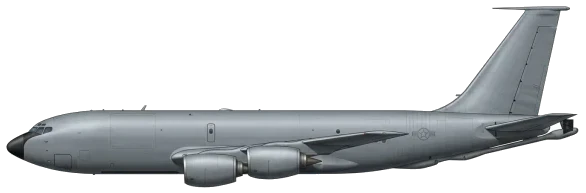
Grissom Air Reserve Base (ICAO KGUS) is an active joint civil-military airfield in Indiana, United States, operated by the US Air Force Reserve. It has 1 runway (3,810 m). Home to the 434th Air Refueling Wing, the 72nd Air Refueling Squadron, flying KC-135 Stratotanker.
Facility Details
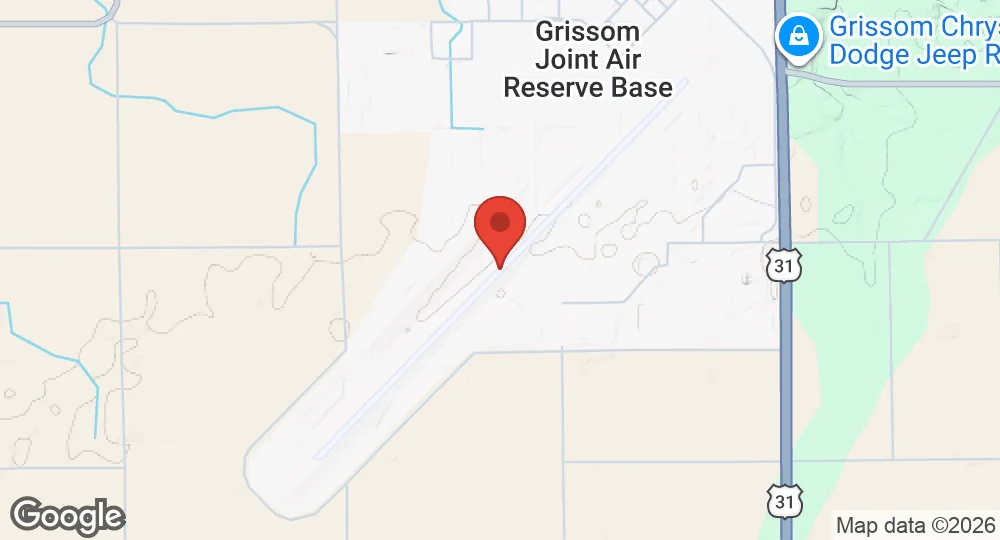
40.6481°N, 86.1522°W · 247 m elevation
| Operating Country | 🇺🇸 United States |
| Location | 🇺🇸 United States |
| Status | Active |
| Usage | Dual |
| Year built | 1942 |
| Operating Organization | US Air Force Reserve |
| Units |
434th Air Refueling Wing72nd Air Refueling Squadron
|
| Elevation | 247 m (810 ft) |
| IATA code | GUS |
| ICAO code | KGUS |
| Runways |
05/23 · 3,810 m (12,500 ft) · Asphalt
|
| Website | www.grissom.afrc.af.mil/ |
- 89 km Fort Wayne Air National Guard Base 122nd Fighter Wing
- 165 km Hulman Field Air National Guard Base 181st Intelligence Wing
- 199 km Battle Creek Air National Guard Base 110th Wing
- 201 km Wright-Patterson Air Force Base 88th Air Base Wing
- 216 km Springfield Air National Guard Base 178th Wing
- 222 km Toledo Air National Guard Base 180th Fighter Wing
 434th Air Refueling Wing
 72nd Air Refueling Squadron
Description
Grissom Air Reserve Base is located 12 miles north of Kokomo in Cass and Miami counties, Indiana. Established in 1942 as Naval Reserve Air Base Peru, the facility originally served as a training installation for U.S. Navy, Marine Corps, and Coast Guard pilots. It was renamed Naval Air Station Bunker Hill in 1943. Following a period of inactivity after World War II, the site was transferred to the U.S. Air Force in 1954 and reopened as Bunker Hill Air Force Base under Tactical Air Command. Strategic Air Command assumed operational control in 1957. The installation was renamed Grissom Air Force Base in 1968 in honor of Lieutenant Colonel Virgil I. Grissom. Pursuant to 1991 Base Realignment and Closure legislation, the base was realigned under the Air Force Reserve Command and renamed Grissom Air Reserve Base in 1994.
The 434th Air Refueling Wing serves as the host unit and is operationally gained by Air Mobility Command. The wing operates squadrons of Boeing KC-135R Stratotankers to support global aerial refueling requirements and trains reservists for worldwide duty. The base also hosts the U.S. Marine Corps Reserve Center Grissom and several U.S. Army Reserve units, including the 316th Psychological Operations Company, the 1st Battalion of the 330th Regiment, and the 855th Quartermaster Company.
The military installation occupies approximately 1,700 acres and operates as a joint-use facility alongside the civilian Grissom Aeroplex. Infrastructure includes flight operations buildings, maintenance hangars, and an assembly and repair shop equipped with a five-ton overhead crane. A specialized water survival training pool features platforms that simulate the height of an aircraft carrier for abandon-ship maneuvers. The base maintains a radar approach control facility and was designated as an emergency landing site for the Space Shuttle program.
- AUG 142026 Updated Based aircraft recorded: KC-135 Stratotanker
- AUG 132026 Updated Runway designations, surfaces and lengths recorded
- APR 112026 Updated Description updated in a site-wide editorial pass
- JAN 122026 Updated Sources and cross-references refreshed
- JUL 12025 Updated Airbase data reviewed and updated