Kisarazu Air Field
Summary
| Operating Country | 🇯🇵 Japan |
| Location | 🇯🇵 Japan |
| Status | ◉ Active |
| Usage | Military only |
| Year built | 1936 |
| Operating Organization | Japan Ground Self-Defense Force |
| Units |
|
Location & Details
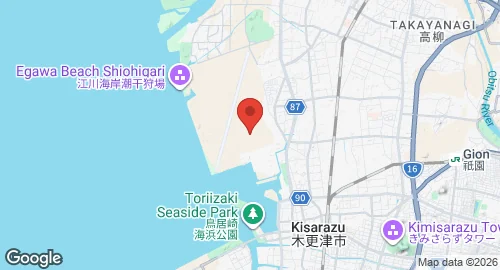
| Coordinates | 35.3950°N, 139.9131°E |
| Elevation | 3 m (10 ft) |
| ICAO code | RJTK |
| Runways |
|
Description
Kisarazu Air Field is located 1.2 nautical miles north-northwest of Kisarazu in Chiba Prefecture, Japan. Established in 1936 for the Imperial Japanese Navy Air Service under the Yokosuka Naval District, the facility originally hosted the Kisarazu Air Group, the first land-based bomber unit of the Imperial Japanese Navy. During World War II, the base served as a testing site for experimental aircraft, including the Nakajima Kikka jet. Following the end of the conflict in 1945, the United States Air Force operated the site as Kisarazu Air Base. In 1956, control transferred to the Japan Air Self-Defense Force (JASDF) for use as a training facility, while United States units remained in a tenant capacity until 1961. The Japan Ground Self-Defense Force (JGSDF) assumed control of the installation in 1968. Under the Treaty of Mutual Cooperation and Security between the United States and Japan, the site remains designated as an auxiliary landing field for the United States 7th Fleet.
The JGSDF operates the aerodrome as Camp Kisarazu. The 1st Helicopter Brigade is the primary unit stationed at the base and is attached to the Central Readiness Force. This unit provides support to the 1st Airborne Brigade and the Japanese Special Forces Group. The base also hosts tenant units from the Japan Maritime Self-Defense Force and the Japan Air Self-Defense Force. Aircraft types operating from the facility include the CH-47 Chinook.
In 2014, the Japanese government established the base as a maintenance hub for V-22 Osprey tiltrotor aircraft. The facility provides depot-level repairs for V-22s operated by the United States Marine Corps from MCAS Futenma and has previously serviced JGSDF Ospreys. Maintenance is conducted by JGSDF personnel with assistance from Boeing and Bell Helicopter technicians. A formal maintenance facility opened at the site on January 12, 2017.