Pipistrel Virus SW80
Slovenian two-seat light aircraft, introduced in the late 1990s, utilized for training, surveillance, and recreational flight operations. Key figures: top speed 283 km/h, range 1,450 km, service ceiling 6,800 m, max takeoff weight 600 kg, built 1,000. In service with 1 air force as of 2026 — India (83).
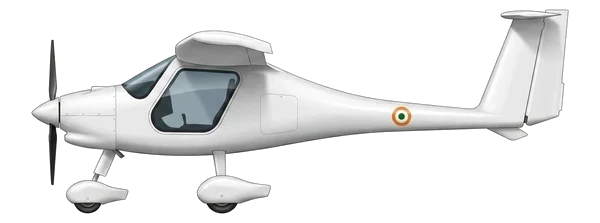

| Crew | 1 |
| Length | 6.5 m (21.3 ft) |
| Wingspan | 10.7 m (35.1 ft) |
| Height | 1.9 m (6.1 ft) |
| Wing area | 9.5 m² (102.4 sqft) |
| Empty weight | 289 kg (637 lbs) |
| Max. takeoff weight | 600 kg (1,323 lbs) |
| Powerplant | 1 × Rotax 912 UL 60 kW each |
| Maximum speed | 283 km/h (176 mph) |
| Operational range | 1,450 km (901 mi) |
| Endurance | 5 hours |
| Service ceiling | 6,800 m (22,310 ft) |
| Climb rate | 8.4 m/s (27.6 ft/s) |

Recent Events — Pipistrel Virus SW80
1 event →
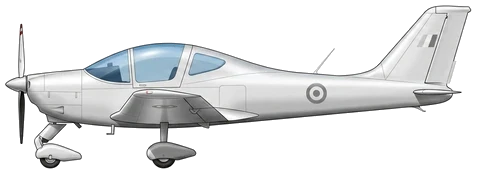
Description
The Pipistrel Virus is a two-seat, high-wing light aircraft manufactured by Pipistrel in Slovenia and Italy. Based on the Pipistrel Sinus, the Virus first flew on August 10, 1999, and entered production in January 2000. Development of the short wing (SW) version began in 2007, with production starting in 2008. By March 2019, Pipistrel had produced 1,000 units of the Sinus and Virus product lines.
Design
The Virus SW 80 is a cantilever monoplane of pod-and-boom configuration featuring a T-tail and air brakes. It has a wingspan of 10.7 meters and utilizes a fixed undercarriage in either tricycle or tailwheel configuration. The cabin provides side-by-side seating for two. Power is supplied by an 80 hp Rotax 912 engine. The airframe can be equipped with an emergency recovery parachute system. Later certified versions, such as the SW 121, include dual redundant ADAHRS units, autopilots, and haptic stall warning systems.
Operational History
In October 2015, the Indian Ministry of Defence ordered 194 units of a specialized SW 80 variant, designated "Garud," for training Flight Safety and Air Wing Cadets. The order included 110 aircraft for the National Cadet Corps, 72 for the Indian Air Force, and 12 for the Indian Navy. All units were delivered by September 2019. In Indian service, the Garud is also used for monitoring bird activity around airfields. On January 21, 2026, an Indian Air Force Garud performed a forced emergency parachute landing near Bamrauli following an engine failure; the crew was uninjured. Other military operators include the Slovenian Air Force and the Royal Danish Air Force, which employ the electric Velis Electro variant. In 2012, a turbocharged Virus SW completed a 100,000 km circumnavigation, reaching an altitude of 8,944 meters.
Variants
- Virus SW 80: Short wing version with a 10.7-meter wingspan and an 80 hp Rotax 912 engine.
- Virus SW 80 Garud: Military trainer variant developed for the Indian Ministry of Defence.
- Virus SW 100: Short wing version powered by a 100 hp Rotax 912 ULS engine.
- Virus SW 121: EASA type-certified model powered by a Rotax 912 S3 and equipped with digital avionics.
- Velis Electro (Virus SW 128): First EASA-certified electric aircraft, powered by a 76 hp electric engine with 50-minute endurance.
Frequently Asked Questions
What type of aircraft is the Pipistrel Virus SW80?
What is the maximum speed of the Pipistrel Virus SW80?
What is the range of the Pipistrel Virus SW80?
When did the Pipistrel Virus SW80 first fly?
How many Pipistrel Virus SW80 have been built?
Which countries operate the Pipistrel Virus SW80?
What is the service ceiling of the Pipistrel Virus SW80?
- JUL 272026 Updated Name updated
- APR 212026 Created Page created: Virus SW80