Andorra Military Forces 🇦🇩
Military Strength Overview
Geography
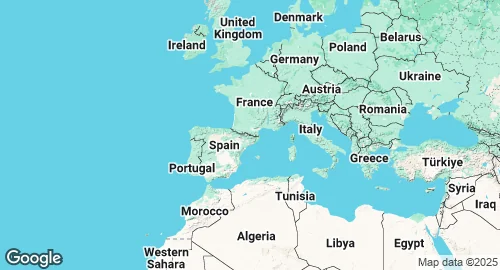
| Capital | Andorra la Vella |
| Land Area | 468 km² |
| Coastline Length | 0 km |
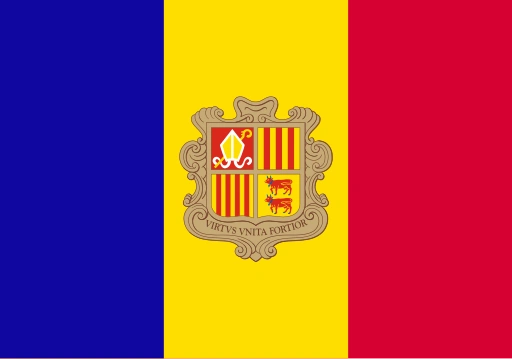
National Flag
Defense Statistics & Key Metrics
| Population | 79705 (2022) |
| GDP | $3.4 billion (2022) |
| GDP per capita | $42414 (2022) |
Population and Military Personnel Trends
GDP and Inflation Rate Trends
Strategic Overview in 2026
Strategic Position
Andorra maintains a unique defense posture as a non-militarized microstate landlocked between France and Spain. The principality’s security is fundamentally underpinned by the 1993 Treaty of Good Neighborliness, Friendship and Cooperation. Under this tripartite agreement, France and Spain are formally responsible for the defense of Andorran territory in the event of external aggression or threats to its sovereignty. This arrangement allows Andorra to operate without a standing military while benefiting from the security umbrellas of two NATO member states.
The country’s strategic priorities are centered on internal security, border integrity, and regional cooperation. Primary security concerns involve trans-border organized crime, specifically the smuggling of illicit goods, and maintaining the stability of its financial sector against money laundering. As of 2026, Andorra is not a member of NATO or the European Union but maintains close alignment with European security standards. The principality participates in international security frameworks through the United Nations, the OSCE, and Interpol. Regional relationships are dominated by its status as a co-principality, with the President of France and the Bishop of Urgell serving as joint heads of state, ensuring deep institutional links with both neighboring nations.
Military Forces
Andorra does not possess a standing army, navy, or air force. All security and paramilitary functions are consolidated under the Cos de Policia d’Andorra (Police Corps of Andorra). The force is a civilian agency under the authority of the Ministry of Justice and Interior, though it retains specialized tactical capabilities for high-risk operations.
Personnel The total active personnel strength of the Police Corps is approximately 340 officers, including administrative and technical support staff. Recruitment efforts in late 2025 added 24 agents to the force to address staffing requirements for 2026. Additionally, the Sometent serves as a traditional militia comprised of all able-bodied men. While historically a defensive levy, it currently functions as a ceremonial organization and is occasionally mobilized for civil protection or mountain rescue emergencies under the direction of the General Council.
Organization and Units The Police Corps is organized into four main operational divisions: - Criminal Police: Responsible for investigations into organized crime, drug trafficking, and financial offenses. - Public Security and Proximity: Tasked with general patrol, maintaining public order, and community policing. - Traffic and Borders: Oversees road safety and manages immigration controls at the borders with France and Spain. - Police Support: Provides logistical, IT, and training services.
Specialized capabilities are maintained by the Grup d’Intervenció Policia d’Andorra (GIPA). This tactical unit is trained for counter-terrorism, hostage rescue, and high-stakes arrests. GIPA personnel receive specialized training in mountain operations, reflecting the country’s Pyrenean terrain, and maintain interoperability with French and Spanish special intervention units.
Equipment Inventory is limited to small arms and light equipment suitable for law enforcement and counter-terrorism. The standard sidearm is the Glock 17, while specialized units operate Heckler & Koch MP5 submachine guns and G36 assault rifles. The force maintains a fleet of all-terrain vehicles and motorcycles for mountain patrols. There are no armored fighting vehicles, artillery pieces, or combat aircraft.
Strategic Trends
The 2025–2026 period is marked by a focus on technological modernization and tighter integration with European border management systems. A primary strategic priority is the implementation of the Schengen Entry/Exit System (EES) at the Spanish–Andorran border, scheduled for February 2026. This system digitalizes border controls and enhances the tracking of third-country nationals, aimed at reducing irregular migration and improving counter-terrorism surveillance.
Cybersecurity has emerged as a central pillar of Andorran security doctrine. Following the 2022 Cybersecurity Act, the government has integrated the National Security Plan (ENSAD) and the Critical Infrastructure Regulations (RIC-AD) into its operational framework. These measures establish technical standards for the protection of essential services, including banking and energy grids. In 2026, Andorra continues to expand its domestic cyber-incident response capabilities and seeks deeper intelligence-sharing agreements with the European Union to mitigate hybrid threats.
Budgetary trends show a steady increase in internal security spending, primarily directed toward personnel recruitment and the upgrading of digital forensics infrastructure. The absence of a conventional defense budget as a percentage of GDP remains a constant, as external defense costs are absorbed by the protector states. Future shifts are expected to focus on deepening the Association Agreement with the European Union, which may further harmonize Andorran security protocols with broader European defense and intelligence architectures.
Frequently Asked Questions
Does Andorra have nuclear weapons?
Military Expenditure: SIPRI Milex. Suggest a change