Benin Military Forces
Benin ranks #146 of 170 militaries worldwide in 2026, with 7,250 active troops. The Air Force flies 11 aircraft. Benin has no nuclear weapons.
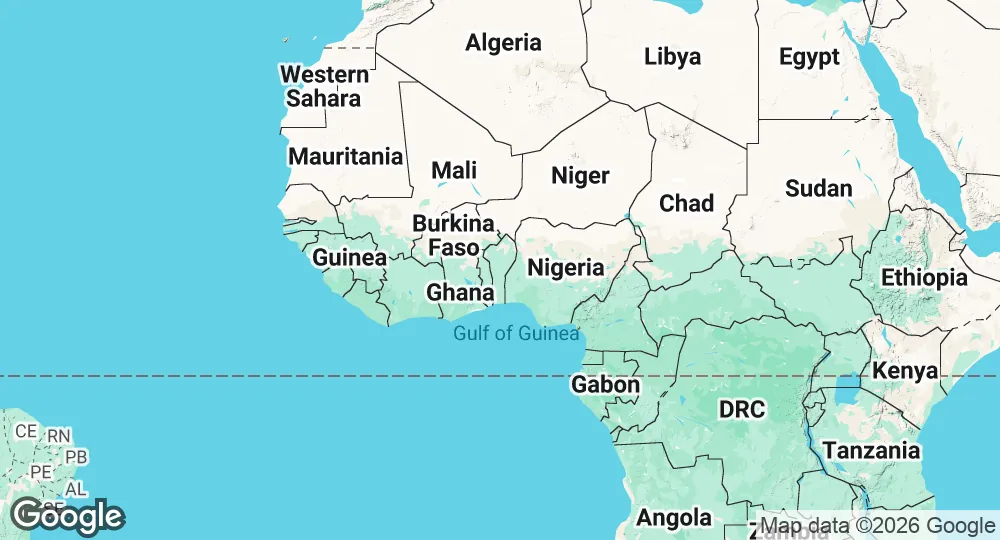

Armed Forces in 2026
| Domain | Strength | Composition |
|---|---|---|
| Air Force | 11 aircraft | 9 helicopters |
| Personnel | 7,250 active | 4,800 paramilitary |
ATLAS Index (Aggregate Total of Land, Air and Sea strength)
Full ranking →| Pillar | Weight | Score | Basis |
|---|---|---|---|
| Manpower | 10% | 21.7 | Active, reserve & paramilitary personnel |
| Ground forces | 20% | 0.0 | ARMS inventory power: armour & artillery by type and era, attack helicopters, armament |
| Naval power | 20% | 0.0 | SEAS inventory power: hulls by type, size and era, air wing, sustainment, armament |
| Air power | 25% | 12.2 | AIRS inventory power: aircraft by type and generation, enablers, armament |
| Nuclear deterrent | 10% | 0.0 | No declared nuclear capability |
| Defense budget | 15% | 11.3 | Annual spending, purchasing-power adjusted |
| Availability | modifier | ground ×0.80 · naval ×1.00 · air ×0.95 | Budget per point of each force, from the branch indexes |
Country File
| Population | 14.5M (2024) |
| GDP | $21.5 billion (2024) |
| GDP per capita | $1,485 |
| Military budget | $150M (2024) |
| Share of GDP | 0.7% (2024) |
| Military spending per capita | $10 (2024) |
| Inflation rate | 1.16% (2024) |
| Capital | Porto Novo |
| Region | Africa |
| Land area | 114,305 km² |
| Coastline | 121 km |
| Land borders | 1,989 km |
| Bordering countries | 4 |
| Currency | XOF |
Strategic Overview in 2026
Strategic Position
The Republic of Benin occupies a coastal position in West Africa, bordered by Togo, Burkina Faso, Niger, and Nigeria. Geopolitically, the state has transitioned from a stable littoral nation to a frontline actor against the southward expansion of militant Islamist organizations from the central Sahel. The primary security concerns are concentrated in the northern departments of Alibori and Atacora, where incursions from groups linked to al-Qaeda and the Islamic State have increased.
Benin is a member of the Economic Community of West African States (ECOWAS) and the African Union. It participates in the Accra Initiative, a regional security framework designed to prevent the spillover of terrorism into coastal West Africa through intelligence sharing and joint operations. Bilateral military cooperation is a cornerstone of Beninese defense strategy; the government maintains a deep technical and logistical partnership with France and signed a comprehensive bilateral defense agreement with the United States in January 2025 to enhance interoperability and logistical support. Additionally, a security pact with Rwanda provides training and technical assistance for counter-insurgency operations. Relationships with neighboring Niger have been strained by border disputes and regional political shifts, complicating coordinated security efforts along their shared frontier.
Military Forces
The Forces Armées Béninoises (FAB) are under the command of the Chief of General Staff and are overseen by the Ministry of National Defense. The FAB comprises approximately 10,000 to 15,000 active-duty personnel across four branches: the Army, Navy, Air Force, and the National Guard. Recent large-scale recruitment drives have aimed to double the force size to meet escalating northern security demands.
-
Army: The largest branch, organized into infantry battalions, an armored squadron, and specialized commando units. The Army operates PT-76 light tanks and BRDM-2 reconnaissance vehicles. Armored mobility is supported by VBL scout cars and Bastion, AML-90, and Casspir armored personnel carriers.
-
National Guard: Established as a distinct military branch to serve as a rapid-reaction force, the National Guard is tasked with internal security, counter-insurgency, and protecting sensitive infrastructure. It plays a lead role in Operation Mirador, the ongoing domestic campaign against militant incursions.
-
Navy: Focused on maritime security in the Bight of Benin, the Navy addresses piracy, illegal fishing, and smuggling. It operates a fleet of patrol vessels, including FPB 98 and Patra-class patrol boats.
-
Air Force: Primarily a transport and surveillance arm, the Air Force operates DHC-6 Twin Otter and MA60 fixed-wing aircraft. Rotary-wing assets include H225M and AS350 helicopters. Surveillance capabilities have been augmented by the integration of tactical unmanned aerial vehicles (UAVs) for border monitoring.
Strategic Trends
Benin’s defense posture is currently defined by the 2025–2029 Strategic Plan, which prioritizes the modernization of the FAB into a more mobile and technologically capable force. The defense budget saw an 18% increase for the 2025 fiscal year, totaling approximately CFA 118 billion (USD 209 million), reflecting the transition to a sustained counter-insurgency footing.
Modernization priorities include the acquisition of additional armored vehicles, improved intelligence-gathering systems, and expanded drone capabilities for Operation Mirador. Strategic focus has also shifted toward protecting critical infrastructure, such as the Agadem-Sèmè oil pipeline. Internal stability remains a priority following a foiled coup attempt in late 2025, which highlighted the military's role in constitutional defense and its continued reliance on regional and international partners for logistical and surveillance support during crises. The ongoing challenge for the FAB remains balancing the resource-heavy requirements of northern counter-insurgency with the need for maritime security and domestic institutional stability.
Military Expenditure: CIA World Factbook. Last updated on 4 August 2026. Suggest a change
Frequently Asked Questions
How large is Benin's military?
What is Benin's defense budget?
How does Benin rank militarily in the world?
Does Benin have nuclear weapons?
How many aircraft does Benin's air force have?
What percentage of GDP does Benin spend on defense?
What is Benin's military personnel per capita?
Does Benin have paramilitary forces?
- AUG 42026 Updated Global Military Index updated in a site-wide editorial pass
- JUL 162026 Updated Global Military Index updated in a site-wide editorial pass
- JUN 162026 Updated Yearly statistics, military spending and 2 more fields updated
- JAN 132026 Updated Description added