Hong Kong Military Forces 🇭🇰
Military Strength Overview
Geography
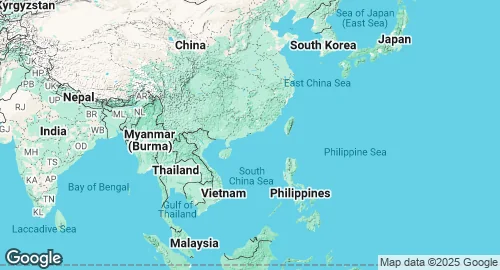
| Capital | Hong Kong |
| Land Area | 1,106 km² |
| Coastline Length | 733 km |
National Flag
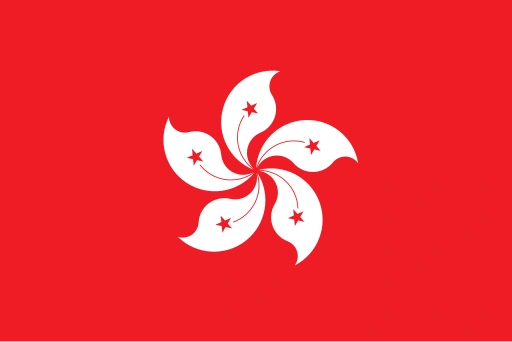
Defense Statistics & Key Metrics
| Population | 7.3 million (2022) |
| GDP | $358.7 billion (2022) |
| GDP per capita | $48826 (2022) |
| Inflation Rate | 1.88% (2022) |
Population and Military Personnel Trends
GDP and Inflation Rate Trends
Strategic Overview in 2026
Strategic Position
As a Special Administrative Region (SAR) of the People's Republic of China (PRC), Hong Kong’s defense and foreign affairs are the responsibility of the Central People's Government. The primary security framework is dictated by the Basic Law and the Law of the People's Republic of China on Garrisoning the Hong Kong Special Administrative Region. Strategic priorities center on the preservation of national sovereignty, territorial integrity, and internal security.
The security posture transitioned following the implementation of the National Security Law (NSL) and the 2024 Safeguarding National Security Ordinance, which completed the local legislative requirements under Article 23 of the Basic Law. These legal frameworks integrate Hong Kong’s security architecture directly into the national defense system of the PRC, focusing on the prevention of secession, subversion, and external interference.
Hong Kong does not maintain independent alliance memberships and is integrated into the PRC’s regional defense strategy. The territory is a component of the Southern Theater Command’s area of responsibility, which oversees operations in the South China Sea. Regional relationships are influenced by the PRC’s broader geopolitical stance, including 2025-2026 maritime and diplomatic frictions with regional neighbors such as Japan and the United States.
Military Forces
The People's Liberation Army (PLA) Hong Kong Garrison is a joint force comprising elements from the Ground Force, Navy, and Air Force, alongside personnel from the People's Armed Police. It is under the direct leadership of the Central Military Commission (CMC) in Beijing and the administrative oversight of the Southern Theater Command. The garrison maintains a presence across 19 military sites, with headquarters at the Chinese People's Liberation Army Forces Hong Kong Building in Central.
Personnel The garrison maintains a force of several thousand active-duty personnel. Recruitment and training are conducted in mainland China, with regular rotations typically occurring annually. The 27th officer rotation was completed in early 2025, and the force initiated its 2026 training cycle on January 4, 2026, focusing on joint operational capabilities.
Ground Force Ground units are stationed at various barracks, including Gun Club Hill, San Wai, and Stanley. The force operates ZSL-92 wheeled armored vehicles and specialized internal security equipment. Personnel are trained in urban combat, counter-terrorism, and riot control.
Navy The naval element is based at the Ngong Shuen Chau Naval Base (Stonecutters Island). It operates Type 056 corvettes and various patrol craft designed for coastal defense and maritime surveillance. The squadron is responsible for patrolling the SAR's territorial waters and providing maritime security.
Air Force The air element operates out of Shek Kong Airfield and maintains a presence at Shadi Air Base in Guangdong. Equipment consists of Z-9 series helicopters, including utility and attack variants. These units conduct transport, search and rescue, and reconnaissance missions over the territory.
Specialized Capabilities The garrison maintains dedicated special operations units capable of hunter-combat training and rapid response. In 2025, the garrison increased its emphasis on joint-service drills to align with the PLA’s theater-level operational doctrines. It also operates sophisticated radar and surveillance facilities at Tai Mo Shan to monitor regional airspace and maritime traffic.
Strategic Trends
Defense policy in Hong Kong is currently aligned with the PLA’s "centenary goal" targeted for 2027. Modernization programs prioritize informatization and the application of intelligent technologies in command-and-control systems. Force development focuses on enhancing "jointness" between the land, sea, and air branches to ensure rapid response to internal or external security threats.
A significant trend is the increased public visibility of the garrison as a symbol of sovereignty. Open-day events in 2025 at Stonecutters Island and Shek Kong featured demonstrations of bayonet drills and advanced flight maneuvers, aimed at demonstrating operational readiness to the local population.
Budgetary allocations for the garrison are included in the national defense budget of the PRC. Constraints on the military presence include the high density of Hong Kong's urban environment, which limits the scale of local training maneuvers. Consequently, the garrison conducts many of its heavy equipment exercises and live-fire drills at the Tsing Shan firing range or at training bases in mainland China to maintain combat proficiency. The force also faces external pressures from international sanctions, such as those included in the United States' FY2026 National Defense Authorization Act, which targets entities involved in PRC defense and technology sectors.
Hong Kong Naval Shipbuilding
| Class | Type |
|---|---|
| Sea Panther | Command Boat |
Frequently Asked Questions
Does Hong Kong have nuclear weapons?
Military Expenditure: SIPRI Milex. Suggest a change