Z-9 Haitun
Chinese utility helicopter, widely deployed for anti-submarine and SAR missions since the late 20th century. Key figures: top speed 315 km/h, range 1,000 km, service ceiling 6,000 m, max takeoff weight 4,100 kg, built 200. In service with 13 air forces as of 2026 — China (314), Cambodia (9), Zambia (7) and 10 others.
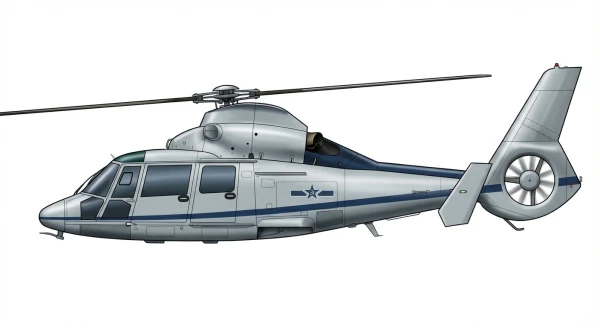
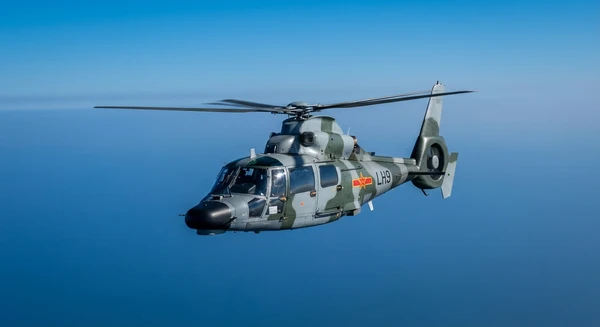
| Length | 13.7 m (44.9 ft) |
| Wingspan | 11.9 m (39.2 ft) |
| Height | 3.5 m (11.4 ft) |
| Empty weight | 2,050 kg (4,519 lbs) |
| Max. takeoff weight | 4,100 kg (9,039 lbs) |
| Powerplant | 2 × turboshafts Zhuzhou WZ-8A 544 kW each |
| Maximum speed | 315 km/h (196 mph) |
| Operational range | 1,000 km (621 mi) |
| Service ceiling | 6,000 m (19,685 ft) |
-
 China
314
China
314
-
 Cambodia
9
Cambodia
9
-
 Zambia
7
Zambia
7
-
 Kenya
6
Kenya
6
-
 Pakistan
6
Pakistan
6
-
 Bolivia
5
Bolivia
5
-
 Ghana
4
Ghana
4
- 🇱🇦 Laos 4
-
 Cameroon
3
Cameroon
3
- 🇬🇶 Equatorial Guinea 2
-
 Mauritania
2
Mauritania
2
-
 Djibouti
1
Djibouti
1
-
 Namibia
1
Namibia
1
Recent Events — Z-9 Haitun
3 events →
Description
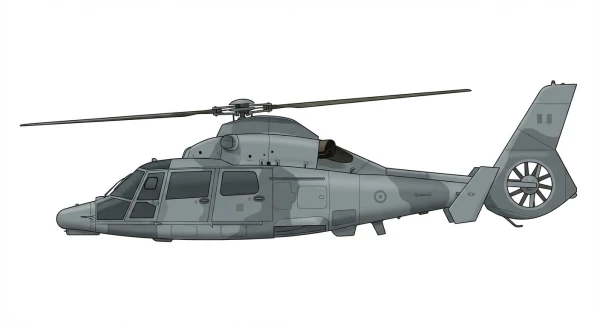
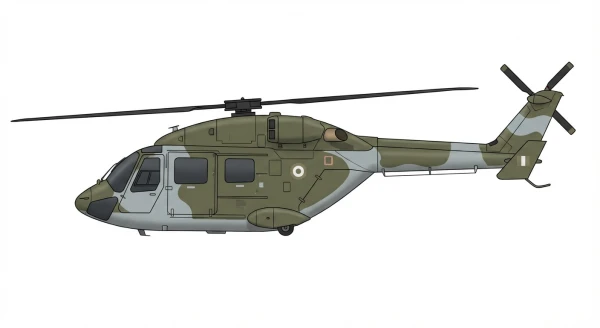
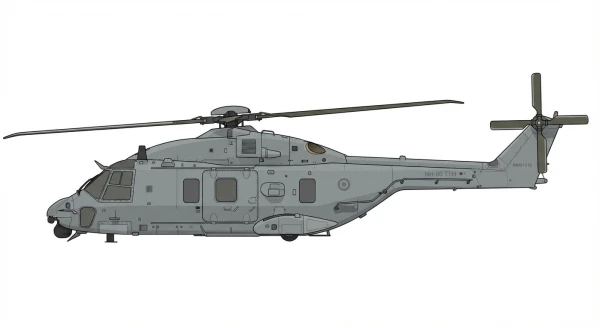
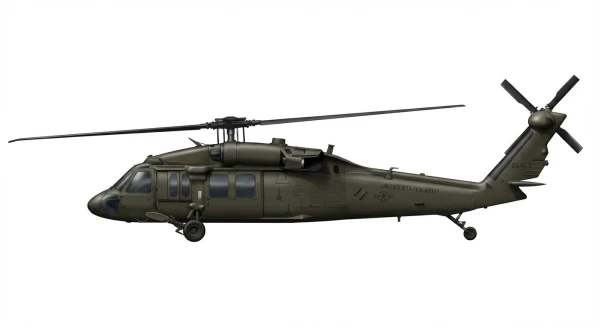
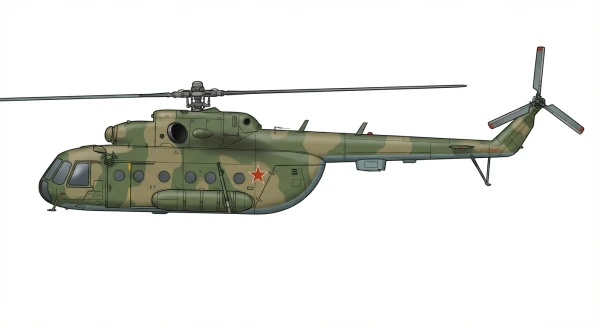
The Harbin Z-9 Haitun is a Chinese military utility helicopter manufactured by the Harbin Aircraft Manufacturing Corporation as a license-built derivative of the French Eurocopter AS365 Dauphin. Designed for tactical troop transport, search and rescue, anti-submarine warfare, and armed attack roles, the aircraft entered service with the People's Liberation Army in 1994. It is primarily known as a light multi-role helicopter platform that formed the basis for numerous specialized domestic military variants.
Development
China acquired a production patent for the Aérospatiale AS365 on 15 October 1980, leading to the first flight of a French-assembled Z-9 in 1981. The localized Z-9B variant, constructed with 70 percent domestic components, completed its first flight on 16 January 1992 and received final design approval in December 1992. Serial production of the Z-9B began in 1993 ahead of its PLA service entry. In 2002, Harbin certified the H410A variant powered by Turbomeca Arriel 2C engines, resulting in legal objections from Eurocopter regarding production following the expiration of the original licensing agreement.
Design
The Z-9 features a teardrop-shaped fuselage with a rounded nose, stepped cockpit, retractable landing gear, and a flat bottom. Power is supplied by two side-by-side turboshaft engines, such as the 632 kW Zhuzhou WZ-8A, mounted above the cabin to drive a four-blade main rotor. The Z-9B replaces the original 13-blade layout with an 11-blade faired-in Fenestron tail rotor fitted with wide-chord composite blades. Later production variants incorporate additional composite materials to increase structural strength and reduce radar signature. The cabin accommodates up to two pilots and 10 fully armed soldiers, or an internal payload of 1,900 kg.
Armament
Attack variants of the Z-9 carry two fixed 23 mm Type 23-2 cannon. External weapon pylons support gun pods, unguided rockets, ET52 torpedoes, and anti-tank guided missiles including the HJ-8, HJ-9, and HJ-10 series. Night-attack variants, such as the Z-9WA, feature a nose-mounted FLIR sensor and a helmet-mounted sight capable of targeting TY-90 air-to-air missiles, MANPADS, and light anti-ship missiles including the C-701 and TL-1 series.
Operational History
The PLA fielded armed Z-9W variants in the early 1990s as an interim anti-tank platform prior to the deployment of the Z-10 attack helicopter. Naval variants operate from surface combatants, including Chinese Type 054A frigates and Pakistani Zulfiquar-class frigates, performing anti-submarine warfare and surface target detection using X-band KLC-1 radar. Export operators of the Z-9 include Bolivia, Cambodia, Cameroon, Djibouti, Equatorial Guinea, Ghana, Kenya, Laos, Mali, Mauritania, Myanmar, Namibia, Pakistan, and Zambia.
Variants
-
Z-9B: Multi-role domestic production variant constructed with 70 percent Chinese-manufactured parts and an 11-blade Fenestron tail rotor.
-
Z-9C: Naval anti-submarine warfare and search-and-rescue variant for the PLA Naval Air Force, equipped with an X-band KLC-1 surface search radar.
-
Z-9EC: Anti-submarine warfare export variant produced for the Pakistan Naval Air Arm, equipped with pulse-compression radar, dipping sonar, and torpedoes.
-
Z-9W: Armed anti-tank variant fitted with pylon-mounted weapons, gyro stabilization, and a roof-mounted optical sight.
-
Z-9WA: Night-capable armed variant equipped with a nose-mounted FLIR sensor, helmet-mounted sight, and expanded air-to-ground missile capability.
Identified in 88 sorties in the official China-Taiwan Tensions activity reports between 2021 and 2023 — a floor, not a census: only sorties the source identified by type are counted, and how much it disclosed varies by year.
Frequently Asked Questions
What type of aircraft is the Z-9 Haitun?
What is the maximum speed of the Z-9 Haitun?
What is the range of the Z-9 Haitun?
When did the Z-9 Haitun first fly?
How many Z-9 Haitun have been built?
Which countries operate the Z-9 Haitun?
What is the service ceiling of the Z-9 Haitun?
- AUG 62026 Updated Description updated
- AUG 52026 Updated Powerplant updated in a site-wide editorial pass
- JUL 232026 Updated Sources and cross-references refreshed
- APR 72026 Updated Sources and cross-references refreshed
- FEB 72026 Updated Wingspan added
- JAN 122026 Updated Range updated in a site-wide editorial pass