Lesotho Military Forces
Lesotho ranks #152 of 170 militaries worldwide in 2026, with 2,000 active troops. The Air Force flies 9 aircraft. Landlocked, Lesotho has no navy and no nuclear weapons.
Armed Forces in 2026
| Domain | Strength | Composition |
|---|---|---|
| Lesotho Defence Force – Air Squadron | 9 aircraft | 6 helicopters |
| Personnel | 2,000 active |
ATLAS Index (Aggregate Total of Land, Air and Sea strength)
Full ranking →| Pillar | Weight | Score | Basis |
|---|---|---|---|
| Manpower | 10% | 15.0 | Active, reserve & paramilitary personnel |
| Ground forces | 20% | 0.0 | ARMS inventory power: armour & artillery by type and era, attack helicopters, armament |
| Naval power | 20% | 0.0 | SEAS inventory power: hulls by type, size and era, air wing, sustainment, armament |
| Air power | 25% | 12.6 | AIRS inventory power: aircraft by type and generation, enablers, armament |
| Nuclear deterrent | 10% | 0.0 | No declared nuclear capability |
| Defense budget | 15% | 7.8 | Annual spending, purchasing-power adjusted |
| Availability | modifier | ground ×0.80 · naval ×1.00 · air ×0.80 | Budget per point of each force, from the branch indexes |
Country File
| Population | 2.3M (2024) |
| GDP | $2.3 billion (2024) |
| GDP per capita | $972 |
| Military budget | $34M (2024) |
| Share of GDP | 1.5% (2024) |
| Military spending per capita | $15 (2024) |
| Inflation rate | 6.11% (2024) |
| Capital | Maseru |
| Region | Africa |
| Land area | 30,355 km² |
| Land borders | 909 km |
| Bordering countries | 1 |
| Currency | LSL |
Strategic Overview in 2026
Strategic Position
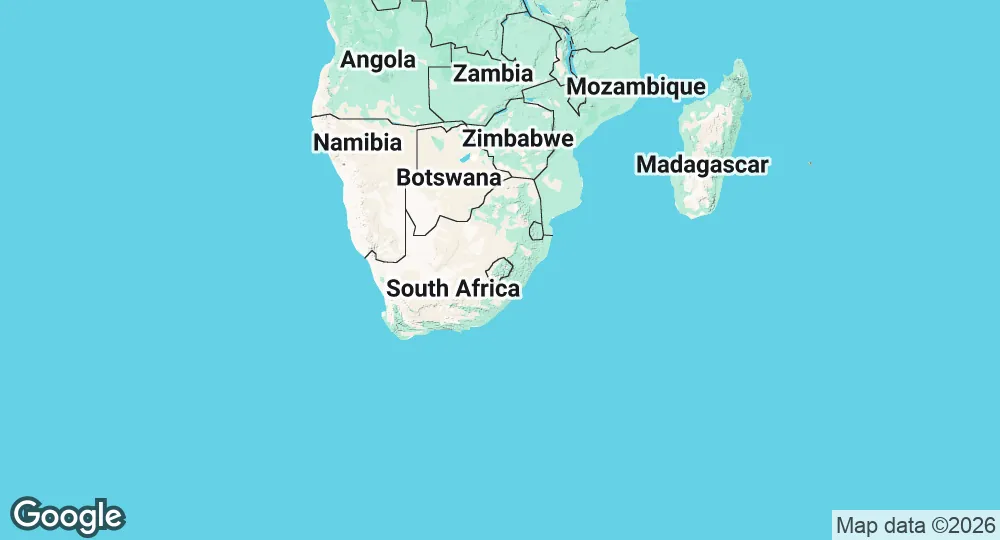
Lesotho is a landlocked sovereign enclave situated entirely within the borders of South Africa. This unique geography dictates a defense policy characterized by a total reliance on South African territory for transit, logistics, and international trade. The primary security concerns for the Lesotho Defence Force (LDF) center on internal stability, border security—specifically regarding livestock theft and undocumented migration—and the maintenance of constitutional order following a history of military involvement in political governance.
Lesotho is a member of the Southern African Development Community (SADC) and participates in the SADC Standby Force. The country’s defense doctrine is focused on internal security and regional peacekeeping under the SADC and African Union (AU) frameworks. Relationships with South Africa are the most critical aspect of Lesotho's strategic posture, formalized through bilateral agreements that include training assistance and intelligence sharing. While no formal external military threats exist from neighboring territory, the LDF maintains a posture designed to prevent cross-border criminal activity and protect national sovereignty in the context of its enclave status.
Military Forces
The Lesotho Defence Force (LDF) is a unified command structure under the Ministry of Defence and National Security. The King of Lesotho serves as the Commander-in-Chief, while operational control is exercised by the Commander of the LDF. The force is divided into two primary components: the Army and the Air Wing. Total active personnel numbers are approximately 2,000 to 2,500.
Army The Army is the dominant branch and consists of infantry battalions, a special forces unit, and support elements including artillery and reconnaissance platoons.
-
Armored Vehicles: The LDF operates a small inventory of armored reconnaissance and transport vehicles, including Panhard VBLs, RAM MK3 armored personnel carriers, and BRDM-2 scout cars. While T-55 main battle tanks remain in the inventory, their operational status is limited.
-
Artillery and Support: The force maintains towed artillery pieces, including 105mm howitzers and various mortars for infantry support.
-
Special Forces: A dedicated Special Forces unit exists for counter-insurgency, reconnaissance, and high-value asset protection.
Air Wing The Air Wing functions primarily in a transport, reconnaissance, and medical evacuation capacity. It does not possess dedicated combat or interceptor aircraft.
-
Fixed-wing: The fleet includes CASA C-212 and GA-8 Airvan aircraft used for logistics and light transport.
-
Rotary-wing: The LDF operates Bell 412 and Airbus H125 (formerly AS350) helicopters. These assets are utilized for troop transport, disaster relief, and patrolling the mountainous terrain of the Maloti Mountains.
Strategic Trends
The LDF is currently undergoing a process of professionalization and Security Sector Reform (SSR) facilitated by SADC. This program aims to decouple the military from the domestic political process and establish a clear line of civilian oversight. These reforms were accelerated following political instability in the late 2010s and remain a primary focus for the defense ministry through 2026.
Modernization priorities for the LDF are centered on mobility and communications rather than heavy conventional hardware. Procurement focuses on light armored vehicles and multi-role helicopters suited for high-altitude operations and border surveillance. Defense spending remains modest, typically fluctuating between 1.5% and 2.5% of GDP.
A major operational priority is the "Bata-u-Sebele" initiative and similar operations focused on border security. The LDF is frequently deployed to the border regions to combat organized livestock theft syndicates, which pose a direct threat to the rural economy. In terms of regional engagement, Lesotho recently concluded its contribution to the SADC Mission in Mozambique (SAMIM), where LDF personnel provided infantry support. Future force structure shifts are expected to emphasize specialized units capable of rapid deployment for both domestic emergencies and regional peacekeeping missions.
Constraints facing the military include limited budgetary resources and a reliance on external suppliers for all technical equipment and maintenance. The LDF continues to depend on South African and international partners for advanced officer training and technical instruction.
Military Expenditure: CIA World Factbook. Last updated on 4 August 2026. Suggest a change
Frequently Asked Questions
How large is Lesotho's military?
What is Lesotho's defense budget?
How does Lesotho rank militarily in the world?
Does Lesotho have nuclear weapons?
How many aircraft does Lesotho's air force have?
What percentage of GDP does Lesotho spend on defense?
What is Lesotho's military personnel per capita?
- AUG 42026 Updated Global Military Index updated in a site-wide editorial pass
- JUL 162026 Updated Global Military Index updated in a site-wide editorial pass
- JUN 162026 Updated Yearly statistics, military spending and 2 more fields updated
- JAN 132026 Updated Description added